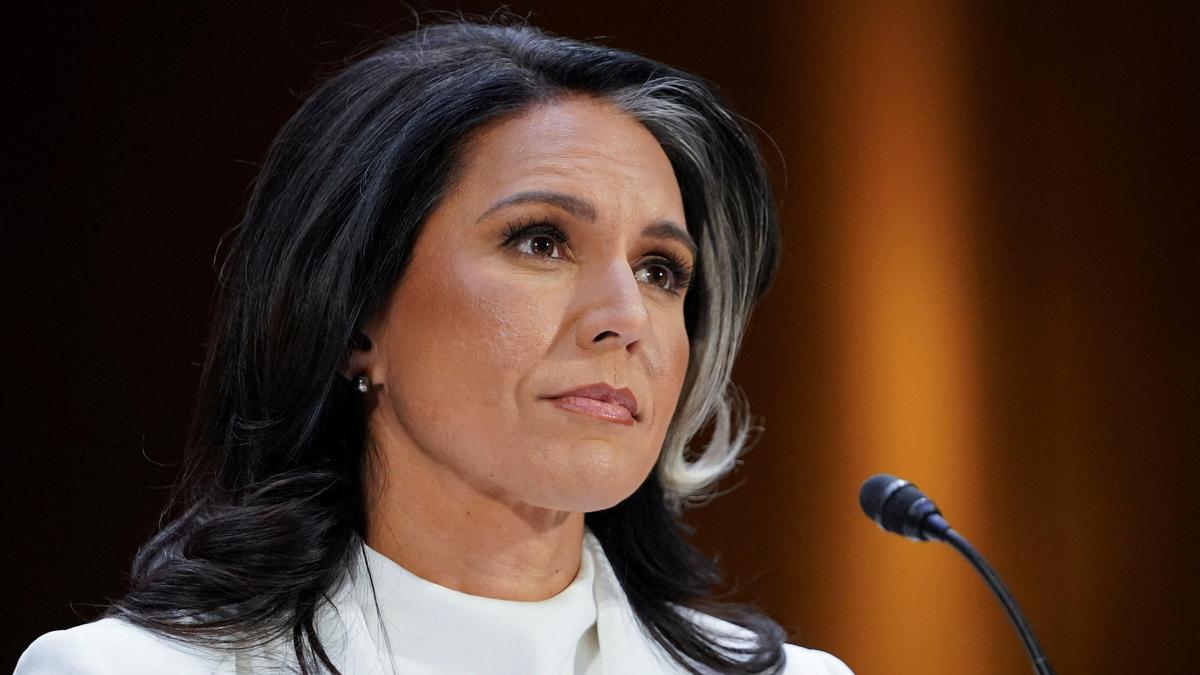
Tulsi Gabbard is officially stepping down. On Friday, the Director of National Intelligence announced she’s leaving her post as the nation’s top spy chief effective June 30, 2026. If you look at social media, the narrative is already splitting down predictable partisan lines. One side is offering deep sympathy. The other side is essentially throwing a party.
But if you want to understand what’s actually happening inside the Office of the Director of National Intelligence, you have to look past the official press releases. The real story isn't just about a sudden vacancy. It's about a stormy 15-month tenure that completely changed how Washington handles secrets.
The Official Reason and the Behind-the-Scenes Friction
Gabbard made her exit public by sharing a letter she sent to President Donald Trump. The core reason for her departure is deeply personal. Her husband, Abraham Williams, was recently diagnosed with an extremely rare form of bone cancer. Gabbard wrote that she must step away from public service to be by his side through the upcoming medical battle. Trump quickly followed up on social media, praising her work and announcing that her principal deputy, Aaron Lukas, will take over as acting director.
That’s the official script. But senior administration officials leak a slightly more complicated picture. Rumors of her departure had been swirling around the White House for weeks, even though Gabbard denied them to colleagues recently.
Some sources close to the situation claim Gabbard faced intense structural pressure from the White House inner circle. During her 15 months in office, the former Democratic congresswoman turned conservative commentator was frequently frozen out of core national security meetings. She held the title of intelligence czar, but she didn’t always have the president's ear when major geopolitical crises flared up.
Why Her 15 Months in Power Sparked Total Chaos
To understand why Gabbard’s resignation is such a massive deal, you have to look at the sheer amount of friction she caused from day one. She entered office with zero traditional intelligence experience. Her entire worldview was built on anti-interventionism and a deep-seated distrust of the agencies she was chosen to lead.
Capitol Hill never really accepted her. Her tenure was marked by incredibly awkward public exchanges with lawmakers. During Senate hearings, when pressed for her expert assessment on foreign threats like Iran, she frequently deflected. Instead of offering an independent intelligence analysis, she repeatedly stated that policy choices were Trump’s decision, not hers.
Critics like Democratic Senator Adam Schiff didn’t hold back after the announcement. Schiff stated publicly that Gabbard’s only positive contribution to national security was her resignation, accusing her of weaponizing the intelligence community to chase political theories and election fraud claims.
On the flip side, her defenders argue she did exactly what Trump brought her in to do. She challenged the deep state. She pushed heavily for declassification and questioned the intelligence community's long-standing conclusions about Russia. She wasn't trying to please the Washington establishment; she was trying to dismantle it.
The Growing Cabinet Exodus
Gabbard isn't the first high-profile departure from this administration, and she won't be the last. Her exit marks the fourth major Cabinet casualty in Trump's second term, signaling a broader pattern of instability at the highest levels of government.
Just look at the timeline of the last few weeks. Trump ousted Homeland Security Secretary Kristi Noem in late March following intense backlash over her management of immigration enforcement and disaster relief efforts. Shortly after, Labor Secretary Lori Chavez-DeRemer resigned in April amidst multiple misconduct investigations. Add Gabbard to the list, and it's clear that the administration is struggling to keep its core leadership team intact.
Who Controls the Nation's Secrets Now
With Gabbard out at the end of June, the focus shifts to Aaron Lukas. As acting director, Lukas inherits an intelligence apparatus that is deeply demoralized and politically fractured.
The job of the DNI is to oversee 18 separate intelligence agencies and present objective, unbiased data to policymakers. Senator Mark Warner, vice-chairman of the Senate Intelligence Committee, immediately issued a warning about what needs to happen next. Warner emphasized that the next permanent director must restore trust and ensure that intelligence professionals can speak truth to power without fear of political interference from the White House.
If you're tracking the stability of US national security, the next few weeks are critical. Watch how Lukas manages the daily briefings and whether Trump nominates an establishment figure or another political disrupter to replace Gabbard permanently. The transition period will reveal whether the administration wants to mend fences with the intelligence community or continue the war against it.