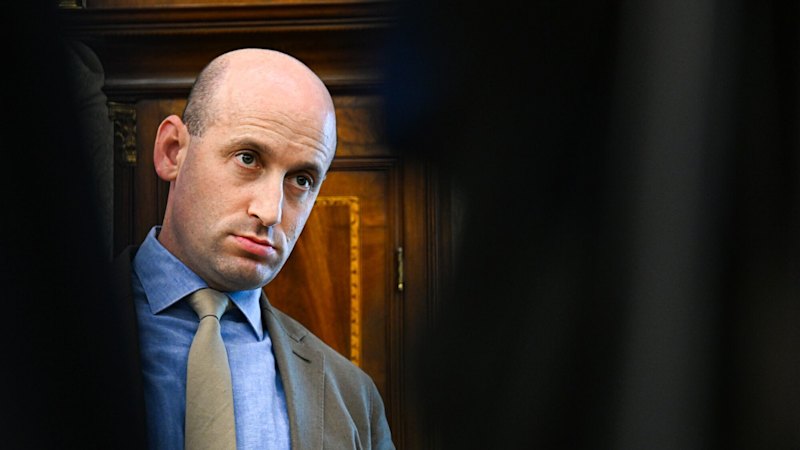
Most political commentators treat Stephen Miller’s promotion to White House Chief of Staff like a sudden plot twist. It wasn't. When Donald Trump tapped Miller on November 6, 2026, to replace Susie Wiles after a brutal midterm defeat, he wasn't panicking—he was handing the keys of the executive branch to the only aide who has survived every single ideological purge since 2016.
If you think of a White House Chief of Staff as a traffic cop who manages schedules and brokers compromises with Congress, forget everything you know. Miller isn't there to manage the building. He’s there to weaponize it.
The Post-Midterm Reality Behind Stephen Miller's Promotion
Republicans got crushed in the November 2026 midterm elections, losing 42 House seats and handing Democrats a massive majority alongside key Senate flips. Traditional presidential playbooks dictate that after a midterm drubbing, you bring in a pragmatic conciliator to negotiate with the new opposition.
Trump did the exact opposite.
Susie Wiles, the veteran campaign strategist who kept the West Wing running like a disciplined political operation since January 2025, resigned on November 6, 2026. Three days later, on November 9, Miller officially stepped in as the 33rd White House Chief of Staff. White House allies immediately started calling him Trump’s "wartime consigliere," and honestly, the label fits.
With Democrats preparing to take over House oversight committees in January 2027—and figures like Representative Robert Garcia already telling Miller to "lawyer up"—legislative compromise is dead on arrival. Trump knows he won't pass major bills through a hostile Congress over his final two years. Instead, he needs someone who knows every dusty lever of unilateral executive authority.
That is Miller’s entire skillset.
From Santa Monica Contrarian to West Wing Power Broker
To understand how a 41-year-old staffer became the most powerful unelected official in Washington, you have to look at his trajectory. Miller didn't climb the traditional Republican establishment ladder of think tanks and corporate law firms. He built his career on ideological combat.
- The Early Provocateur: Born in 1985 in liberal Santa Monica, California, Miller made a name for himself in high school and later at Duke University by attacking multiculturalism and campus orthodoxy in student newspaper columns.
- The Capitol Hill Engine: After graduating in 2007, he skipped law school and went straight to Congress, working as a press secretary for Representative Michele Bachmann and Representative John Shadegg before landing with Senator Jeff Sessions.
- Killing the 2013 Immigration Bill: Alongside Sessions, Miller helped torpedo the bipartisan "Gang of Eight" immigration reform bill in 2013, proving that aggressive messaging and procedural guerrilla warfare could defeat well-funded establishment coalitions.
When Miller joined Trump’s presidential campaign in January 2016, most Washington insiders viewed him as a niche policy aide. They missed what Trump saw immediately. Miller could translate Trump’s gut instincts into sharp speechwriting and legally binding executive orders. He wrote Trump’s 2017 inaugural address. He survived the chaotic firings of Reince Priebus, Steve Bannon, John Kelly, and Mick Mulvaney.
The Wilderness Years Built His Legal Machine
Most aides lose relevance when their boss leaves office. Miller used the four years between 2021 and 2025 to build an institutional battering ram.
In April 2021, he co-founded America First Legal (AFL) alongside former Trump administration lawyers. While other conservatives went on cable news to complain about the Biden administration, Miller’s group filed dozens of lawsuits targeting corporate diversity programs, federal agency rules, and immigration policies. That period wasn't downtime—it was a dry run. By the time Trump returned to the White House in January 2025, Miller wasn't guessing which executive actions might survive court challenges. He had already litigated the exact statutory loopholes he needed to exploit.
How the Miller Doctrine Actually Operates
When Miller served as White House Deputy Chief of Staff for Policy and Homeland Security Advisor from January 2025 until November 2026, he quietly centralized control over domestic and national security machinery. Now that he holds the top West Wing job, his operating philosophy—often called the "Miller Doctrine" by Washington insiders—governs the entire executive branch.
It rests on three core mechanics:
- Maximalist Executive Power: Miller operates from the premise that Article II of the Constitution gives the president near-absolute authority over borders, trade, and federal agencies. Working closely with Office of Management and Budget Director Russell Vought, Miller spent much of 2026 drafting unilateral actions on tariffs, visa restrictions, and housing regulations that bypass Congress completely.
- Weaponizing Obscure Statutes: Rather than waiting for lawmakers to rewrite the law, Miller digs up decades-old statutory provisions. During the first term, he championed Section 212(f) of the Immigration and Nationality Act to defend travel bans. In the second term, he pushed aggressive third-country deportation agreements, sending migrants to nations where they hold no citizenship, alongside executive orders attempting to restrict birthright citizenship.
- Aggressive Confrontation With the Courts: When federal judges block administration policies, Miller doesn't quietly rewrite the paperwork. He attacks the legitimacy of the rulings publicly while simultaneously filing emergency appeals and drafting revised orders to keep the policy moving.
What Critics and Allies Both Misread
If you watch cable news, you'll hear two competing caricatures of Stephen Miller. Democrats paint him as a rogue extremist who hijacked the presidency. Hardline supporters treat him as a flawless ideological purist. Both versions miss how he actually functions inside the White House.
First, Miller never gets ahead of Donald Trump’s instincts. The reason Trump has called him a "great fighter" and an "MVP"—even while privately joking about his intense, monotone demeanor—is that Miller subjugates his own ego completely. Other chiefs of staff tried to manage Trump, slow down his impulses, or leak stories to protect their own reputations with the Washington press corps. Miller doesn't care what The New York Times or moderate Senate Republicans think of him. An Indiana Republican congressman publicly called Miller's promotion a "horrible decision," and Miller didn't blink.
Second, people assume Miller’s portfolio starts and stops at the southern border. That was true in 2017, but it hasn't been true since 2025. As Homeland Security Advisor and now Chief of Staff, Miller’s fingerprints are on trade tariffs, higher education funding cuts, federal workforce purges, and even foreign policy pressure campaigns involving Latin America and European allies. He views immigration, trade, and domestic regulation as a single nationalist project.
The Massive Political Gamble for 2027 and 2028
Putting a hardline ideologue in the Chief of Staff chair carries enormous risks for the Republican Party.
Normally, a Chief of Staff acts as a shock absorber for the president. They tell cabinet secretaries "no," keep rival factions from leaking against each other, and warn the president when a policy is toxic with swing voters. Miller isn't built to be a shock absorber. He is an accelerator.
The 2026 midterm results already showed that while Trump’s core base loves aggressive deportation operations and tariff battles, independent and suburban voters balked at the chaos and economic friction. Even Trump briefly acknowledged before the election that some voters felt his deportation tactics might be "too tough". Yet by elevating Miller over Wiles, Trump signaled that he intends to double down rather than pivot to the center.
For Republicans looking ahead to the 2028 presidential race, that creates a serious bind. Every executive order Miller pushes through in 2027 will energize primary voters while giving House Democrats endless subpoena targets and campaign ammunition.
How to Track What Miller Does Next
If you want to understand where the White House is actually heading over the next two years, stop watching press briefings and start watching the paperwork. Under Miller’s management, real policy shifts happen through administrative mechanisms long before they hit television headlines.
- Watch the Federal Register, Not Congress: With Democrats controlling the House in 2027, major legislation is frozen. Track interim final rules issued by the Department of Homeland Security, the Department of Justice, and the U.S. Trade Representative.
- Follow Emergency Docket Filings: Miller’s strategy relies on pushing aggressive executive actions knowing they will trigger immediate injunctions. Pay attention to emergency stay applications at the U.S. Supreme Court—that is where his agenda lives or dies.
- Monitor OMB Directives: Keep an eye on budget memos co-signed by Russell Vought. When Miller wants to defund a program or restructure a federal agency without passing a law, the paper trail always starts at the Office of Management and Budget.
For further reporting on the administration's shifting leadership, you can review the official White House announcement of Miller's appointment or read CBS News coverage of his policy record. You can also watch why Trump picked Stephen Miller to replace Susie Wiles for additional context on how the midterm losses reshaped the West Wing hierarchy.