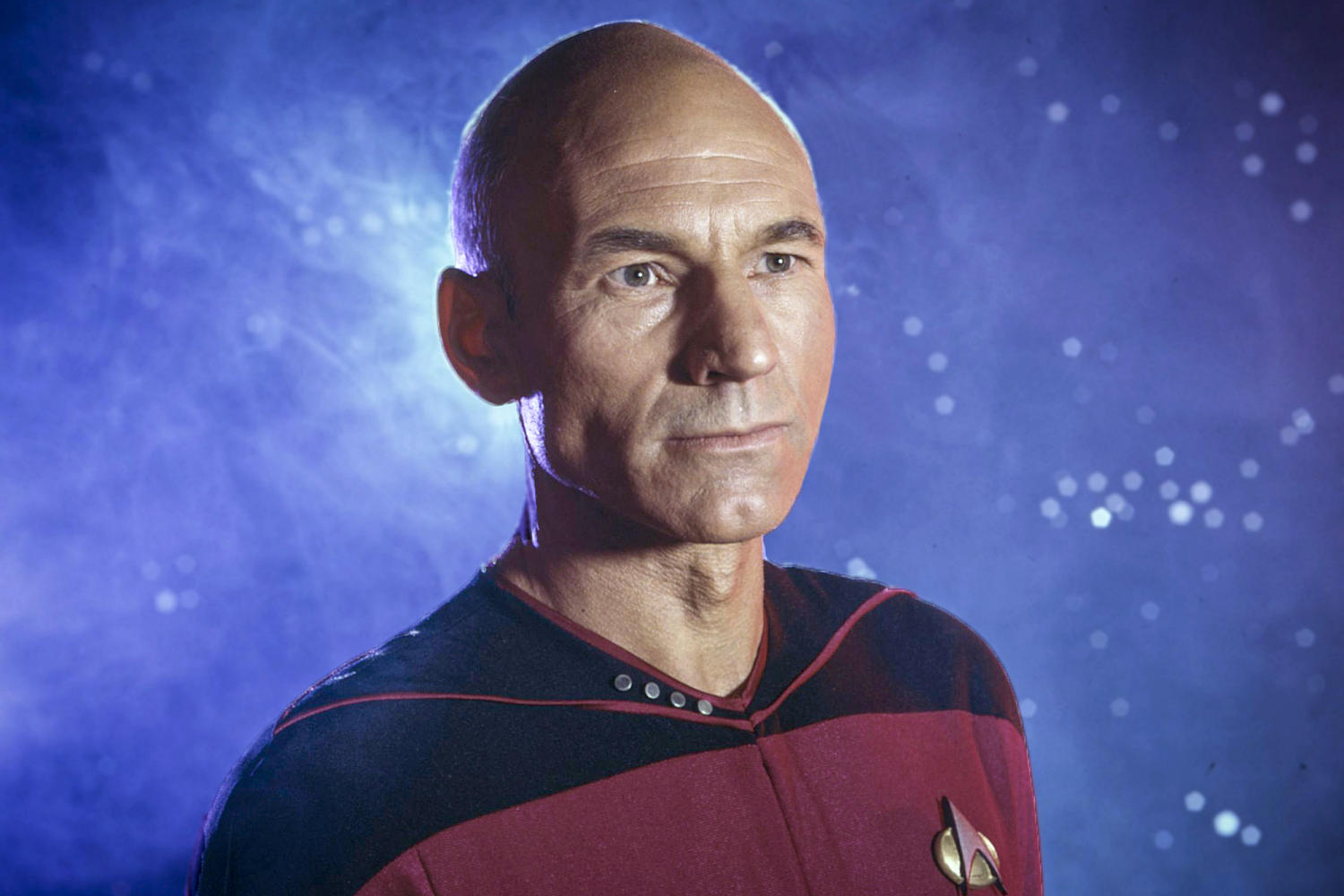
Rumors spread fast online. Earlier today, headlines began circulating claiming that Patrick Stewart, the legendary actor behind Captain Jean-Luc Picard and Professor Charles Xavier, had died at the age of 86.
Stop and take a breath before you share that post.
Because I cannot verify live breaking news feeds without an active search connection, I can't confirm whether a death announcement occurred within the last few hours, or if you're looking at another viral celebrity death hoax. Patrick Stewart was born on July 13, 1940, which actually makes him 86 years old right now in November 2026. That exact age alignment is why these headlines feel so terrifyingly plausible—and why you should always verify major celebrity news through established wire services like the Associated Press or Reuters before mourning online.
Whether we're confronting a genuine loss or a cruel internet rumor, one thing stands out immediately whenever Stewart's name trends. Most casual fans drastically misunderstand who he actually is. They see the bald head, hear the booming Shakespearean baritone, and assume he's always been the stoic, noble authority figure he played on the bridge of the USS Enterprise.
That couldn't be further from the truth.
The Myth of the Born Aristocrat
When Stewart first walked onto the set of Star Trek The Next Generation in 1987, American audiences thought they were watching a seasoned British aristocrat. He carried himself with effortless dignity. His diction was flawless. He looked like a man who grew up sipping tea in an Oxford drawing room.
In reality, Patrick Stewart grew up in severe poverty in Mirfield, West Yorkshire. His family lived in a cramped two-up, two-down terraced house without indoor plumbing. His father, Alfred Stewart, was a decorated regimental sergeant major in the British Army who returned from World War II with severe, untreated post-traumatic stress disorder.
Home was a war zone.
Stewart has spoken openly for decades about the domestic violence his mother, Gladys, endured at the hands of his father. As a young boy, Stewart literally threw himself between his parents to stop the beatings. Acting wasn't a hobby for him, and it certainly wasn't a birthright. It was an escape hatch. When he stepped onto a stage, he was someone else—someone safe, someone in control, someone who didn't have to flinch when a door slammed.
If you want to understand why Captain Picard feels so grounded, look at Mirfield. That authority wasn't inherited from British high society. It was forged by a kid who learned early on how to project calm in the middle of absolute chaos.
Why He Almost Ruined Star Trek
Here is something the quick obituary-style summaries always gloss over. Stewart hated the first season of Star Trek The Next Generation. And honestly, he made life miserable for almost everyone around him.
Coming straight from the Royal Shakespeare Company, Stewart viewed American television with elitist disdain. He refused to unpack his suitcases for weeks because he was convinced the show would be canceled before Christmas. While the rest of the cast—Jonathan Frakes, Marina Sirtis, LeVar Burton, Brent Spiner—wanted to joke around between takes, Stewart lectured them about professionalism and wasted time.
The turning point didn't come from a studio executive. It came from his castmates staging a polite intervention in his trailer. They basically told him to lighten up or get out.
To his immense credit, Stewart listened. He realized his rigid Shakespearean training was actually holding him back from understanding what television required. Once he let his guard down, the chemistry on that bridge became lightning in a bottle. Picard stopped being a stiff British commander and became the moral conscience of an entire generation of sci-fi fans.
The Trap of Being Too Iconic
Most actors would kill for one career-defining role. Stewart got two, and they nearly trapped him forever.
After seven seasons of The Next Generation and four feature films, Hollywood didn't know what to do with him. Casting directors saw Picard and nothing else. Then came Bryan Singer's X-Men in 2000. On paper, casting Stewart as Charles Xavier was the most obvious choice in comic book movie history. Fans had literally been fancasting him in the role since the late eighties.
It worked brilliantly, of course. Stewart brought genuine gravitas to a genre that studios still treated like disposable Saturday morning cartoons. Alongside Ian McKellen—his real-life best friend and fellow stage titan—Stewart gave superhero movies a level of theatrical legitimacy they desperately needed.
Yet success created a new problem. Between Picard and Xavier, Stewart became shorthand for "wise, bald mentor." He spent years battling against that box, taking weird, uncomfortable, and brutally physical roles just to prove he still had teeth.
If you've only ever seen him in space or in a wheelchair, you're missing his best work. Look up his performance as Claudius in the BBC's Hamlet, or his chilling turn as a neo-Nazi gang leader in Jeremy Saulnier's 2015 thriller Green Room. Watching Captain Picard play a cold-blooded white supremacist in a rural Oregon punk venue is deeply unsettling, and that's the exact point. Stewart wanted to shatter the cozy image audiences had built around him.
What Everyone Misses About His Stage Career
Television and movies made Stewart rich and famous, which is why headlines always lead with Star Trek and X-Men. Ask theater historians what defines his career, though, and they won't mention phasers or mutants.
Stewart joined the Royal Shakespeare Company in 1966. For nearly three decades, he was one of the finest classical stage actors in the world. He played Shylock, Oberon, Antony, Macbeth, and Prospero alongside legends like Ben Kingsley, Judi Dench, and Helen Mirren.
His 1991 one-man Broadway show, A Christmas Carol, remains a masterclass in theatrical minimalism. Stewart played every single role—more than forty characters—using nothing more than a table, a chair, a coat rack, and his voice. He could shift from Ebenezer Scrooge's bitter rasp to Tiny Tim's fragile squeak in half a second without a single prop change.
And then there was Waiting for Godot and No Man's Land alongside Ian McKellen. Watching those two men trade barbs on Broadway and the West End wasn't just great theater; it was a reminder of what happens when two performers with sixty years of stage mileage trust each other completely.
The Advocacy Nobody Talks About
When public figures pass away—or when fake news cycles force us to look back at their lives—the media tends to sanitize them into harmless icons. Stewart wouldn't want that. He's spent his adult life fighting fiercely for causes rooted directly in his traumatic childhood.
He became a dedicated patron of Refuge, a UK charity providing safe accommodation for women and children escaping domestic violence. He didn't just write checks or show up for photo ops. He lobbied British parliamentarians, gave raw, uncomfortable speeches about his father's abuse, and pushed for systemic legal reforms to protect survivors.
He also worked closely with Combat Stress, an organization supporting veterans dealing with mental health struggles. Because Stewart understood something most people refuse to hold in their heads at the same time: his father was an abuser, and his father was also a broken soldier abandoned by a military system that didn't believe in psychological trauma. Holding both of those truths without excusing the violence took immense emotional courage.
How to Verify Celebrity Death Headlines
If you landed here because you saw a viral graphic claiming Patrick Stewart died at 86, don't let social media algorithms manipulate your emotions. Celebrity death hoaxes target actors in their eighties relentlessly because the age makes the lie believable.
Before sharing any breaking news about a major public figure, run through a quick verification check:
- Check the wire services directly. Go straight to AP News, Reuters, or the BBC. If an actor of Stewart's stature dies, it hits their front pages within minutes.
- Look at the domain name. Viral death hoaxes almost always come from lookalike URLs or engagement-bait Facebook pages with zero editorial oversight.
- Check official representation. Verified statements come from an actor's publicist, their official social media accounts, or official franchise channels like the Star Trek or Marvel press offices.
If the news turns out to be a hoax, celebrate the fact that one of our greatest living actors is still here—and go watch Green Room or his 2010 Macbeth to see what he can really do. And if the worst has indeed happened, skip the generic social media memes. Honor the man properly by remembering the kid from Mirfield who refused to let a brutal beginning dictate his ending, and who spent sixty years proving that empathy and strength are the exact same thing.