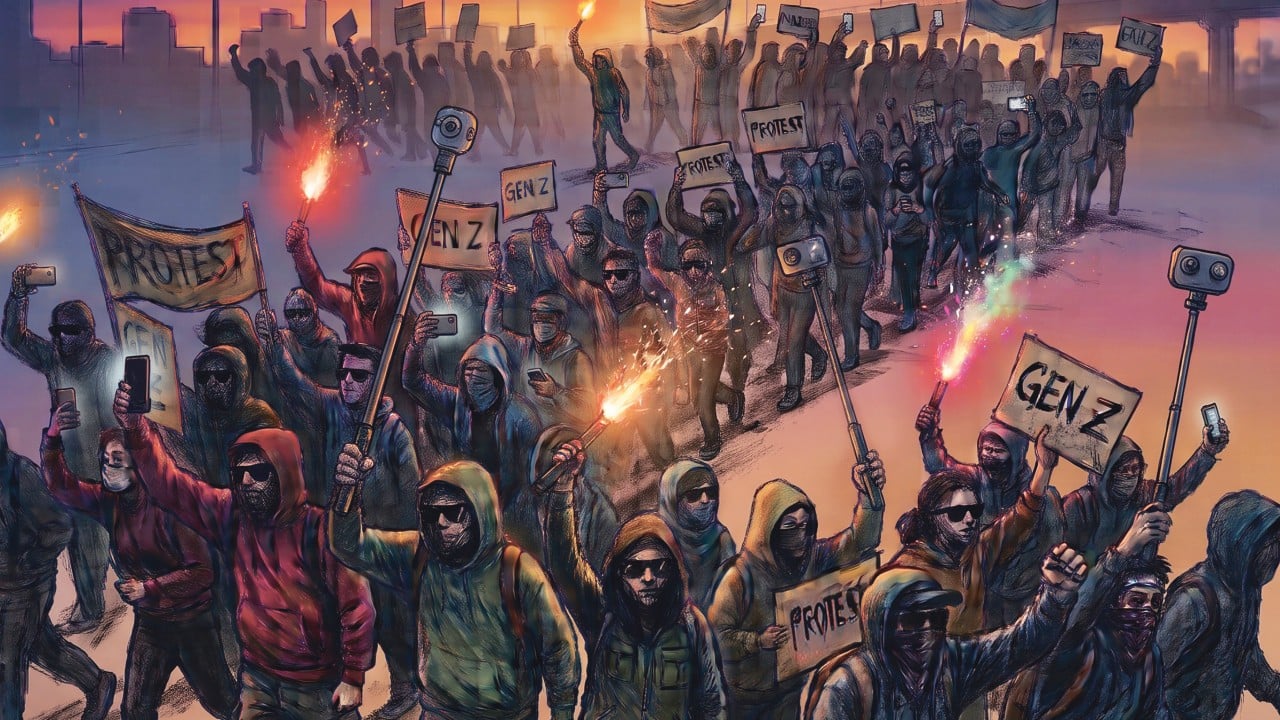
Older politicians look at a cartoon frog or a three-finger salute and see a joke. They're dead wrong. Across Asia, young people aren't just posting memes to pass the time—they're using digital humor to dismantle authoritarian narratives, organize street protests, and survive state censorship.
The competitor piece, "By all memes: why Asia’s Gen Z are revolting," touched on the surface of this movement. It noticed the aesthetics. Yet if you've actually watched how youth movements operate in Bangkok, Jakarta, Hong Kong, or Yangon over the past decade, you know memes aren't decorative. They're tactical armor. Recently making headlines in related news: Inside the French Cost of Living Revolt That Keeps Breaking the Republic.
Why Memes Beat Traditional Protest Slogans
Traditional political messaging is slow, heavy, and easy to ban. Print a pamphlet, and the police confiscate the press. Shout a specific slogan, and algorithms immediately flag and delete the video.
Memes move differently. They mutate faster than state censors can update their keyword blacklists. More details into this topic are explored by The New York Times.
When I first started tracking digital activism in Southeast Asia around 2020, the speed of adaptation was staggering. A government official would make an out-of-touch remark on morning television. By lunch, thousands of remixed clips, anime edits, and ironic TikTok sounds would flood every feed. You can't arrest a joke without looking pathetic. And in Asian political culture, where saving face is currency, looking ridiculous is fatal for strongmen.
Take the Milk Tea Alliance. It didn't start in a think tank or a university lecture hall. It began in April 2020 as a meme war on Twitter between Thai internet users and Chinese nationalist trolls over a Thai actor's girlfriend. Within days, users from Hong Kong and Taiwan joined in, united by a shared love for sweet milk tea—and a shared exhaustion with Beijing's political overreach.
Humor lowered the barrier to entry. You didn't need a degree in political science to understand a meme about tea. You just needed to be online.
Pop Culture as a Shield Against Censorship
Authoritarian states know how to crush centralized leadership. Arrest the three people holding the megaphones, and the crowd goes home.
Asia's Gen Z solved this by refusing to have leaders at all. Instead, they rallied around pop culture icons that governments couldn't ban without triggering massive public backlash.
Thailand's Hunger Games and Hamtaro
In Thailand, student protesters adopted the three-finger salute from The Hunger Games as a symbol of resistance against the military-backed government. When authorities threatened to arrest anyone flashing the sign in public, protesters pivoted.
In July 2020, thousands of young people gathered around Bangkok's Democracy Monument to run in circles singing the theme song to Hamtaro, a Japanese anime about a hamster. They changed the lyrics from "the most delicious food is sunflower seeds" to "the most delicious food is taxpayers' money." How do you send riot police to beat up kids singing a hamster song? You don't—not without losing whatever legitimacy you have left.
Hong Kong's Pepe the Frog
In Western internet culture, Pepe the Frog became associated with far-right extremism. Hong Kong protesters completely rewired his meaning in 2019.
Because Hong Kong's movement was strictly leaderless—operating under Bruce Lee's philosophy to "be water"—protesters needed a mascot that belonged to everyone and no one. Pepe became a symbol of solidarity, painted on Lennon Walls and printed on stickers wearing yellow hard hats and gas masks. When a young woman suffered a severe eye injury from a police projectile, Pepe memes immediately appeared with a bandaged eye. The image bypassed language barriers and explained the situation to global audiences in half a second.
Indonesia's Political Satire and "Peringatan Darurat"
More recently in Indonesia, digital dissent took a darker, sharper turn. In August 2024, when lawmakers attempted to rush through revisions to regional election laws that would favor outgoing President Joko Widodo's political dynasty, Indonesian netizens flooded social media with a stark blue image featuring the Garuda state emblem and the words "Peringatan Darurat" (Emergency Warning).
It mimicked an old analog television emergency broadcast system—eerie, nostalgic, and impossible to ignore. Within hours, that single graphic pulled tens of thousands of students and workers onto the streets outside parliament in Jakarta, forcing lawmakers to back down. It wasn't a joke, strictly speaking, but it used the exact same viral mechanics: high-contrast visual shorthand engineered for instant sharing.
The Economic Reality Behind the Humor
People love to frame Gen Z protests as purely ideological battles over democracy and free speech. That's only half the story. Usually, the spark is economic despair.
Look at the numbers across the region:
- Youth unemployment has hit stubborn highs in several major Asian economies, leaving college graduates underemployed or stuck in precarious gig work.
- Housing costs in cities like Hong Kong, Seoul, and Taipei have completely detached from entry-level wages.
- Political dynasties continue to hoard state resources while telling young people to work harder.
When you hold a university degree and still can't afford rent, traditional political speeches sound insulting. Irony becomes a survival mechanism. Dark humor lets young people process bleak economic realities without falling into total apathy.
In South Korea, young people coined terms like "Hell Joseon" to describe a hyper-competitive society where family wealth determines your entire life trajectory. In China, the "lying flat" (tangping) and "let it rot" (bailan) movements used self-deprecating memes to reject grueling 996 work culture (9 a.m. to 9 p.m., six days a week). Even when street protests are impossible, refusing to participate in the hustle economy is its own quiet revolt.
Where Digital Activism Hits a Wall
It's easy to romanticize meme warfare, so let's be honest about its limits. Viral posts don't automatically topple regimes.
Governments have learned how to fight back, and their tactics are brutal. In Myanmar, following the 2021 military coup, Gen Z protesters initially used creative street theater, satirical signs, and viral TikToks to mock the junta. The military responded with live ammunition, internet blackouts, and mass arrests. You can't meme your way out of an airstrike.
State surveillance has also caught up. Countries across Asia have passed strict "cybersecurity" and "anti-fake news" laws—such as Thailand's Computer Crime Act or Singapore's POFMA—that carry heavy prison sentences for online dissent. AI-driven content moderation now detects visual symbols, not just text, meaning platforms can shadowban protest imagery before it ever reaches a trending page.
There's another trap, too: slacktivism. Sharing a clever graphic feels like taking action, but likes don't change legislation. The movements that actually won concessions—like Indonesia's 2024 protests or South Korea's 2016 Candlelight Revolution—only succeeded because online humor translated into physical bodies showing up in the streets.
How to Actually Read Asia's Next Wave of Dissent
If you're watching Asian politics, business, or culture, ignoring youth meme culture means missing the earliest warning signs of major instability. Mainstream local media is often state-aligned or overly cautious, meaning real public sentiment hides in comment sections, private Telegram channels, and coded TikTok trends.
Stop looking at official press releases to gauge stability in the region. Watch the slang instead. Pay attention to what songs are suddenly getting banned on streaming platforms, which cartoon characters are getting scrubbed from local search engines, and what ironic hashtags are trending among twenty-somethings at 2 a.m. When young people start turning their anger into jokes, the people in charge usually have less time left than they think.