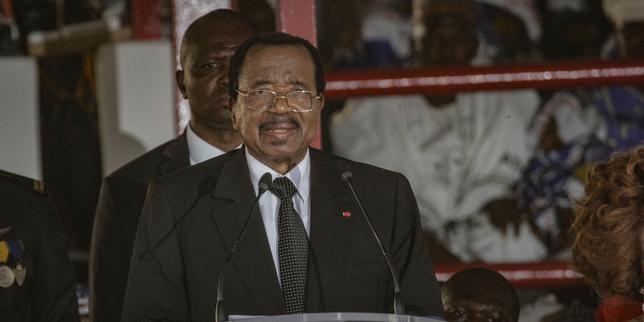
Cameroonian President Paul Biya has officially summoned the electorate to the polls on February 7 for long-delayed legislative and municipal elections. Issued by presidential decree after months of institutional stalling and constitutional extensions, the announcement ends a prolonged period of political limbo in Yaoundé. Yet beneath the routine administrative language of an electoral calendar lies a calculated effort to lock down local power structures, neutralize a fractured opposition, and manage an uncertain succession timeline inside one of Africa’s longest-standing regimes.
The move does not happen in a vacuum. Originally scheduled earlier in the cycle, these twin ballots—which determine the composition of the 180-seat National Assembly and leadership across 360 municipal councils—were repeatedly pushed back through parliamentary maneuvers that extended incumbent mandates. Those delays bought the ruling Cameroon People’s Democratic Movement (CPDM) valuable breathing room at a moment when economic strain, regional insecurity, and internal party fatigue threatened its grip on the state apparatus. Calling the vote for February 7 signals that the presidency believes the window of maximum political advantage has finally opened.
The Architecture of Delay
To understand why February 7 matters, you have to look at how time operates as a political weapon in Yaoundé. In mature democracies, election dates are fixed constitutional anchors; in Cameroon, the electoral calendar functions as an executive lever. Under the country’s electoral code, the head of state retains wide discretion over the formal convocation of the electorate, provided it falls within statutory windows—windows that parliament, dominated by Biya’s CPDM, previously voted to stretch.
The official justification for postponing the legislative and municipal polls rested on logistical strain and the clustering of national ballots. Holding multiple nationwide elections within a compressed timeframe, government officials argued, would overwhelm state finances and administrative capacity. On paper, that rationale sounds plausible. Organizing simultaneous local and parliamentary races across ten diverse regions—two of which remain engulfed in a protracted separatist conflict—requires substantial security deployments and bureaucratic coordination.
In practice, however, the postponements achieved three distinct political objectives for the ruling establishment:
- Mandate preservation without voter accountability: Extending the terms of sitting lawmakers and mayors kept loyal local intermediaries in office and on the state payroll without exposing them to voter backlash over inflation, fuel subsidy cuts, and failing municipal infrastructure.
- Resource attrition for opposition parties: Unlike the CPDM, which draws directly on state-aligned patronage networks and administrative visibility, opposition movements rely on episodic fundraising. Stretching out the pre-campaign period drained their financial reserves long before the official campaign window opened.
- Synchronization with presidential strategy: Municipal councils and parliamentary seats form the bedrock of presidential campaign mobilization in Cameroon. Controlling the mayors’ offices means controlling local administrative endorsements, campaign venue permits, and grassroots turnout machinery.
By the time the decree setting February 7 was signed, the terrain had been thoroughly conditioned. Opposition parties were forced to pivot overnight from legal challenges against the delays to the grueling mechanics of candidate vetting across hundreds of constituencies.
Why Municipal Councils Are the Real Prize
International coverage of Cameroonian politics fixates almost exclusively on the presidency and, to a lesser extent, the National Assembly. That focus misses where real administrative survival happens. In Cameroon’s centralized yet nominally decentralized system, municipal councils are the primary interface between the state and ordinary citizens—and the indispensable transmission belt for ruling party dominance.
Mayors control local development budgets, market stall allocations, civil registry documents, and grassroots patronage. More critically, municipal councilors make up the bulk of the electoral college that elects the Senate, the upper house of parliament whose president is constitutionally designated as the interim head of state should the presidency fall vacant.
Control the town halls, and you control the constitutional line of succession.
That single structural reality explains the ferocity with which the CPDM guards its municipal majorities. Even in urban centers like Douala and Yaoundé, where opposition sentiment runs deep among younger, underemployed voters, the ruling party relies on finely sliced electoral districts, administrative disqualification of rival lists, and concentrated turnout in peripheral wards to retain council control.
For opposition parties, winning a parliamentary seat gives a politician a national platform in Yaoundé, complete with parliamentary immunity and media visibility. Winning a mayor’s office, however, provides tangible governance leverage—the ability to pave roads, manage waste collection, and prove competence to skeptical voters. Because the February 7 vote combines both legislative and municipal ballots on the same day, voters face a split choice, and opposition parties face a massive logistical test. Fielding credible, legally compliant lists in all 360 municipalities requires thousands of vetted candidates, each needing tax clearances, criminal record extracts, and administrative certifications issued by state authorities who rarely rush to assist regime critics.
The Opposition’s Structural Trap
Cameroon’s opposition enters the February 7 race divided not merely by personalities, but by a fundamental strategic dilemma that has paralyzed anti-incumbent politics for three decades: participate in a system tilted toward the ruling party, or boycott and cede the institutional field entirely.
Past boycotts have yielded bitter lessons. When major opposition formations sat out previous legislative and municipal cycles, the CPDM swept vacated councils unopposed, locking in supermajorities that allowed it to amend laws, approve budgets, and stack electoral bodies without meaningful floor debate. Worse, absence from elected office starved boycotting parties of state campaign subsidies—funds distributed proportionally based on parliamentary and municipal representation—and deprived them of the institutional standing required to challenge results effectively.
Yet participation carries its own hazards. Entering the February 7 polls legitimizes an electoral framework administered by Elections Cameroon (ELECAM), a body whose leadership is appointed by presidential decree and whose independence is routinely contested by civil society monitors. Furthermore, opposition parties frequently cannibalize their own vote. Rather than forming unified regional coalitions behind single consensus candidates, rival opposition leaders routinely field competing lists in the same districts, splitting the anti-CPDM vote and handing pluralities to ruling party candidates who win with less than forty percent of the ballot.
| Strategic Option | Immediate Advantage | Long-Term Political Cost |
|---|---|---|
| Full Participation (Solo Lists) | Preserves party visibility and eligibility for state funding | Splits opposition vote in multi-candidate districts |
| Unified Opposition Coalitions | Maximizes chances of unseating CPDM incumbents in urban hubs | Fragile alliances often collapse over candidate selection |
| Electoral Boycott | Denies moral legitimacy to an uneven playing field | Hands total municipal and parliamentary control to the CPDM |
Consider a hypothetical scenario in an urban constituency in Littoral or Centre region: if 60 percent of voters want change, a unified opposition list wins decisively. If three opposition parties run separate lists and split that 60 percent into shares of 25, 20, and 15 percent, the CPDM candidate wins the seat with 40 percent. This exact arithmetic has rescued ruling party incumbents across Cameroon cycle after cycle.
Security Realities in the Anglophone Regions
Any electoral calendar in Cameroon collides with the harsh realities of the North-West and South-West regions. Since late 2016, what began as strikes by lawyers and teachers over the marginalization of English-language legal and educational systems has hardened into an armed separatist conflict between state security forces and fragmented militant groups demanding independence for a breakaway state they call Ambazonia.
While violence has fluctuated over the years, large swaths of rural territory in both regions remain volatile. Separatist factions routinely impose lockdowns—locally known as "ghost towns"—and issue direct threats against anyone participating in state-organized elections, viewing the ballot as an assertion of Yaoundé’s sovereignty.
In previous election cycles, voter turnout in the Anglophone regions plummeted to single digits in several divisions, with polling stations consolidated into heavily guarded military garrisons or urban centers. Residents in rural villages faced an impossible choice: risk violent reprisal from armed groups by traveling to vote, or stay home and allow a tiny fraction of ballots—often cast by civil servants, soldiers, and displaced party loyalists—to decide their local mayors and parliamentary representatives.
The February 7 decree does nothing to resolve this underlying legitimacy deficit. While the government will deploy heavy security reinforcements to ensure polling stations formally open across the North-West and South-West, low participation in these two regions almost guarantees that the CPDM will sweep the parliamentary and council seats there by default. That outcome gives the ruling party an automatic cushion of dozens of seats in the National Assembly before a single ballot is counted in the rest of the country, distorting the national political balance and deepening the alienation of Anglophone communities who feel unrepresented by officials elected under military guard.
Economic Headwinds and Voter Fatigue
Beyond security crises and legal maneuvers, the February 7 elections will unfold against mounting household economic pressure. Cameroon’s economy—the largest and most diversified in the Central African Economic and Monetary Community (CEMAC)—has struggled with high public debt servicing, sluggish non-oil growth, and repeated increases in retail fuel prices following government efforts to reduce costly energy subsidies.
For ordinary Cameroonians in Douala, Bafoussam, Garoua, or Maroua, macro-level GDP figures mean little compared to the rising cost of transport, cooking oil, staples, and electricity outages that routinely cripple small businesses. Youth unemployment and underemployment remain acute in a country where the median age sits below nineteen, creating a vast demographic disconnect between a ruling political class dominated by octogenarians and a population struggling to enter the formal economy.
Yet economic frustration in Cameroon rarely translates automatically into electoral upheaval. Decades of political conditioning have bred deep voter cynicism. Many younger citizens have never registered on the electoral rolls, convinced that outcomes are predetermined behind closed doors in Yaoundé. The ruling party thrives on this apathy. High abstention among disaffected urban youth lowers the turnout threshold needed for the CPDM’s disciplined, state-mobilized base—civil servants, traditional chiefs, local business contractors, and rural women’s associations—to carry the vote.
Internal Jockeying Inside the Ruling Establishment
Perhaps the most revealing aspect of the February 7 polls is not the battle between the government and the opposition, but the quiet civil war inside the CPDM itself. With Paul Biya in power since 1982, every election cycle doubles as a proxy struggle among rival factions within the regime positioning themselves for the post-Biya era.
Getting on the CPDM candidate list is widely viewed as the real election in safe ruling-party strongholds. Consequently, the party’s internal candidate selection process—known as the investiture phase—triggers intense lobbying, financial bidding, and bitter local feuds. Established barons fight to retain parliamentary immunity and municipal patronage, while younger technocrats and ambitious elites aligned with competing power centers in the presidency attempt to purge rivals and install their own loyalists in town halls and National Assembly seats.
When the central committee of the CPDM finalizes its lists ahead of February 7, the losers of those internal battles often pose a greater immediate threat to party cohesion than external challengers. Disgruntled party heavyweights who are dropped from official lists frequently covertly fund independent or minor-party candidates to punish their local rivals, forcing the party hierarchy to dispatch high-level envoys to enforce discipline.
At the same time, placing loyalists into municipal councils and the National Assembly on February 7 allows the presidency to refresh its local enforcement network without altering the core architecture of power. New mayors and lawmakers owe their positions directly to the central party apparatus that approved their candidacy, ensuring obedience during sensitive legislative votes or constitutional transitions.
What the February 7 Vote Actually Decides
Stripped of official rhetoric about democratic vitality and institutional renewal, the February 7 legislative and municipal elections serve a clear functional purpose for Cameroon’s governing system. They are designed to re-legitimize state institutions after prolonged delays, replenish the pool of local intermediaries who manage day-to-day governance, and lock in a compliant parliament and municipal base ahead of future national milestones.
Watch three specific indicators when ballots are cast and results are tallied by the Constitutional Council:
- Urban council battlegrounds: Whether opposition coalitions can overcome internal divisions to capture major municipal councils in Douala, Yaoundé, Bafoussam, or Garoua—which would signal genuine vulnerability in the CPDM’s urban containment strategy.
- Turnout rates in the North-West and South-West: Whether participation remains confined to fortified administrative enclaves, underscoring the persistent failure to integrate the Anglophone regions into normal political life.
- The scale of CPDM list turnover: How aggressively the ruling party replaces aging incumbents with younger cadres, revealing which internal faction holds the upper hand in shaping the regime’s next generation.
Elections in Cameroon rarely produce sudden regime change at the ballot box, and February 7 is engineered to ensure institutional continuity rather than disruption. The real story will not be found in the predictable victory speeches from Yaoundé, but in how wide the gap grows between the formal power of the state and the quiet withdrawal of the citizens it claims to govern.