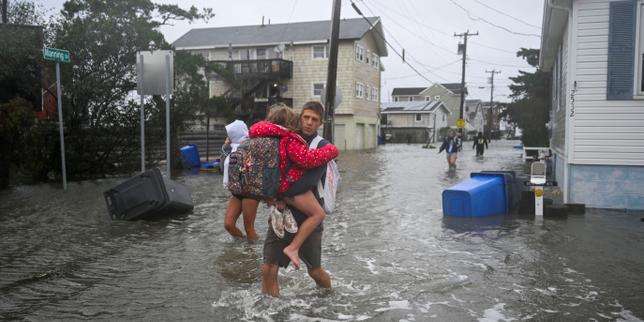
Every time a Nor'easter stacks water against the Atlantic seaboard, the media machine spins up its favorite disaster porn. Headlines scream about major coastal inundations, emergency declarations fly, and municipal leaders scramble to sandbag waterfront parking lots like they are holding back the Mongol hordes. Millions of dollars get burned on reactionary theater while the actual structural vulnerability of the eastern seaboard goes completely ignored.
The lazy consensus says we are victims of an angry ocean. The reality is far more embarrassing. We are victims of bad zoning, stubborn municipal inertia, and a century-long addiction to building million-dollar properties on shifting sandbars.
The Real Estate Shell Game Along the Coastline
I have watched developers scream for federal disaster relief while pocketing profits from properties that should have been turned into salt marshes thirty years ago. Every major storm in the Northeast brings out the same chorus of shock. Meteorologists point to atmospheric pressure drops and lunar cycles as if these are unprecedented anomalies rather than textbook oceanography.
Let us be entirely clear about what is actually happening when a storm surge hits Boston, New York, or the Jersey Shore. The ocean is not invading; it is simply reclaiming what we foolishly paved over.
Insurance markets know this truth, which is why private carriers are quietly fleeing coastal portfolios while federally backed flood insurance continues to subsidize high-risk shoreline living. We have engineered a moral hazard on an industrial scale. When public taxpayers bail out recurring waterfront damage, we incentivize bad behavior. Why elevate a structure or retreat from a barrier island when FEMA will write a check to rebuild the exact same drywall on the exact same flood-prone slab after the next nor'easter?
Dismantling the Sea Wall Fetish
Municipal planners love concrete. Hand them a coastal erosion report and their immediate instinct is to build a bigger sea wall, drop riprap boulders, or pump millions of cubic yards of dredged sand onto eroding beaches.
It fails every single time.
Rigid coastal defense structures interrupt natural sediment transport. They starve down-drift beaches, accelerate erosion at adjacent properties, and create a false sense of security that encourages even denser development right behind the barrier. When a storm finally overpowers the concrete—and physics dictates that it eventually will—the catastrophic failure makes a standard tidal flood look like a puddle.
Imagine a scenario where every coastal municipality stopped treating storms as black-swan events and started treating them as predictable seasonal resets. Instead of spending capital on bulkheads that rust and crack, cities would institute aggressive managed retreat programs. We need to buy out vulnerable properties, tear down obsolete infrastructure, and let the wetlands do what nature designed them to do: absorb wave energy before it reaches human settlements.
The Bureaucratic Paralysis of Emergency Management
Emergency management agencies thrive on spectacle. A dramatic rescue video of a front-end loader splashing through a flooded intersection in Rhode Island justifies budgets and validates executive press conferences. Meanwhile, the unsexy work of updating drainage codes, fixing subterranean infrastructure, and restricting high-density permits in low-lying flood zones gets bogged down in local zoning board politics.
We treat coastal flooding as a weather problem when it is fundamentally a governance failure. The standard warning cycle goes like this: watch the radar, hype the wind speeds, urge residents to move their cars to higher ground, and wait for the water to recede so everyone can pretend the threat has passed.
This loop ignores the chronic, insidious creep of rising baseline sea levels and sinking coastal landmasses. A high-tide sunny-day flood in Charleston or Miami often causes more cumulative economic damage than a dramatic nor'easter, yet it never makes the national evening news because there is no wind-swept reporter standing in hip-waders to narrate it.
Stop Resisting the Coastline
If you own property on a dynamic coastline, your biggest enemy is not the storm. Your enemy is your own refusal to accept ecological reality.
We cannot engineer our way out of geography. Pumping sand onto a barrier island every four years is the corporate equivalent of robbing Peter to pay Paul while the interest rate compounds daily. The only long-term strategy that survives basic economic and physical scrutiny is adaptation through strategic abandonment.
Stop funding the rebuild of homes that have flooded three times in a decade. Stop approving high-rise foundations on reclaimed marshland. Redirect every dollar currently spent on reactionary disaster response into relocation funds and ecological restoration.
The ocean always wins the long game. The only question left is how many billions of public dollars we want to burn before we finally admit it.