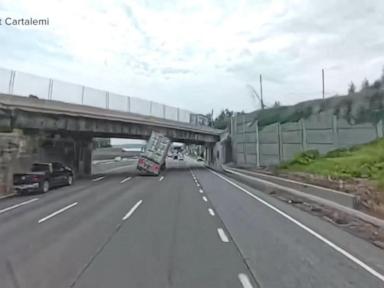
A loud crash echoed down the New York State Thruway as a 2020 Mack tractor-trailer slammed violently into the South Broadway bridge. Dashcam footage from a trailing vehicle captured the chaotic sequence. Shards of metal and fiberglass erupted into the air before the massive semi-truck tipped completely onto its side, sliding across the pavement and crushing a parked Toyota sedan on the shoulder.
It is a miracle nobody died. The driver of the sedan went to the hospital with non-life-threatening injuries, while the truck driver walked away physically unhurt. State troopers later ticketed the driver for operating an over-height vehicle.
The Anatomy of a Bridge Strike
Commercial truck drivers operate under strict clearance rules. Standard legal heights across most US states max out at 13 feet, 6 inches. When a vehicle exceeds that limit, disaster waits at every low bridge.
Why do these crashes keep happening?
GPS routing errors play a massive role. Standard consumer navigation apps often route commercial vehicles onto parkways or secondary roads with low-clearance stone arches. Truckers must use specialized GPS systems configured for commercial vehicle dimensions, weight ratings, and bridge heights. Relying on a phone map meant for a sedan is a recipe for disaster.
Fatigue also kills focus. Driving an 18-wheeler for eleven hours straight blunts situational awareness. Missing a warning sign or failing to double-check a low-clearance clearance bar takes only a fraction of a second.
Infrastructure Strain and Aging Bridges
Old infrastructure makes the problem worse. The South Broadway overpass in South Nyack where this latest wreck occurred has a history of strikes. Local residents expressed shock that it happened there again.
Transportation authorities face an uphill battle. Thousands of highway bridges built decades ago feature clearances well below modern preference standards. Rebuilding every single overpass to accommodate taller loads costs billions of dollars and causes massive traffic gridlock.
Preventing Future Crashes
Carriers and drivers share the burden of prevention. Fleets are starting to adopt advanced telematics and real-time height-monitoring tools. Drivers must perform pre-trip inspections that verify exact load dimensions. Guessing your height never works out.
If you drive a commercial rig, map your route twice. If you drive a standard car, give high-profile trucks plenty of room on the highway.
Drive defensively and stay alert.


