Mount Everest is choked with people. In May 2021, an astonishing 274 climbers stood on the summit in a single 24-hour window. Think about that for a second. More than two hundred and seventy people pushed through the death zone, jammed clip-to-clip on a fixed safety line, all aiming for the exact same patch of snow. It shattered previous records. It also highlighted a systemic crisis that Nepal refuses to fix.
If you think mountaineering is still about solitary adventurers testing their grit against the elements, you are living in the past. It is an industry now. A highly commercialized, crowded, and increasingly dangerous assembly line. The historic day in 2021 proved that the mountain cannot handle this volume safely. You might also find this similar coverage insightful: The Brutal Truth About Private Island Conservation On Bird Island.
When hundreds of people try to summit Mount Everest simultaneously, bottlenecks form at critical bottlenecks like the Hillary Step and the bottleneck below the South Summit. Climbers wait for hours. They freeze. Their supplemental oxygen runs out. We need to look at why this keeps happening and what needs to change before the world's highest peak becomes an outright graveyard.
The mechanics of a 274 climber traffic jam
High-altitude mountaineering depends entirely on weather windows. In May, the jet stream shifts away from the Himalayas, offering a few brief days of calm weather. As highlighted in detailed articles by Lonely Planet, the results are notable.
In 2021, that window was incredibly tight. Cyclones in the Bay of Bengal disrupted the early season, compressing the climbing days. When expedition leaders saw a clear forecast for May 23, everyone moved at once.
Imagine standing at 8,800 meters. The temperature is minus thirty. You are breathing through a plastic mask. Your toes are numb. Now imagine waiting in a line of 50 people just to move ten feet. That is what happened. Expedition teams reported massive delays on both the Nepali and Tibetan sides, though the vast majority of climbers pushed up from the south route in Nepal.
This is not just annoying. It is lethal. The human body cannot survive long at that altitude. Every minute spent standing still increases the risk of frostbite, exhaustion, and high-altitude pulmonary edema.
The commercial shift that created the crowds
The record-breaking crowd did not happen by accident. It is the result of a massive shift in how Himalayan expeditions operate.
For decades, Western guiding companies dominated the mountain. They charged premium prices and limited team sizes. Over the last decade, homegrown Nepali operators took over the market. They cut costs significantly, making Everest accessible to a completely new demographic of climbers.
- Cheaper permits and packages: Traditional expeditions cost upwards of $75,000. Some local budget agencies now offer climbs for $35,000.
- Minimal screening: If you can pay the $11,000 permit fee to the Nepal government, you get on the mountain. There is no strict requirement proving you have climbed other 8,000-meter peaks.
- The luxury illusion: Premium operators now provide heated tents, espresso machines, and unlimited oxygen at Base Camp. This convinces wealthy amateurs that the climb is safer and easier than it actually is.
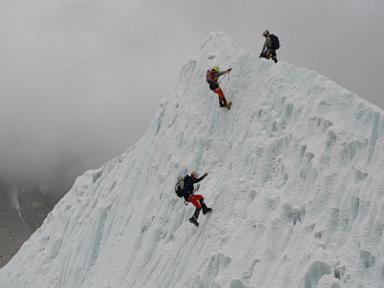
Experienced guides will tell you that many clients today do not even know how to put on their own crampons. They rely entirely on Sherpas to clip them into the lines and pull them up the mountain. When something goes wrong in a crowd of 274 people, these inexperienced climbers panic. They cannot rescue themselves, and they put their guides in impossible situations.
The trash and environmental toll nobody wants to manage
More people means more waste. It is that simple.
Everest has a poop problem. Human waste at Camp 2 and Camp 3 does not decompose quickly because of the extreme cold. It freezes into the ice. During the spring thaw, it washes down into the glaciers, contaminating the water supply for villages down valley like Namche Bazaar.
Then there is the gear. Abandoned tents, shredded nylon, empty oxygen canisters, and old ropes litter the high camps. While the Nepal Ministry of Culture, Tourism, and Civil Aviation requires climbers to bring back their gear or lose a deposit, enforcement is notoriously lax. Officials are rarely stationed at the high camps to verify who left what.
The government collects millions in permit fees every year. Very little of that money goes back into environmental cleanup or mountain management.
What needs to happen to fix Mount Everest
The solution is not complicated, but it requires political will. Nepal relies heavily on tourism revenue, making officials hesitant to restrict access. If we want to prevent disasters, several changes must happen immediately.
First, the government must institute a strict cap on the number of permits issued per season. Splitting the crowds across broader timeframes or limiting total seasonal permits to 300 would instantly alleviate the dangerous bottlenecks.
Second, mandatory climbing prerequisites must be enforced. You should not be allowed to attempt Everest unless you have successfully summited at least one other 7,000-meter or 8,000-meter peak in Nepal, such as Manaslu or Cho Oyu. This ensures everyone on the fixed ropes possesses basic survival skills.
If you are planning to climb an 8,000-meter peak, do your homework. Avoid high-volume budget agencies that cut corners on safety equipment and oxygen supplies. Ask hard questions about client-to-guide ratios. Choose operators that actively pay their staff ethical wages and participate in waste removal initiatives. The future of the mountain depends on climbers demanding better standards instead of just chasing a record.