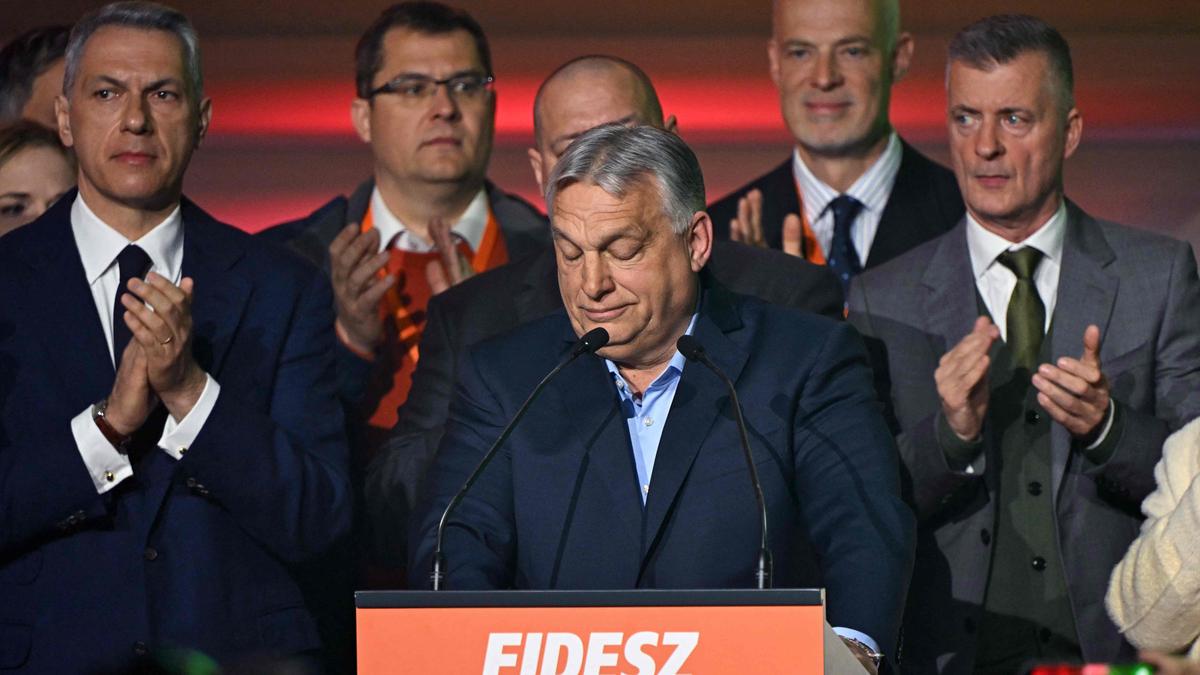
Viktor Orbán didn't just lose an election on April 12, 2026. He watched a political fortress he spent sixteen years building crumble in a single night. For over a decade, the narrative from Budapest was that Orbán was invincible, his "illiberal democracy" a blueprint for the global far-right. Then came Péter Magyar and the Tisza party. The landslide wasn't a fluke. It was a 70% parliamentary majority that effectively ended an era.
If you're looking for the reason why the most entrenched populist in Europe fell, don't look at "Brussels interference" or "foreign meddling." Look at the grocery bills in Budapest and the crumbling hospitals in the countryside. Orbán’s defeat proves that even the most sophisticated media machine can't spin its way out of a tanking economy forever. People got tired of hearing about "civilizational wars" when they couldn't afford butter.
The Insider Who Broke the Machine
Péter Magyar wasn't some activist from the fringes. He was the ultimate Fidesz insider, married to a former justice minister and embedded in the very elite he eventually took down. This is the first big lesson: it takes a defector to kill a king. Magyar knew exactly how the machine worked because he helped grease the wheels. When he broke ranks in 2024, he didn't use the standard liberal talking points that Fidesz had spent years mocking.
He used their own language. He spoke about national pride, conservative values, and family—but he tied them to honesty rather than corruption. By the time the 2026 election rolled around, the Tisza party had turned the river it was named after into a literal flood. Magyar spent two years on the road, hitting tiny villages where no opposition leader had dared to set foot in a decade. He met people where they were. He didn't lecture them from a stage in Budapest; he talked to them in town squares.
Economics Trumped the Culture War
For years, Orbán stayed in power by picking fights. If it wasn't George Soros, it was the EU. If it wasn't the EU, it was "gender ideology." In 2026, those ghosts stopped scaring people. Hungary’s inflation had been among the worst in the EU for years. While the Fidesz elite were buying up villas and yachting in the Mediterranean, the average Hungarian saw their purchasing power evaporate.
Magyar’s campaign was laser-focused on the stuff that actually matters on a Tuesday morning:
- Healthcare: The state of Hungarian hospitals had become a national joke, and not a funny one.
- Education: Teachers had been protesting for years over dismal wages and outdated curricula.
- Corruption: The blatant enrichment of Orbán’s childhood friends became impossible to ignore when the rest of the country was tightening its belt.
The "Brussels is attacking us" line failed because people realized the EU was actually the one trying to send money that Orbán’s corruption had frozen. When voters had to choose between a "sovereignty fight" and a functional school system, they chose the schools.
A Massive Blow to the Global Far-Right
This wasn't just a domestic shift. It’s a disaster for the international populist movement. Only days before the vote, US Vice President JD Vance was in Budapest, practically campaigning for Orbán. The Trump administration had held Hungary up as the gold standard for what they wanted to achieve in America.
That endorsement didn't help. If anything, it made Orbán look like a puppet of foreign interests—the very thing he always accused his opponents of being. For the EU, the 2026 results are a massive relief. Hungary had been the "veto king," blocking everything from Ukraine aid to rule-of-law reforms. With Magyar at the helm, that roadblock is gone. He’s already pledged to lift the veto on the €90 billion loan to Ukraine and repair ties with the European People's Party (EPP).
Why Orbánism Might Still Linger
Don't think Orbán is just going to disappear into the sunset. He’s moving to the opposition, and he’s taking a massive network of loyalists with him. Over sixteen years, Fidesz installed "party soldiers" into every corner of the state:
- The judiciary is packed with loyalists.
- Public media is still essentially a mouthpiece for the old guard.
- Foundations controlled by Fidesz cronies own billions in state assets.
Magyar has a two-thirds majority, which gives him the legal power to rewrite the constitution and "drain the swamp." But cleaning out sixteen years of institutional rot is a messy, slow process. He has the mandate, but he’s inheriting a system designed to resist him at every turn. He’s also leading a party of political novices. Most Tisza MPs have never held office before. The "honeymoon" period will be incredibly short, and the expectations are sky-high.
What Happens Tomorrow
The first 100 days of the Magyar government will be a sprint. If you're watching from the outside, look for these three things:
- The Money: Watch how fast the €18 billion in frozen EU funds starts flowing. This is the literal lifeblood Magyar needs to fix the economy.
- The Purge: Keep an eye on the Ministry of Foreign Affairs. Magyar has promised to root out Russian influence, which has run deep in Budapest for years.
- The Media: Changing the leadership at the state broadcaster will be the first real test of how aggressive the new government is willing to be.
If you’re a political strategist or just someone worried about the state of democracy, the lesson here is simple: No leader is permanent if they stop delivering for the people. You can control the TV, the courts, and the borders, but you can't control a voter who can't afford to feed their kids.
Hungarians didn't just vote for a new guy. They voted for a return to reality. Now the hard work begins.