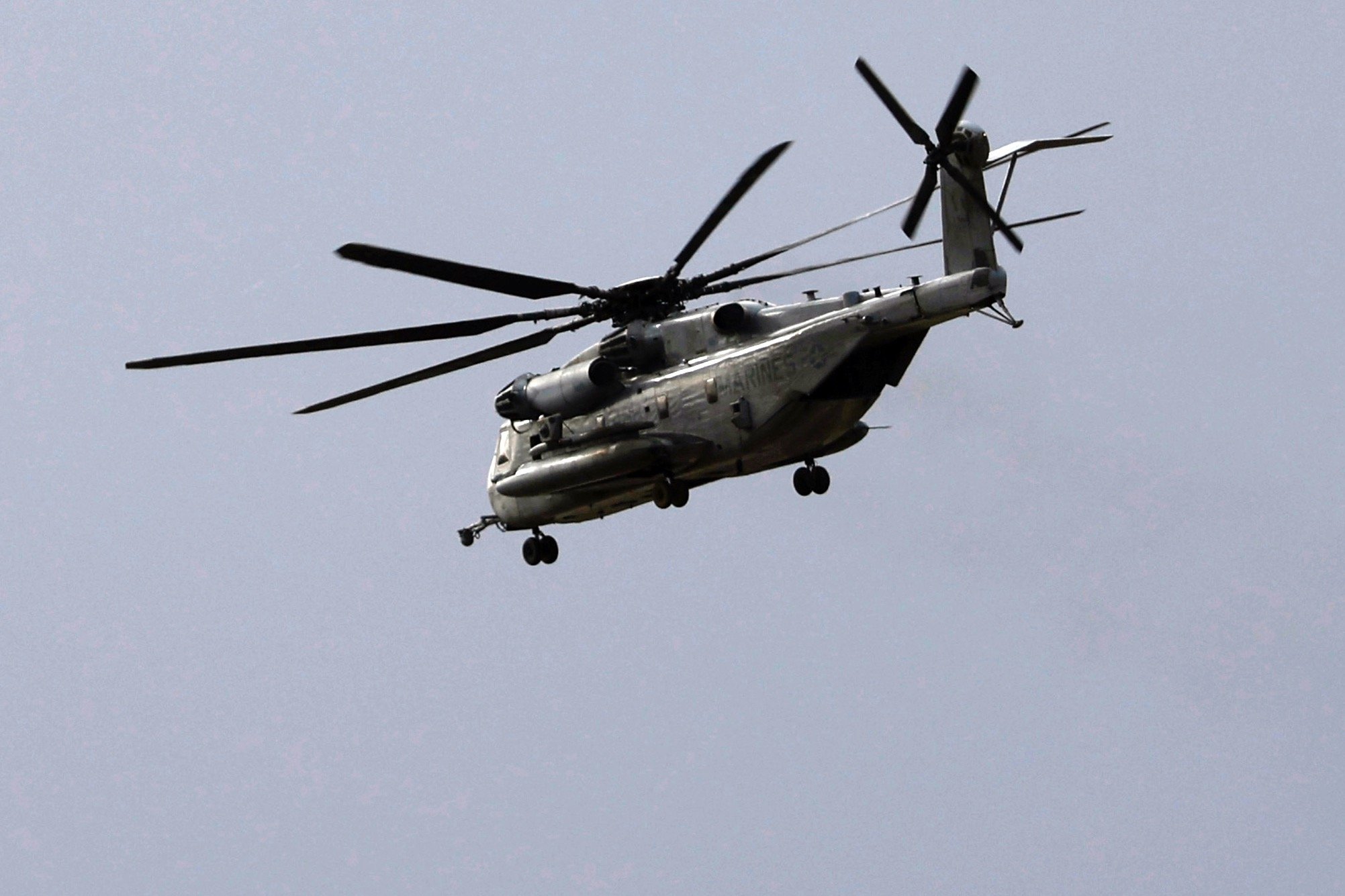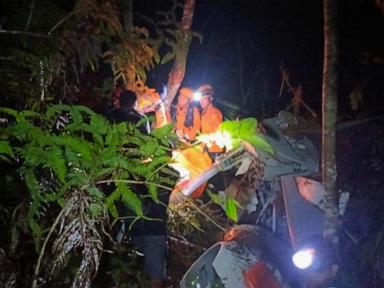
The fatal crash of a helicopter on Borneo island, resulting in eight fatalities, highlights a recurring failure in the intersection of high-altitude logistics, tropical meteorology, and aging airframe maintenance. In the remote Kalimantan provinces, aviation is not a luxury but a critical supply chain component for mining, logging, and governmental infrastructure. When these systems fail, the cause is rarely a single mechanical glitch; it is a cascading breakdown of operational safety margins within a high-stakes environment.
The Triad of Indonesian Aviation Risk
Analyzing this event requires a structural understanding of the three primary variables that dictate flight safety in the Indonesian archipelago. Aviation safety is a function of $S = f(M, P, E)$, where $S$ is safety, $M$ is maintenance integrity, $P$ is pilot proficiency under stress, and $E$ is environmental volatility.
1. Orographic Turbulence and Micro-Climates
Borneo’s topography creates specialized aerodynamic hazards. The island's dense rainforest and mountainous spine generate intense heat rising from the canopy, which meets cooler air at higher altitudes. This creates "micro-cells" of extreme turbulence.
- Density Altitude Complications: High humidity combined with tropical heat reduces air density. This forces engines to work harder to produce the same amount of lift. If an airframe is near its maximum takeoff weight (MTOW), the margin for error during sudden downdrafts vanishes.
- Rapid Ceiling Closure: Visibility in Borneo can shift from Visual Flight Rules (VFR) to Instrument Meteorological Conditions (IMC) in minutes. Pilots operating without advanced terrain-awareness systems (TAWS) are susceptible to Controlled Flight Into Terrain (CFIT), the leading cause of rotorcraft fatalities in Southeast Asia.
2. Maintenance Cycles in Corrosive Environments
The salt-heavy, humid air of Indonesia acts as a constant corrosive agent on turbine components and rotor blade leading edges. Maintenance in these regions often struggles with "Supply Chain Lag."
The downtime required for a deep-level inspection (D-Check) is frequently compressed due to the high demand for air assets in remote mining operations. This creates a "Reliability Gap" where the actual mechanical state of the aircraft diverges from its logged maintenance status. In a helicopter, where the failure of a single "Jesus nut" or a tail rotor drive shaft is catastrophic, this gap is unacceptable.
3. Crew Resource Management (CRM) Under Economic Pressure
There is an inherent conflict between the pilot’s duty to safety and the commercial pressure to complete a mission. In remote Borneo, "No-Go" decisions carry heavy logistical costs. If a pilot aborts a flight due to weather, it might stall a multi-million dollar extraction project. This creates an environment where pilots may "scud run"—flying low to stay beneath cloud cover—thereby increasing the risk of striking trees or terrain.
The Mechanics of a Total Airframe Loss
When a helicopter loses power or control in a dense jungle environment, the outcome is determined by the kinetic energy at the moment of impact. Unlike fixed-wing aircraft, which can glide to some extent, a helicopter depends on autorotation.
The Physics of Autorotation Failure
Autorotation is the process where the upward flow of air through the rotor system turns the blades, allowing for a controlled descent after engine failure. However, for autorotation to be successful, the pilot needs:
- Altitude: To trade potential energy for rotor RPM.
- Airspeed: To maintain control during the flare.
- Landing Zone: A clear area to settle the aircraft.
In the Borneo canopy, the third requirement is almost never met. A helicopter descending into 150-foot trees will experience "Dynamic Rollover" or "Main Rotor Strike" long before reaching the ground. The trees shred the airframe, often rupturing fuel cells and leading to post-impact fires, which account for a high percentage of fatalities in otherwise survivable impacts.
Structural Bottlenecks in Search and Rescue (SAR)
The death toll of eight indicates a high-occupancy flight, likely a transport mission for personnel or a heavy-lift utility operation. In these scenarios, the "Survival Window" is extremely narrow.
The density of the Kalimantan jungle creates a "Canopy Masking" effect. An aircraft can be completely invisible to aerial search teams even if they are flying directly over the crash site. Furthermore, the lack of ground infrastructure means that even if a distress signal is received, the "Golden Hour" for medical intervention is routinely missed. Ground teams must often trek through swamp and dense brush for days to reach a site that is only a few miles from a base.
Limitations of ELT Technology
Emergency Locator Transmitters (ELTs) are designed to trigger on impact. However, in Indonesian crashes, ELTs frequently fail for two reasons:
- Antenna Shear: The antenna is often ripped off during the descent through the canopy.
- Signal Obstruction: The dense vegetation and moisture-heavy air attenuate the 406 MHz signal, preventing satellite acquisition.
Data-Driven Mitigation Strategies
To prevent the recurrence of these eight-fatality events, the Indonesian aviation sector must move beyond reactive mourning and toward proactive systemic hardening.
Implementation of Flight Data Monitoring (FDM)
Small-to-mid-sized operators often bypass FDM systems due to cost. However, FDM allows for the "Invisible Incident" to be caught—instances where a pilot exceeded a bank angle or an engine temperature limit but didn't report it. Analyzing this data allows for the identification of dangerous patterns before they result in a hull loss.
Synthetic Training for Mountainous VFR
Simulation training must be modernized to specifically mimic the "White-Out" or "Green-Out" conditions prevalent in Borneo. Pilots need high-fidelity training in transitioning from VFR to IMC. If a pilot cannot fly by instruments with 100% proficiency, they have no business operating in the interior of Kalimantan.
Logistics Redundancy
Mining and infrastructure companies must build "Safety Buffers" into their schedules. If a project's success depends on a helicopter flying in marginal weather, the project's logistics are fundamentally flawed. Shifting the burden of "Mission Success" away from the pilot and onto the logistical planner reduces the psychological pressure to fly in unsafe conditions.
The loss of eight lives in Borneo is a signal of a system operating at its absolute limit. The intersection of hostile terrain, unforgiving weather, and the relentless pace of resource extraction creates a high-entropy environment. Survival in this sector requires a shift from "Compliance-Based Safety" (doing the bare minimum the law requires) to "Resilience-Based Safety" (building systems that can absorb a failure without resulting in a total loss of life).
Operators must prioritize the immediate installation of upgraded TAWS and the mandate of dual-pilot operations for all high-occupancy transport missions in Kalimantan. Reducing the "Single Point of Failure"—whether that is a lone pilot or a single engine—is the only viable path to stabilizing the fatality rate in Indonesian rotorcraft aviation.