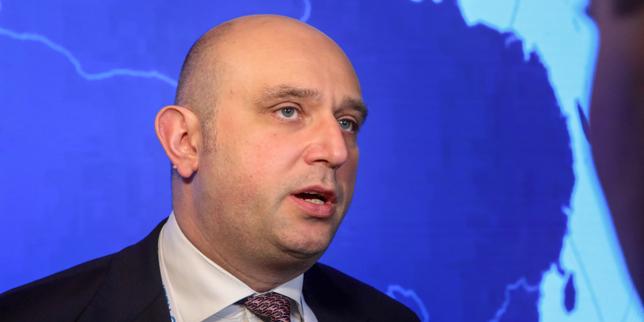
Jay Puri is the structural architect behind Nvidia’s global revenue engine, serving as Executive Vice President of Worldwide Field Operations since 2005 and translating semiconductor engineering into multi-billion-dollar enterprise adoption. While sensationalist media coverage reduces his public profile to a viral 2026 courtroom anecdote involving former Sun Microsystems CEO Scott McNealy’s outburst during a competitive talent dispute, the operational reality is far more consequential. Puri represents the rare intersection of technical fluency and global sales execution that allows a hardware-software platform company to capture monopoly-grade market share without collapsing under its own supply chain complexity.
The Structural Role of Worldwide Field Operations at Nvidia
To understand why an executive like Jay Puri becomes a flashpoint in high-stakes technology talent wars, one must first dissect the mechanics of Worldwide Field Operations (WFO) at a fabless semiconductor and AI infrastructure giant. Unlike traditional enterprise software sales, where a salesperson sells licenses to a Chief Information Officer, Nvidia’s field operations function as a technical systems-integration bridge. Don't forget to check out our previous article on this related article.
Puri’s organization manages three distinct operational layers simultaneously:
- Demand Aggregation and Allocation: In an environment where advanced packaging capacity at foundries like TSMC (specifically CoWoS—Chip-on-Wafer-on-Substrate) constrains total supply, WFO does not merely take orders. It rations compute capacity across hyperscalers, sovereign AI initiatives, and enterprise customers based on strategic lock-in and multi-year architectural commitments.
- Ecosystem Co-Engineering: Nvidia does not sell isolated silicon; it sells full-stack data center architectures encompassing GPUs, NVLink interconnects, InfiniBand networking, and CUDA software libraries. Field operations teams embed solutions architects directly inside customer engineering departments to optimize workloads before hardware is even deployed.
- Channel and OEM Orchestration: Beyond direct hyperscaler relationships with Microsoft, Meta, Google, and Amazon, Puri oversees the global network of original equipment manufacturers (Dell, HPE, Lenovo, Supermicro) and regional distribution partners that standardize Nvidia reference designs into turnkey enterprise servers.
This three-tiered structure explains why Puri’s tenure—spanning over two decades at Nvidia—is an anomaly in Silicon Valley. Enterprise sales leadership typically experiences high turnover every 36 to 48 months as product cycles shift. Puri’s longevity stems from his ability to evolve Nvidia’s go-to-market motion across four distinct technological eras: PC discrete graphics, mobile processors (Tegra), high-performance computing (HPC), and generative AI infrastructure. To read more about the context here, Business Insider provides an informative breakdown.
Deconstructing the Sun Microsystems Talent Dispute and Executive Friction
Media narratives surrounding the phrase "wish you die" stem from historical litigation and testimony detailing the brutal competitive dynamics of mid-2000s enterprise hardware. Before joining Nvidia in 2005, Jay Puri spent over twenty years at Sun Microsystems, rising to Senior Vice President of Worldwide Sales and Marketing. At Sun, Puri was a primary executor of the company’s workstation and server dominance during the dot-com expansion.
When Sun’s proprietary SPARC/Solaris architecture began losing ground to commoditized x86 servers running Linux, internal pressure mounted across Sun’s executive suite. Departures of senior operational leaders to rising semiconductor and systems competitors triggered intense hostility from Sun’s co-founder and then-CEO, Scott McNealy. In high-stress executive environments characterized by existential market share loss, leadership rhetoric frequently crosses from competitive urgency into personal animus.
Analyzing this friction through organizational economics reveals two underlying mechanisms rather than a mere personality clash:
- Asymmetric Institutional Knowledge Transfer: A senior sales executive leaving a legacy hardware vendor carries an exact map of enterprise procurement cycles, CIO decision-making hierarchies, and pricing elasticity. When Puri transitioned to Nvidia, he did not bring proprietary Sun hardware blueprints; he brought an operational playbook for selling complex compute infrastructure to Fortune 500 buyers—a capability Nvidia entirely lacked in 2005 when it was still viewed primarily as a consumer gaming graphics vendor.
- The Incumbent’s Innovator’s Dilemma: Sun Microsystems struggled to cannibalize its high-margin proprietary UNIX server business to compete in lower-margin volume compute. Nvidia, operating from a clean architectural slate with programmable GPUs, represented an emerging threat to traditional CPU-centric compute budgets. Executive anger at departing talent is frequently a lagging indicator of strategic vulnerability at the incumbent firm.
Quantitative Career Trajectory and Educational Foundation
Puri’s operational style is rooted in formal engineering and quantitative business training rather than traditional relationship-only sales management. His background establishes a clear blueprint for technical executive leadership:
- Undergraduate Engineering: Bachelor of Science in Electrical Engineering from the University of Minnesota. This provides foundational literacy in circuit design, signal processing, and hardware constraints.
- Graduate Engineering: Master of Science in Electrical Engineering from the California Institute of Technology (Caltech), reinforcing deep theoretical competence in physics and semiconductor fundamentals.
- Business Administration: Master of Business Administration from Harvard Business School, equipping him with capital allocation, organizational design, and global market strategy frameworks.
- Pre-Sun Operational Experience: Early career roles at Hewlett-Packard and Booz Allen Hamilton, combining hardware manufacturing discipline with management consulting methodology.
This specific credential stack—EE from Minnesota and Caltech paired with an HBS MBA—creates a distinct operational advantage in semiconductor sales. When Puri negotiates with a hyperscaler’s Vice President of Infrastructure, he can evaluate thermal design power (TDP), memory bandwidth bottlenecks, and cluster interconnect topologies without relying solely on a subordinate engineer to translate. That technical credibility compresses enterprise sales cycles and eliminates the friction that typically occurs when non-technical sales executives overpromise hardware capabilities to engineering-driven buyers.
The Architecture of Nvidia’s Go-to-Market Moat
Critics and surface-level commentators often attribute Nvidia’s market capitalization surge exclusively to Jensen Huang’s vision and the CUDA software moat. That analysis misses the third leg of the stool: field execution. A superior chip with superior software still fails if the global distribution, developer relations, and enterprise support apparatus cannot scale globally without channel conflict.
Under Puri’s direction, Nvidia’s field operations implemented three structural mechanisms that competitors like AMD and Intel have struggled to replicate:
1. Verticalized Industry Engineering Teams
Rather than organizing sales purely by geography, Nvidia built verticalized field teams dedicated to automotive, healthcare, financial services, telecommunications, and manufacturing. Each vertical team includes domain-specific software engineers who build reference applications (such as Nvidia Clara for medical imaging or Nvidia Drive for autonomous vehicles). By demonstrating working AI models on Nvidia hardware before asking for a purchase order, WFO shifts the customer conversation from hardware component pricing to time-to-market acceleration.
2. Sovereign AI Go-to-Market Execution
As national governments recognized compute capacity as critical infrastructure equivalent to power grids and telecommunications networks, Nvidia faced a complex geopolitical sales environment. Puri’s organization adapted by creating a specialized sovereign AI sales motion—working directly with national ministries, state-backed telecom operators, and local cloud providers in Europe, the Middle East, and Asia to deploy domestic AI factories. This diversified Nvidia’s revenue base away from over-reliance on four US cloud service providers.
3. Regulatory and Export Control Navigation
Operating a global semiconductor field organization requires continuous compliance with shifting US Department of Commerce export controls, particularly regarding high-performance compute shipments to restricted jurisdictions. Field operations must dynamically reconfigure product roadmaps—such as deploying compliant variants like the H20 alongside flagship architectures—while maintaining customer trust and supply chain predictability across international borders.
Strategic Limitations and Vulnerability Vectors
No operational model is immune to structural fatigue or market shifts. Evaluating Jay Puri’s field operations architecture requires identifying where the model faces diminishing returns and execution risk:
- Customer Concentration and Custom Silicon: Nvidia’s largest customers—Google (TPUs), Amazon (Trainium/Inferentia), Microsoft (Maia), and Meta (MTIA)—are actively designing custom Application-Specific Integrated Circuits (ASICs) to reduce their dependency on Nvidia’s gross margins. While Puri’s field teams maintain deep relationships with these buyers, no amount of sales execution can prevent hyperscalers from diversifying their internal inference workloads onto proprietary silicon to lower total cost of ownership (TCO).
- Supply Allocation Friction: Acting as the gatekeeper for scarce GPU supply creates long-term relationship strain. Enterprise buyers and smaller cloud providers who face delayed shipments during allocation bottlenecks harbor resentment, creating openings for alternative hardware vendors to secure design wins simply by offering immediate availability.
- Succession and Institutional Knowledge Concentration: Having led Worldwide Field Operations since 2005, Puri represents a massive concentration of institutional knowledge and personal executive relationships. Transitioning leadership of a $100B+ annual run-rate sales organization without disrupting hyperscaler alignment or OEM channel incentives poses a severe organizational continuity challenge.
The Strategic Play for Enterprise Technology Leaders
Organizations attempting to replicate Nvidia’s commercial dominance or compete against Jay Puri’s field apparatus must abandon traditional enterprise software sales playbooks. Hiring charismatic enterprise sales executives from SaaS backgrounds to sell AI infrastructure fails because hardware-software co-design requires engineering-led commercial leadership.
Competitors and enterprise infrastructure vendors must execute three immediate structural adjustments:
- Mandate Technical Credentials in Field Leadership: Restrict senior commercial leadership hires to operators holding undergraduate or graduate engineering degrees who can audit architectural trade-offs in real time during customer negotiations.
- Invert the Sales-to-Solutions-Architect Ratio: Shift field headcount away from account executives toward forward-deployed solutions engineers who build proof-of-concept workloads inside customer environments prior to commercial contracting.
- Institutionalize Supply-Chain-Integrated Sales Forecasting: Eliminate the wall between sales forecasting and foundry capacity planning so field teams commit only to delivery schedules backed by verified advanced packaging allocations.