.png?format=1500w)
The room where history happens is rarely as loud as the movies suggest. It is usually quiet, smelling of floor wax and stale coffee, filled with the soft rustle of briefing papers and the low hum of an air conditioner. When a State Department spokesperson stands behind a podium to address the situation in Iran, they aren’t just reading words. They are performing a delicate piece of theater where every pause is a canyon and every adjective is a tripwire.
Diplomacy is often described as an open door. It sounds inviting, almost neighborly. But for those watching from the streets of Tehran or the halls of Washington, that door feels less like an entrance and more like a heavy, ancient gate. It swings on rusted hinges, and right now, the American hand is holding the handle while the other hand rests firmly on a deadbolt.
The message is a paradox. We are willing to talk, but we are prepared to act. It is the geopolitical equivalent of a velvet glove stretched thin over a knuckle duster.
To understand why this matters, you have to look past the podium and into the lives of people like "Amir," a hypothetical but representative shopkeeper in a bustling Iranian bazaar. Amir doesn't read the State Department transcripts. He feels them. He feels them in the fluctuating price of saffron and the way his customers hesitate before spending their rials. To Amir, American "objectives" aren't abstract policy goals. They are the invisible walls that determine whether he can fix his roof this winter or whether his son can afford the textbooks needed for university.
The disconnect between the high-level rhetoric and the ground-level reality is where the tragedy of modern statecraft lives. When a spokesperson says the U.S. will "ensure objectives are fulfilled," they are talking about regional stability, nuclear non-proliferation, and the curbing of proxy influence. These are massive, tectonic forces. But for the human beings caught in the middle, these objectives are experienced as a series of pressures—economic, social, and psychological—that never seem to let up.
History is a stubborn teacher. We have been here before, standing at this exact threshold, wondering if the words spoken in a press briefing will lead to a handshake or a heartbreak.
Consider the mechanics of the "open door." In the world of international relations, an open door is only useful if someone is willing to walk through it. But walking through that door requires a level of trust that has been eroded by decades of broken promises and shifting administrations. The U.S. maintains that its objectives are non-negotiable. Iran maintains that its sovereignty is absolute. They are two trains sharing the same track, and diplomacy is the only signalman left to prevent the collision.
The spokesperson’s tone is intentionally flat. This is by design. If they sound too eager, they appear weak; if they sound too aggressive, they appear reckless. So they settle for a sterile, calculated "readiness." They tell the world that the path to a solution remains available, but only if the other side meets a set of criteria that the other side finds insulting. It is a stalemate disguised as an invitation.
But what happens when the invitation is never accepted?
The stakes are not just found in the enrichment levels of uranium or the range of a ballistic missile. They are found in the eyes of a mother in Shiraz who wonders if a renewed cycle of sanctions will mean her daughter’s asthma medication becomes a luxury she can no longer find. They are found in the weary sighs of diplomats who have spent twenty years trying to solve the same puzzle, only to find that the pieces have been swapped out overnight.
We often treat these news cycles like a game of chess. We analyze the moves, the gambits, and the sacrifices. We forget that the board is made of glass and the pieces are made of people.
The U.S. government is operating on a philosophy of "pressure and path." The pressure is the lever, and the path is the door. The logic is that if you apply enough pressure, the target will eventually be forced to take the path. It sounds rational on paper. It looks clean in a PowerPoint presentation. Yet, humans are not rational actors when they feel backed into a corner. Pride is a powerful chemical. It can make a person—or a nation—choose a harder path simply because it was the only one that didn't feel like a surrender.
The "objectives" mentioned at the podium are the iron key. They are the things that must be secured for the U.S. to feel safe in its global position. These include preventing a nuclear-armed Iran and ensuring that the flow of oil through the Strait of Hormuz isn't strangled by regional conflict. These are legitimate concerns. They are grounded in the harsh reality of global security. But the pursuit of these objectives often creates a friction that burns the very people diplomacy is supposed to protect.
Think about the sheer weight of a word like "fulfilled." It implies an ending. A completion. In the context of the Middle East, there are no endings. There are only chapters. To fulfill an objective today is often to plant the seed for a grievance tomorrow.
The tragedy of the current standoff is that both sides are speaking different languages while using the same dictionary. When the U.S. says "diplomacy," it means a negotiation toward a specific, Western-aligned stability. When Iran hears "diplomacy," it often hears "intervention." The gap between those definitions is where the danger resides.
We are living in an era where the "human element" is often discarded in favor of "strategic interests." We talk about percentages and red lines. We don't talk about the anxiety of a generation of young Iranians who are connected to the world through the internet but disconnected from its economy by a wall of legislation. We don't talk about the American families who watch the news with a sinking feeling, wondering if their sons and daughters will once again be sent to a desert they can't find on a map to settle a dispute that started before they were born.
The door is open. The spokesperson said so.
But an open door in a house on fire is not an invitation; it is an escape route. And right now, the smoke is getting thick. The U.S. insists that it is not the one holding the match, while Iran points to the sparks flying from the sanctions. In the middle of this burning house are eighty million people who just want to breathe.
There is a specific kind of exhaustion that comes from watching this cycle repeat. It is the exhaustion of the observer who knows how the play ends but has to sit through the first act again and again. The names of the spokespeople change. The titles of the articles are updated. The core conflict, however, remains as static and cold as a stone monument.
True diplomacy isn't just about being "open" to talk. It is about the radical, uncomfortable act of listening to things you don't want to hear. It is about acknowledging that the "objectives" of one side might be the existential threats of the other. Until that happens, the podium will remain a place of theater rather than a place of progress.
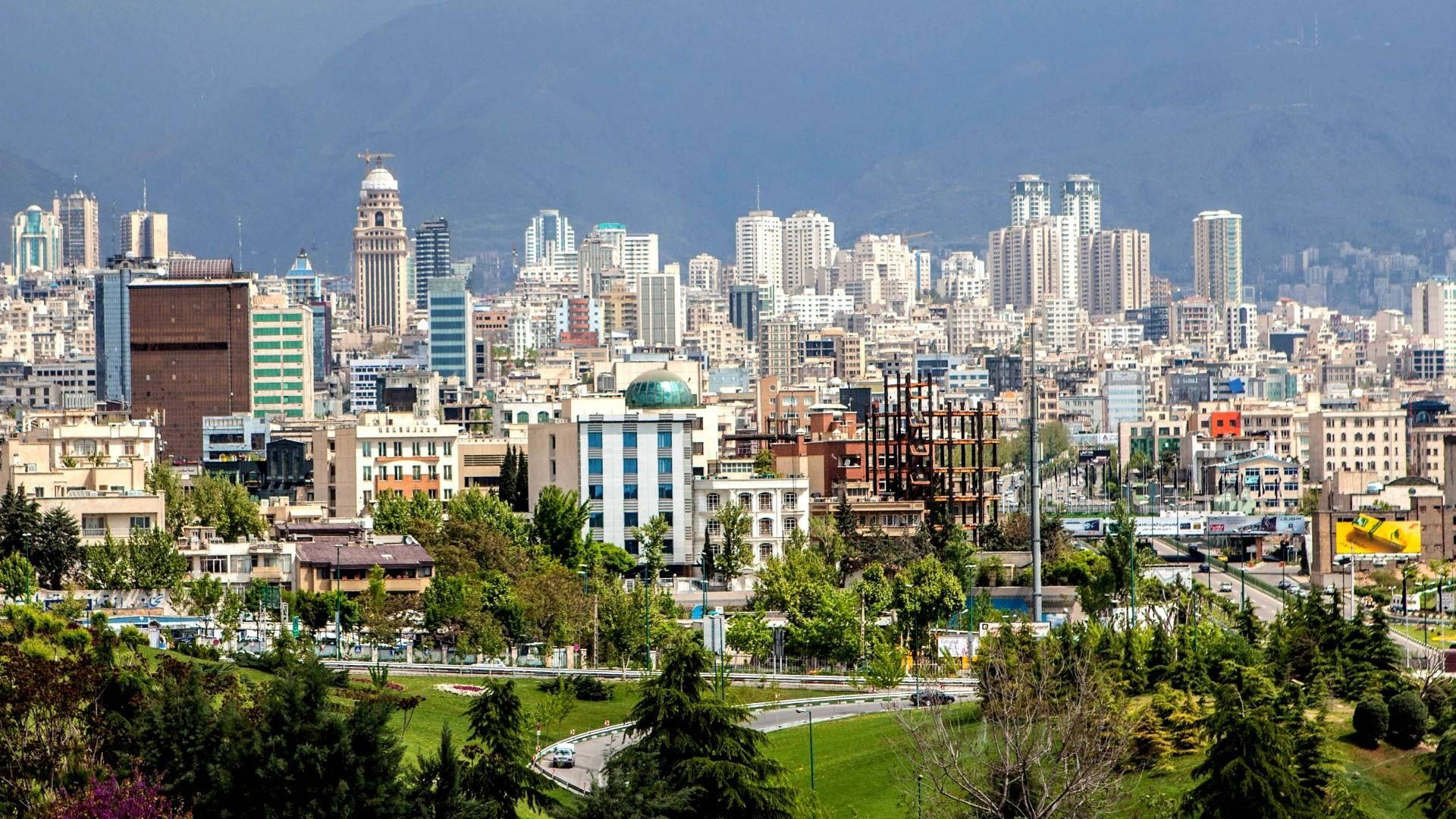
The shopkeeper in the bazaar, Amir, closes his shutters as the sun sets over Tehran. He doesn't know what was said in Washington today. He doesn't need to. He can feel the temperature of the world shifting without a thermometer. He knows that as long as the door is used as a shield rather than a bridge, his roof will stay leaky and his son's books will remain unbought.
The American spokesperson steps down. The cameras click off. The transcript is uploaded to a server where it will be parsed by analysts and translated by intelligence agencies. It is a document of intent, a declaration of a stance that has become a permanent feature of the political landscape.
Outside the briefing room, the world continues to spin, indifferent to the carefully chosen words of the powerful. The door stays open, the key stays turned, and the people in the hallway continue to wait for a sound that never comes—the sound of the bolt finally sliding back.
Silence is the only thing currently being fulfilled.