Every single election cycle, politicians and pundits pitch a collective fit over the price of regular unleaded gasoline, treating a fifty-cent spike at the pump as a sign of imminent societal collapse. The consensus narrative is simple, lazy, and comforting to voters: high gas prices mean bad government, and cheap fuel is the baseline metric of a healthy nation. This populist theater treats citizens like petulant children who cannot bear a minor economic friction without demanding an immediate scapegoat.
The reality is far more uncomfortable. The obsessive demand for artificially suppressed energy prices is precisely what finances the very geopolitical nightmares we claim to abhor. When leaders treat oil like a cheap consumer staple rather than a strategic lever of national security, they invite the exact conflicts they later pretend to lament.
The Addiction to Cheap Energy
Look at how energy markets actually function. For decades, global consumers enjoyed a steady supply of crude oil lubricated by a complex web of international trade, lax enforcement of sanctions, and a dangerous reliance on unstable production nodes. When oil flows cheaply and abundantly, rogue actors find themselves swimming in petrodollars. Iran did not build its extensive network of regional proxies—from the Houthis in Yemen to Hezbollah in Lebanon—on goodwill and bake sales. They funded terrorism through oil sales that were tolerated, ignored, or clumsily sanctioned by Western administrations terrified of angering voters at the local station.
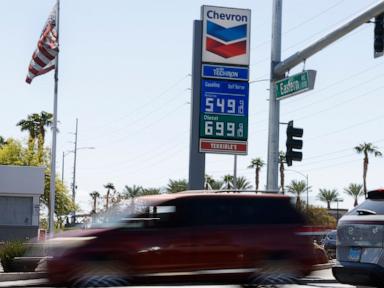
When a conflict breaks out, such as the current confrontation with Iran, the market experiences an immediate spasm. Risk premiums shoot up. Shipping lanes through critical chokepoints face disruption. Speculators and traders react to the sudden threat of supply destruction. The immediate symptom is a painful jump at the fuel pump.
The mainstream media seizes on this moment with predictable outrage. They frame the price increase as an unmitigated disaster, holding up distressed drivers as proof of policy failure. What they refuse to tell you is that cheap oil is a narcotic. It masks the true cost of global stability. When you demand cheap gasoline at all costs, you are implicitly subsidizing the security vacuum that allows hostile regimes to arm themselves to the teeth.
Dismantling the Presidential Illusion
A common misconception is that the person sitting in the Oval Office possesses a giant dial labeled gas prices that they simply refuse to turn out of sheer malice or incompetence. Voters ask why the administration does not just force prices down. This question reveals a fundamental misunderstanding of global commodities.
No American president controls the Brent or West Texas Intermediate crude benchmarks. These prices are set by global supply and demand, geopolitical risk, and refining capacity. Pushing for short-term price suppression via emergency reserve releases or political pressure is a temporary sugar rush that distorts market signals. It discourages domestic capital expenditure, starves innovation in alternative infrastructure, and ultimately leaves the economy more vulnerable to the next major shock.
When leaders state that a temporary surge in fuel costs is a necessary price to pay for confronting a hostile power like Iran, they are speaking a brutal, unvarnished truth that modern politics hates to hear. You cannot simultaneously desire the neutralization of a rogue nuclear state and expect your weekend road trip to remain entirely insulated from the friction of war. Strategic deterrence has an invoice. If you refuse to pay it at the pump through higher operational costs, you pay for it later with massive military interventions, prolonged instability, and catastrophic loss of life.
The Economics of Structural Shock
Let us look at what happens when nations try to bypass this reality. For years, Western powers engaged in economic half-measures against Tehran, trying to squeeze their oil exports while simultaneously begging international producers to pump more crude to keep pump prices low ahead of domestic elections. This contradictory policy achieved the worst of both worlds: it gave Iran enough fiscal breathing room to maintain its proxy apparatus while keeping global energy markets artificially fragile.
Real security requires breaking the cycle. A confrontation that disrupts oil flows forces a permanent recalibration of supply chains. It compels industrial economies to accelerate diversification, harden domestic infrastructure, and stop feeding the coffers of adversarial regimes. High prices act as a natural rationing mechanism and an urgent market signal. They force capital away from obsolete, high-risk supply lines and toward domestic production, efficiency, and alternative energy vectors.
If you want stable, low-cost energy over the next twenty years, you cannot achieve it by coddling hostile petro-states today. You achieve it by neutralizing threats, dismantling state-sponsored terror networks, and accepting the short-term financial volatility required to clean up a broken system.
The Cost of Cowardice
Politicians who pander to gas-price anxiety are selling a dangerous delusion. They want you to believe you can have maximum geopolitical security with zero domestic inconvenience. That is a fantasy. Every time a voter screams about five-dollar gas while ignoring the billions of dollars flowing into the hands of religious zealots and expansionist dictators, they are demonstrating a profound economic illiteracy.
The public needs to stop viewing the price at the pump as a moral grade on the sitting administration. It is a volatile, secondary indicator of global risk. When that risk materializes in the form of military action against a primary sponsor of regional chaos, higher fuel costs are not a policy mistake. They are the visible, unavoidable cost of cleaning up a geopolitical mess that decades of cheap-oil appeasement allowed to fester.
Stop voting for leaders who treat energy policy like a coupon-clipping exercise. Stop pretending that national security is free. The bill always comes due. You can pay it in higher fuel prices while systemic threats are confronted, or you can pay it later when the bill comes back with interest, written in blood.