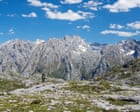
The limestone towers of northern Spain look deceptively inviting under a clear autumn sky. Rugged ridges jaggedly slice the horizon, drawing hundreds of experienced mountaineers every season. But the Picos de Europa do not forgive minor mistakes. A tragic accident near the summit of Torrecerredo—where a 28-year-old British climber lost his life following a 60-metre fall—underscores the unforgiving reality of Spain’s most dramatic vertical terrain.
When you stand at the edge of the Cantabrian Mountains, the sheer scale of the landscape humbles even seasoned veterans. Understanding what makes these climbs so treacherous requires looking past postcard aesthetics and examining the raw mechanics of high-altitude limestone navigation.
The Anatomy of Torrecerredo and the Picos de Europa
Rising to an elevation of 2,649 metres, Torrecerredo stands as the undisputed monarch of the Picos de Europa range. Located in the central massif of the national park, the peak commands respect through its technical demands rather than sheer Himalayan altitude.
Limestone is notoriously fickle. Unlike granite, which offers predictable friction and solid anchor points, weathered limestone features loose scree, hidden fissures, and slick, polished rock faces exposed to constant weathering. The mountain demands absolute physical focus. A single misstep on the steep vertical gullies near the summit ridge can turn a routine alpine ascent into an irreversible crisis.
Local emergency services, specifically the specialized Guardia Civil mountain rescue units known as GREIM, train year-round for precisely these scenarios. Yet, even with rapid helicopter deployments and elite tactical medics, the geography of the central massif makes immediate intervention extraordinarily difficult. Weather windows shift instantly. Low cloud cover or sudden high-altitude winds routinely ground aircraft, leaving climbers isolated in hostile terrain.
The Hidden Dangers Every Mountaineer Underestimates
Alpine accidents rarely stem from a single catastrophic failure. They accumulate through a chain of small, overlooked variables.
Fatigue and the Descent Trap
Most structural accidents happen on the way down, not the way up. After hours of grinding physical exertion pushing toward a summit, cognitive focus degrades. Your legs shake. Concentration slips. On a mountain like Torrecerredo, where the final push involves exposed scrambling and narrow ridges, exhaustion directly impairs balance and spatial awareness.
Over-Reliance on Favorable Weather
Northern Spain experiences sharp microclimates. Coastal moisture from the nearby Bay of Biscay collides with high mountain air, generating sudden fog banks, damp rock surfaces, and rapid temperature drops. A route that felt secure at 9:00 AM can transform into a slick, hazardous gauntlet by noon.
Solitary Climbing vs. Team Dynamics
While solo mountaineering offers profound solitude and uninterrupted personal challenge, it removes your safety net. When something goes wrong—whether a sprained ankle, a sudden rockfall, or a misjudged foothold—having a partner to manage communications, administer first aid, or anchor a rope is the difference between survival and tragedy. Authorities frequently note that solo ascents in rugged Spanish ranges drastically narrow the margin for error.
Navigating Spain’s Rugged Ranges Safely
If you plan to tackle peaks in the Picos de Europa or the wider Cantabrian and Pyrenean chains, preparation goes far beyond packing a waterproof jacket.
- Study the specific route profile: Never rely on general trail maps. Understand the exact technical grading, exposure levels, and descent bottlenecks of your chosen path.
- Monitor local forecasts obsessively: Consult mountain-specific meteorological portals rather than regional lowland weather reports.
- Carry communication devices with international GPS tracking: Mobile coverage is notoriously patchy or entirely non-existent in deep limestone ravines. Satellite messengers save lives.
- Turn around when conditions demand it: Ego is the most dangerous piece of equipment you can carry. If visibility drops or rock surfaces ice over, abandoning the summit is a successful decision, not a failure.
The mountains will still be there tomorrow. Your safety is non-negotiable. Plan meticulously, respect the terrain, and never treat an alpine route as an easy hike.


