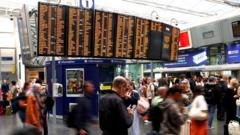
The coffee was still hot when the lights flickered.
It was a small thing. A micro-drop of voltage, barely long enough to reset a microwave clock. In a high-rise apartment three miles from the terminal, Maya barely looked up from her laptop. But ninety seconds down in the transit arteries, beneath the damp concrete of the central hub, that microscopic hiccup was an absolute earthquake.
Trains do not stop because you tell them to. They stop because physics allows it, or because friction forces it. When the power blips, the safety interlocks engage. Signals drop from green to hostile red. Computers stutter, dump their working memory, and demand a manual reboot.
And just like that, seventy thousand people found themselves frozen in time.
The Anatomy of a Standstill
We talk about mass transit as if it were a machine of steel and lightning, sleek and autonomous. We imagine grease-slicked pistons and synchronized schedules running with the cold precision of a Swiss watch. But anyone who has ever stood pressed shoulder-to-shoulder in a suffocating car with the AC dead knows the ugly truth.
It is held together by human nerves.
Consider what happens in the first thirty seconds of an unplanned blackout underground. The hum of the ventilation fans dies. The fluorescent strips overhead buzz, then plunge into an amber twilight powered by emergency batteries. Silence follows, heavy and dense, broken only by the collective exhale of hundreds of lungs.
Then comes the heat.
Within ninety seconds, a crowded commuter car transforms into a greenhouse. The air conditioning compressors hiss to a halt. Oxygen levels begin their slow, invisible descent. For most people, it is an annoyance. They check their phones, realize with a sinking feeling that there is no signal fifty feet below the street, and sigh. They calculate lost minutes. They worry about the morning meeting, the daycare pickup, the boss whose patience wears as thin as cheap paper.
For others, the math is entirely different.
Marcus, a veteran conductor with twenty-two years on the line, gripped the master controller in his dark cab. His radio crackled with static—dispatch trying to reach thirty different trains at once, their voices tight with rising panic. He couldn't move. He couldn't open the doors because the train sat halfway across a junction, locked out by safety protocols designed to prevent a catastrophic collision.
"Stay calm, folks," he spoke into the public address system, his voice a low rumble seasoned by countless similar mornings. "We are waiting on a system reset. Hang tight."
He knew they wouldn't. You cannot ask a thousand people trapped in a steel tube without air to simply hang tight.
The Ripple Effect Above
Above ground, the city didn't stop. It shattered.
When the commuter rail lines choke, the shockwave bleeds instantly into the asphalt. Buses swell beyond capacity, swallowing desperate crowds whole until passengers press their faces against the glass like cargo. Ride-share apps spike with surge pricing, turning a basic commute into a luxury expense for those living paycheck to paycheck. Traffic lights along the parallel corridors malfunction or fall out of sync with the sudden deluge of foot and vehicular traffic, creating a gridlock so absolute that even bicycles struggle to weave through.
This is the hidden cost of our interconnected infrastructure. We build systems that span hundreds of miles and move millions of souls, yet their structural integrity depends entirely on components that can be crippled by a localized transformer fault or a blown circuit breaker.
It is fragile. We pretend it is robust because it works ninety-nine percent of the time. But trust is a delicate thing. It takes years to build a commuter's faith in public transit, and exactly ninety seconds to shatter it.
By the time the power grid stabilized and the central computers finished their agonizing boot sequence, the morning rush hour had transformed into a mythological disaster. Trains crawled at walking speed through the tunnels, conductors manually overriding safety checks with authorization codes, creeping forward foot by agonizing foot to ensure the tracks ahead were clear of stranded passengers who had taken matters into their own hands.
The Long Walk Back
Down in the tunnel between stations two and three, Marcus finally received the green light to open the doors.
There was no platform there. Just a narrow concrete maintenance walkway running parallel to the tracks, dripping with moisture and smelling of ozone and old iron. One by one, passengers stepped out of the air-conditioned tomb into the damp subterranean dark, guided only by the bobbing flashlight beams of railway workers.
Maya was among them. Her coffee was long gone, her heels sinking slightly into the grit of the walkway as she joined the slow, single-file procession toward the nearest emergency exit. Around her, people were silent. No one complained anymore. The anger had burned itself out, replaced by a shared, grim determination just to reach the open air.
When she finally pushed through the heavy street-level doors and blinked against the harsh midday sun, the city looked different. The traffic was still snarled. The pedestrians were still rushing. The sky was the exact same shade of indifferent blue.
But she knew what lay beneath the pavement. We all do. A vast, intricate labyrinth of glass, copper, and iron, holding up the weight of our daily lives, waiting for the next quiet second to test how much we can endure.