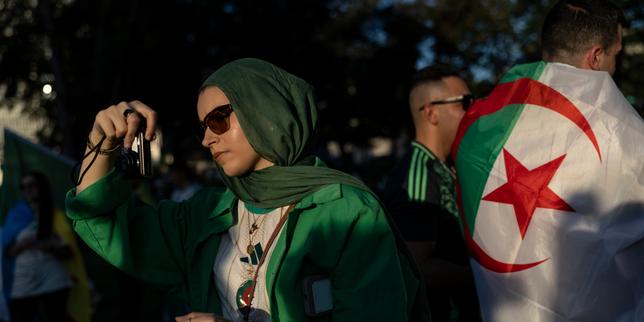
The neon sign above the diner in Atlanta flickered, casting a pale buzz over a counter that usually saw nothing but truck drivers and graveyard-shift nurses at 3:00 AM. Tonight was different. Tonight, the stools were occupied by three men wrapped in Algerian flags, their voices a rapid-fire torrent of French and Arabic, gesturing wildly over plates of half-eaten hash browns. Behind the bar, a bemused cook who had spent forty years flipping burgers in Georgia watched them, entirely out of his depth. He did not speak their language. He did not understand why they were crying over a disallowed goal on a muted television screen. But when one of the men slammed his fist on the counter in shared agony with a replay, the cook poured them fresh coffee on the house.
Something massive had arrived on American soil, and it did not look like the sports the country had spent a century building. Building on this theme, you can find more in: The Thomas Partey Visa Denial Shows Why Sports Diplomacy is Officially Dead.
For decades, the United States treated the FIFA World Cup like an exotic festival happening safely on the other side of an ocean. It was a triennial curiosity, a headline in the back pages of the sports section, a brief intrusion of global fanaticism that faded the moment the trophy was lifted in Rome, Paris, or Rio. America had its own cathedrals—the gridiron, the diamond, the hardwood. It felt insulated. Invincible.
Then, the world arrived at the gates. Analysts at ESPN have provided expertise on this situation.
The Great Migration of Hope
To understand the sheer scale of the shift, look away from the multi-billion-dollar stadiums for a moment. Look instead at the arrivals terminal at JFK International Airport.
Consider a hypothetical traveler named Mateo. He saved for six years, working double shifts at a logistics firm in Buenos Aires, just to buy a single group-stage ticket and a couch-surfing spot in Queens. When Mateo stepped off the plane, he carried a single suitcase and a replica jersey that had been washed so many times the sponsor's logo was peeling away. He represents one of millions. The data tells us that World Cup tournaments draw over three million in-person spectators, with a massive percentage crossing international borders. They are not traditional tourists. They do not come for the museums or the Broadway shows. They come to witness a collective destiny.
The sheer logistics of this human influx are staggering. Host cities across the United States found themselves transforming overnight into microscopic representations of the globe. Subways became rolling carnivals of song. Quiet suburban parks were suddenly claimed by impromptu matches played with rolled-up jackets for goalposts.
This is not a mere sporting event. It is a peaceful invasion.
The skepticism from traditional American sports media was predictable. For years, the narrative was fixed: Americans won't watch a game that can end in a zero-zero tie. They said the field was too crowded, the culture too entrenched. What the pundits missed was the demographic tide rising beneath their feet. The United States had changed. It had become younger, more diverse, and deeply connected to the global grid.
When the fans arrived, they did not find an alien landscape. They found an audience that was already waiting for them.
The Economics of Obsession
Behind the emotion lies a cold, hard ledger. When millions of people descend upon a nation with the sole purpose of celebrating, the financial ripples turn into tidal waves.
Hotels in cities like Dallas, Kansas City, and Miami booked out months in advance, driving room rates to unprecedented heights. Local bodegas found themselves clearing out entire inventories of specific regional beers and snacks to satisfy expatriate communities waking up at dawn to watch matches played in distant time zones.
- Ticket Demand: Match tickets commanded premiums on secondary markets that rivaled the Super Bowl, proving that the hunger was not limited to visiting foreigners.
- Public Transit Strain: Infrastructure systems designed for standard commuter traffic had to adapt to thousands of fans moving in unison, chanting in rhythms that shook the concrete platforms.
- Hospitality Boom: Restaurants and bars reported record-shattering weekday revenues, blurring the line between the weekend rush and the Tuesday morning lull.
But focusing strictly on the revenue figures misses the point entirely. The true economic story is one of human friction. It is the story of a rideshare driver from Somalia finding common ground with a passenger from Croatia as they navigate the gridlock outside a stadium in New Jersey. They argue about midfield tactics through a rearview mirror. For twenty minutes, the meter is running, but the conversation is priceless.
The Friction of Two Worlds
It would be naive to pretend this convergence is entirely without friction. The American sports experience is highly curated. It is a world of tailored stadium seats, predictable commercial breaks, structured tailgates, and polite applause. It is an entertainment product designed for consumption.
The global football culture is something else entirely. It is raw. It is tribal. It is a secular religion where the liturgy is written in real-time by thirty thousand throats singing in perfect unison.
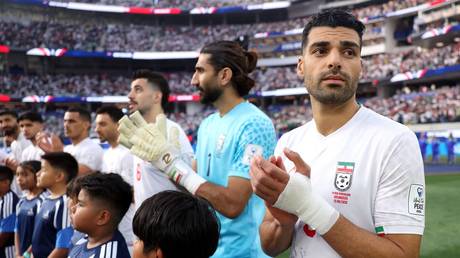
When these two philosophies collided in the summer heat, the sparks were palpable. Security guards trained for NFL games stood bewildered as South American supporters unleashed torrents of confetti and lit smuggled smoke bombs that stained the afternoon sky blue and white. City councils grumbled about noise ordinances as European fan marches took over major thoroughfares, shutting down traffic with a wall of sound.
Yet, as the days bled into weeks, the grumbling stopped. The city took on the rhythm of the tournament.
We saw it in the bars of Chicago, where office workers in crisp suits found themselves swallowed by a sea of green jerseys worn by Mexican supporters. At first, the locals watched from the periphery, tentative, holding their domestic beers like shields. But enthusiasm is a highly contagious pathogen. By the second half, the suits were gone, sleeves were rolled up, and the entire room was jumping as one entity.
The barrier had broken. The American insulation was gone.
The Vocabulary of the Unconverted
There is a specific vulnerability in admitting you do not understand something that the rest of the planet holds sacred. For a long time, the average American sports fan felt this acute discomfort whenever soccer was mentioned. The terminology felt pretentious. Why call the field a "pitch"? Why is the uniform a "kit"? Why does the clock count up instead of down?
The World Cup strips away that semantic pretense. It forces a realization that the rules do not matter as much as the stakes.
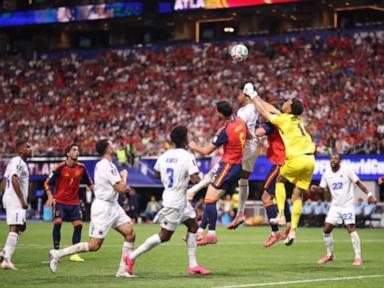
You do not need to understand the intricacies of the offside rule to recognize the look of absolute devastation on a goalkeeper’s face when a shot slips through his fingers in the eighty-ninth minute. You do not need a degree in tactical analysis to feel the kinetic energy of a stadium when a winger cuts inside and unleashes a strike that finds the top corner of the net.
The language of the World Cup is not spoken; it is felt in the gut.
Consider the transformation of a city like Seattle. Known for its tech hubs and rainy stoicism, the city became a cauldron of noise. The local stadium, built for American football, was repurposed for the global game. The artificial turf was ripped out and replaced with natural grass, a literal grounding of the venue to meet international standards. That physical transformation mirrored the psychological shift of the people within it. They were no longer just observers of a global phenomenon. They were the hosts. The responsibility weighed heavily, and they rose to meet it.
The Undeniable Truth of the Morning After
As the tournament progressed toward its inevitable crescendo, the initial shock gave way to a strange, lingering normalcy. The sight of people wearing different national colors on the morning commute became ordinary. The sound of foreign commentators echoing from car radios stopped turning heads.
The United States had spent a century building a sports culture that was distinct, isolated, and self-sufficient. It crowned its domestic champions as "world champions" without a hint of irony.
But the fever that swept through the country during those weeks destroyed that isolation forever. It proved that the world could fit inside America, and more importantly, that America could find its own voice in that global chorus.
Long after the final whistle blew, after the flags were packed away into suitcases and the fans boarded their flights back to Buenos Aires, Algiers, and Tokyo, the ghost of the tournament remained. It stayed in the new youth fields constructed in inner-city neighborhoods. It stayed in the permanent soccer pubs that sprouted in cities that used to only care about baseball.
The cook in the Atlanta diner still doesn't speak French. But he keeps the television tuned to the soccer channels now, even on the quiet nights, just in case the world decides to walk through his door again.