The ink on a treaty doesn’t just bind governments. It holds back ghosts.
In May 2018, a single stroke of a pen in Washington dismantled a machinery of peace that took years to build. When the United States walked away from the Joint Comprehensive Plan of Action (JCPOA)—commonly known as the Iran nuclear deal—the announcement was framed in the capital as a triumph of strength. But across the globe, in rooms filled with monitors tracking the invisible decay of radioactive isotopes, the reaction was a sudden, freezing silence.
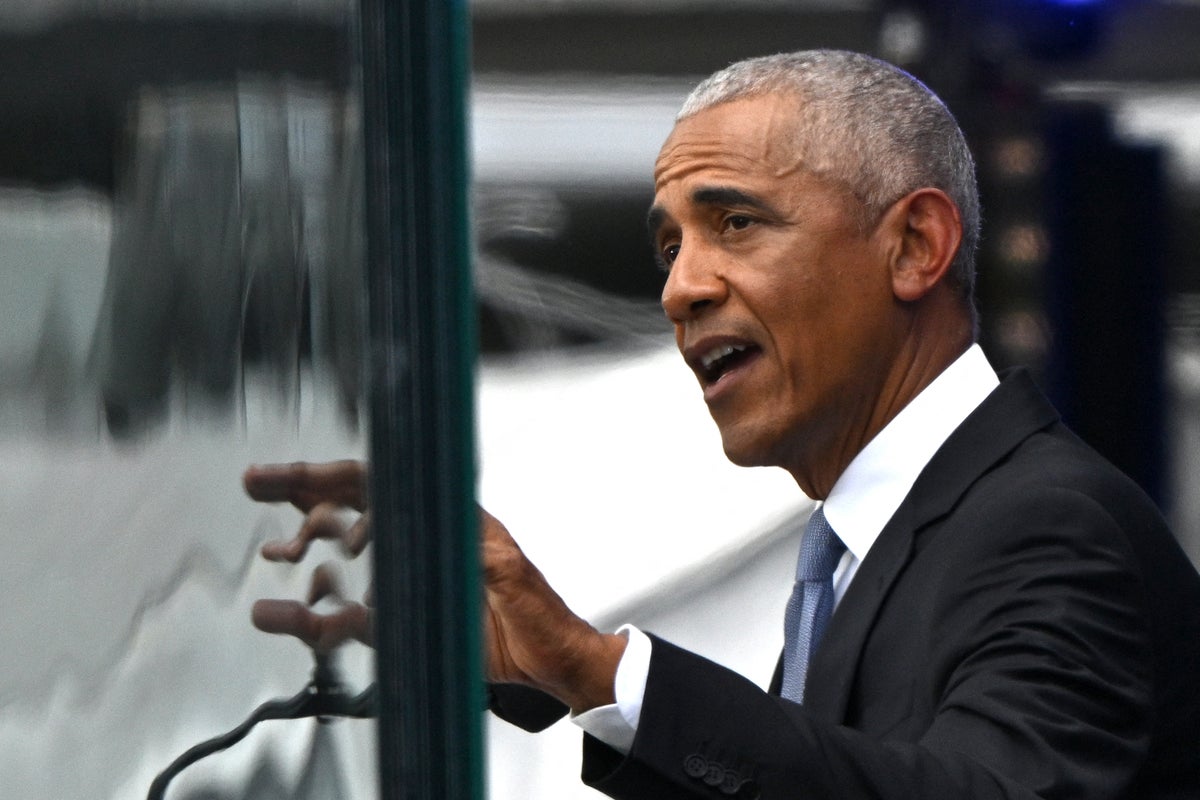
Barack Obama knew that silence. He had spent years of his presidency negotiating the architecture to prevent it. When the exit was finalized, the former president broke his traditional post-term silence with a warning that felt less like a political critique and more like a weather forecast before a category-five hurricane. He warned that walking away would leave America in a far worse, far more dangerous position than before.
He was right. To understand why, you have to look past the podiums and into the quiet concrete bunkers where the real stakes hide.
The Invisible Tripwire
Imagine a sprawling, multi-story warehouse packed with highly sensitive, volatile machinery. For years, you have a security team stationed at every exit. They possess keys to every room. They install 24-hour cameras that stream live data directly to your phone. If a single gear shifts out of place, an alarm blares.
That was Iran under the JCPOA. It wasn't built on trust. It was built on a radical, unprecedented level of access given to the International Atomic Energy Agency (IAEA). Inspectors lived in the country. They sealed containers of nuclear material with tamper-proof tech. They tracked the supply chain from the uranium mines in the earth all the way to the centrifuges spinning at supersonic speeds.
Then, the security guards were ordered to pack up their bags and leave.
When the US pulled out of the agreement and reimposed sweeping economic sanctions, it relied on a theory: "maximum pressure." The idea was that economic pain would force Iran back to the negotiating table to sign a stricter deal.
But geopolitical strategy is not a game of chess where your opponent waits patiently for your next turn. It is a live-fire exercise. Instead of folding, Iran did exactly what the architects of the original deal feared. They restarted the centrifuges. They locked the doors to the inspectors.
They turned off the cameras.
The Acceleration of Time
In the world of nuclear non-proliferation, there is a metric that keeps bureaucrats awake at night: breakout time. This is the amount of time it would take a country to produce enough weapons-grade highly enriched uranium for a single nuclear bomb.
Before the 2015 agreement, Iran’s breakout time was roughly two to three months. They were sitting on a massive stockpile of enriched uranium, spinning thousands of centrifuges at facilities hidden deep inside mountains.
The JCPOA systematically rolled that back. It forced Iran to ship 98 percent of its enriched uranium stockpile out of the country. It capped their enrichment levels at 3.67 percent—perfectly fine for running a civilian power plant, but useless for a warhead, which requires roughly 90 percent purity. It cut the number of active centrifuges by two-thirds.
Suddenly, that terrifying two-month window stretched out to a year or more. A year is an eternity in international politics. A year means time to talk, time to deter, time to breathe.
Now, look at where we stand in the wreckage of that decision. With the agreement shattered, Iran did not just return to its old baseline; it surged past it. They began enriching uranium to 20 percent, then to 60 percent.
Sixty percent purity is a heartbeat away from weapons-grade. It requires far less technical effort to leap from 60 percent to 90 percent than it does to go from zero to five.
The breakout time didn't just shrink back to two months. It shrank to weeks. Then to days.
The Mirage of Isolation
There is a distinct human tendency to believe that if we ignore a problem, or if we punish it severely enough from a distance, it will remain contained. We build a wall of sanctions and assume the threat is trapped behind it.
But isolation breeds strange alliances.
When the US walked away from the deal, it did not just alienate Iran; it fractured the united front of the world's major powers. The original deal was not a handshake between Washington and Tehran. It was a painstaking agreement signed by Great Britain, France, Germany, Russia, and China. It represented a rare moment where global rivals agreed on a single, vital objective: a nuclear-armed Iran was unacceptable.
By tearing up the blueprint unilaterally, the US isolated itself instead of the target. Our European allies were left scrambling, trying to patch a leaking ship with bare hands. Russia and China saw an opening.
Consider what happens next when a nation is pushed to the absolute brink of economic collapse with no diplomatic exit ramp. It looks for alternative lifelines. In the years following the collapse of the deal, we watched the geopolitical map redraw itself. Drone technology, military trade, and deep economic pacts began flowing between isolated regimes. The problem was no longer confined to a single complex in Natanz or Fordow. It bled into global conflicts, influencing battlefields thousands of miles away.
The pressure didn't break the regime's resolve. It merely broke the mechanism we had to watch them.
The Cost of the Empty Table
Trust is a resource that takes decades to mine but can be burned down in an afternoon.
When America walks away from its signature on a document, the cost isn't just measured in the immediate fallout. It is measured in every future negotiation. It is measured in the minds of leaders in North Korea, or any other volatile state, who look at the history of the JCPOA and conclude that American promises expire with the political calendar.
We are left in a landscape of radical uncertainty. Without the strict caps of the agreement, the international community is forced to rely on intelligence guesswork rather than verified data. We are guessing how many advanced centrifuges are spinning in the dark. We are guessing how close the spark is to the powder keg.
When you lose visibility, you increase the likelihood of miscalculation. A false report, a panicked reaction, a sudden military strike born out of fear rather than fact—this is how regional wars ignite.
The critics of the original deal argued it wasn't perfect. They were right. It didn't address Iran's ballistic missile program or its regional proxies. It was never meant to. It was a specific solution to a specific, existential crisis. It was a lock on the most dangerous door in the house.
To remove the lock because you don't like the color of the door is not strategy. It is recklessness.
The sirens aren't blaring yet. Instead, there is only the faint, rhythmic hum of thousands of centrifuges spinning deep beneath the Iranian desert, accelerating in the dark, entirely unchecked. We traded a flawed, working peace for an unmonitored danger, leaving the world to watch the horizon, waiting to see which promise breaks next.