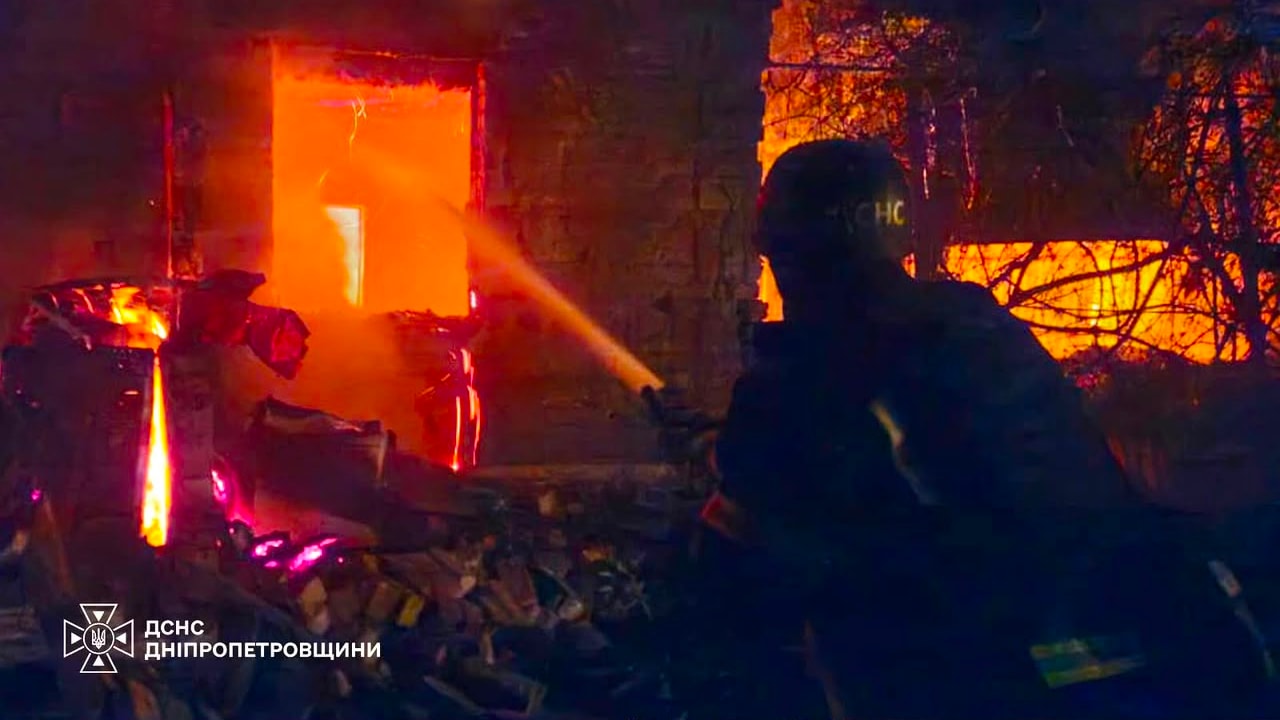
The sirens do not merely sound. They claw at the quiet hours of midnight, vibrating through concrete foundations before they ever reach human ears. In Kyiv, millions of citizens know the rhythm by heart. First comes the shrill pulse on a smartphone screen, a digital ghost warning of what is hurtling through the stratosphere. Then comes the wait.
For sixteen families, that wait ended in blinding flash and ruin. If you liked this post, you should check out: this related article.
When the barrage broke over the Ukrainian capital and its surrounding region, it was not a random scattering of ordnance. It was a meticulously orchestrated symphony of destruction, combining swarms of jet-powered drones, cruising missiles, and high-speed ballistic projectiles. While air defense teams managed to intercept roughly ninety percent of the slow-moving threats, the math of modern war is unforgiving. When a ballistic missile screams downward at supersonic speeds, ninety percent is a failing grade. All of them got through.
Consider what happens next: the roof of a nine-story residential block in the Solomianskyi district simply ceases to exist. For another angle on this development, check out the recent update from BBC News.
Smoke. Fire. Screams.
Among the wreckage, ordinary lives are instantly cleaved into a before and an after. Sixty-year-old Larysa Bondaruk clutched her cat, Chanel, shivering in the rubble after emergency crews pulled them both from the debris of a home that no longer had walls. She would later recount the sound of the roof collapsing, the sudden rush of choking dust, and the devastating realization that a neighbor's grandson was trapped beneath tons of fallen concrete. Across the city, schools, a children's medical center, and quiet neighborhoods bore the scars of a night designed to break a populace.
The official tally records sixteen dead and dozens wounded. But statistics are a sanitized shield against reality. They do not measure the terror of thirty-eight thousand people—including two thousand children—huddling in the damp concrete corridors of Kyiv subway stations, waiting for the all-clear that would not arrive until after dawn. They do not capture the helpless frustration of air force commanders watching radar screens light up with threats they lack the hardware to stop.
Here lies the invisible stake of the conflict.
Ukraine's defense relies fundamentally on a dwindling supply of U.S.-made Patriot interceptor systems. They remain the sole shield capable of catching a falling ballistic missile out of the sky. But international stockpiles are strained thin, caught between shifting global flashpoints and bureaucratic delays. Over the summer months, launchers have sat frustratingly empty, sidelined not by a lack of will on the front lines, but by a paralyzing shortage of political decisions abroad.
President Volodymyr Zelenskyy put it with stark urgency: each missing interceptor has a direct human cost. When launchers are empty, cities bleed. When allies hesitate to replenish stockpiles, the calculus of survival shifts entirely in favor of an aggressor banking on exhaustion. Moscow calculates that if it fires enough high-speed packages, the walls will eventually give way, and the international community will look away.
Yet, the city refuses to yield to despair.
Daylight on Friday brought no celebration, only a mandated silence. Mayor Vitali Klitschko declared a day of official mourning, lowering flags to half-mast across a scarred capital. Neighbors swept glass from sidewalks where children had played only hours before. Rescue workers wiped soot from their brows, cycling back into shattered buildings to search for anyone still unaccounted for.
The air raid warnings will return. The sirens will shriek again. And high above the domes and rooftops of Kyiv, the invisible race between an incoming horizon of fire and the political will to stop it continues in the dark.