The horizon did not change gradually. It did not bleed into a soft, bruised purple the way desert dawns usually do. Instead, the night split open.
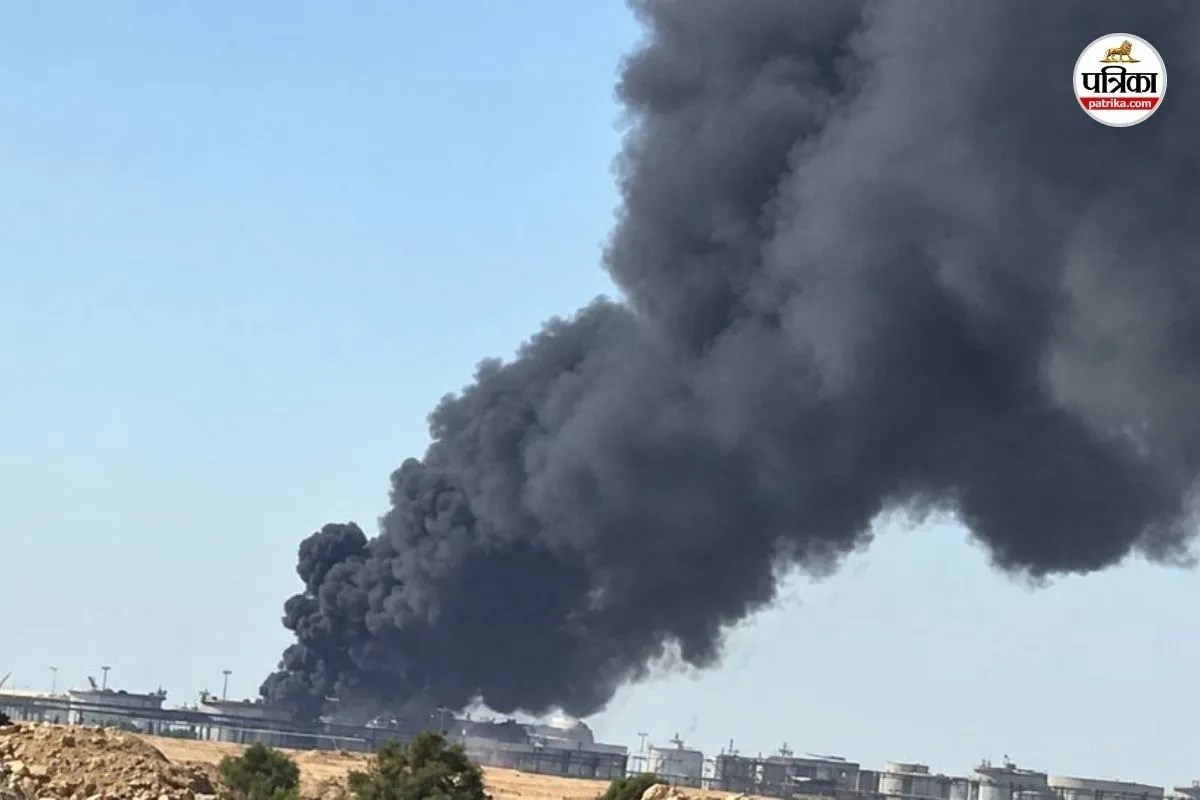
Far across the sprawling expanse of Saudi Arabia, the air suddenly tasted of sulfur and oxidized iron. To an observer standing miles away, the sky above the Abqaiq processing facility—the beating heart of global petroleum supply—did not merely catch a spark. It erupted. Ballistic missiles, cutting through the dark with the cold efficiency of guided predators, slammed into storage tanks and stabilization towers. Within seconds, pillars of orange and black smoke climbed thousands of feet into the stratosphere, blotting out the stars and casting long, flickering shadows over a sleeping world.
Let us be entirely clear about the mechanics here. This was not a localized scuffle. The Houthi movement, operating from the rugged mountains of neighboring Yemen, had reached across international borders with precision-engineered weaponry. They did not aim for an empty patch of sand. They aimed for the throat of modern civilization.
Consider what happens next in a scenario like this, which I write about not from a sterile newsroom, but with the memory of market chaos burning fresh in my mind. When a facility capable of processing millions of barrels of crude oil a day goes up in flames, the shockwave does not stop at the perimeter fence. It travels down pipelines, through shipping lanes, and straight into the pockets of everyday people who have never heard of Abqaiq.
The Silence Before the Sirens
Tariq, a hypothetical senior plant operator whose daily routine mirrors those of the men and women who keep these industrial giants alive, remembers the sound. It is a sharp, tearing whistle that defies the steady hum of turbines. Then, the ground shakes.
In industrial engineering, safety is a religion. Facilities like this are built like fortresses inside fortresses, surrounded by redundant safety valves, automated foam suppression systems, and thermal imaging cameras designed to spot a gas leak before it can form a whisper. Yet, no amount of reinforced concrete can fully domesticate the sheer kinetic violence of a ballistic missile payload.
When the first projectile hit, the automated alarms did not sound like warnings; they sounded like death rattles.
We often talk about geopolitics as if it were a game of chess played by men in tailored suits in air-conditioned rooms thousands of miles away. We look at charts. We debate supply chains. But geopolitics smells like burning hydrocarbon. It feels like the sudden, suffocating heat of a thousand-degree furnace radiating against your skin while you scramble to shut down emergency valves before the next explosion tears the control room apart.
The Houthi military spokesman later claimed responsibility, speaking of drones and missiles launched in coordinated defiance. The official statements were crisp, tactical, and devoid of human context. But the reality on the ground was raw panic, frantic emergency dispatchers coordinating across encrypted frequencies, and engineers risking their lives to isolate unruptured lines before the cascading fire could consume the entire complex.
The Invisible Stakes of a Fragile Grid
Why does a missile strike in the Eastern Province of Saudi Arabia matter to a commuter in Chicago, a baker in Berlin, or a delivery driver in New Delhi?
Because we live on an invisible web.
Energy is the silent partner in every human transaction. It powers the tractor plowing the field, the refrigerated truck carrying milk to the supermarket, and the server farm hosting the very words you are reading right now. When the Abqaiq facility—responsible for processing a massive chunk of the kingdom's daily output—stumbled, the global energy nervous system suffered a massive stroke.
Within hours of the attack, crude oil futures experienced one of the most violent spikes in modern financial history. Traders watching glowing screens in New York and London gasped as prices leaped by nearly twenty percent in a matter of minutes. It was the largest intraday percentage jump ever recorded.
Panic is a contagious disease.
Behind those financial tickers lay a sobering truth: the global economy is balanced on the edge of a razor. We assume that fuel will always flow from the pump, that power grids will always hum, and that the modern miracle of uninterrupted abundance is a permanent fixture of nature. It is not. It is a fragile, highly engineered illusion maintained by thousands of workers doing dangerous jobs in unforgiving environments.
When the missiles fell, they reminded us of our collective vulnerability. They proved that peace is not an absence of war, but a delicate architecture maintained by deterrence, diplomacy, and sheer luck.
The Aftermath in the Embers
The fires at Abqaiq were eventually brought under control. Firefighters, battling shifting winds and intense radiant heat, worked in brutal conditions to starve the flames of oxygen and fuel. Engineers rerouted pipelines with astonishing speed, patching together makeshift solutions to prove to the markets that the kingdom could still deliver.
Prices drifted back down as supplies were temporarily restored from emergency reserves. Life resumed its normal cadence. The news cycle marched on to the next crisis, the next election, the next scandal.
Yet, out in the vast, indifferent desert, the scars remain.
The control rooms are quieter now, haunted by the ghost of a whistle that preceded the dawn. Operators check their monitors twice. Security perimeters are scanned with a new, heavier dread. Every shift change carries the unspoken understanding that the peace of the world is fragile, combustible, and entirely dependent on the holding of a line that was tested on a night when the desert caught fire.