Silence.
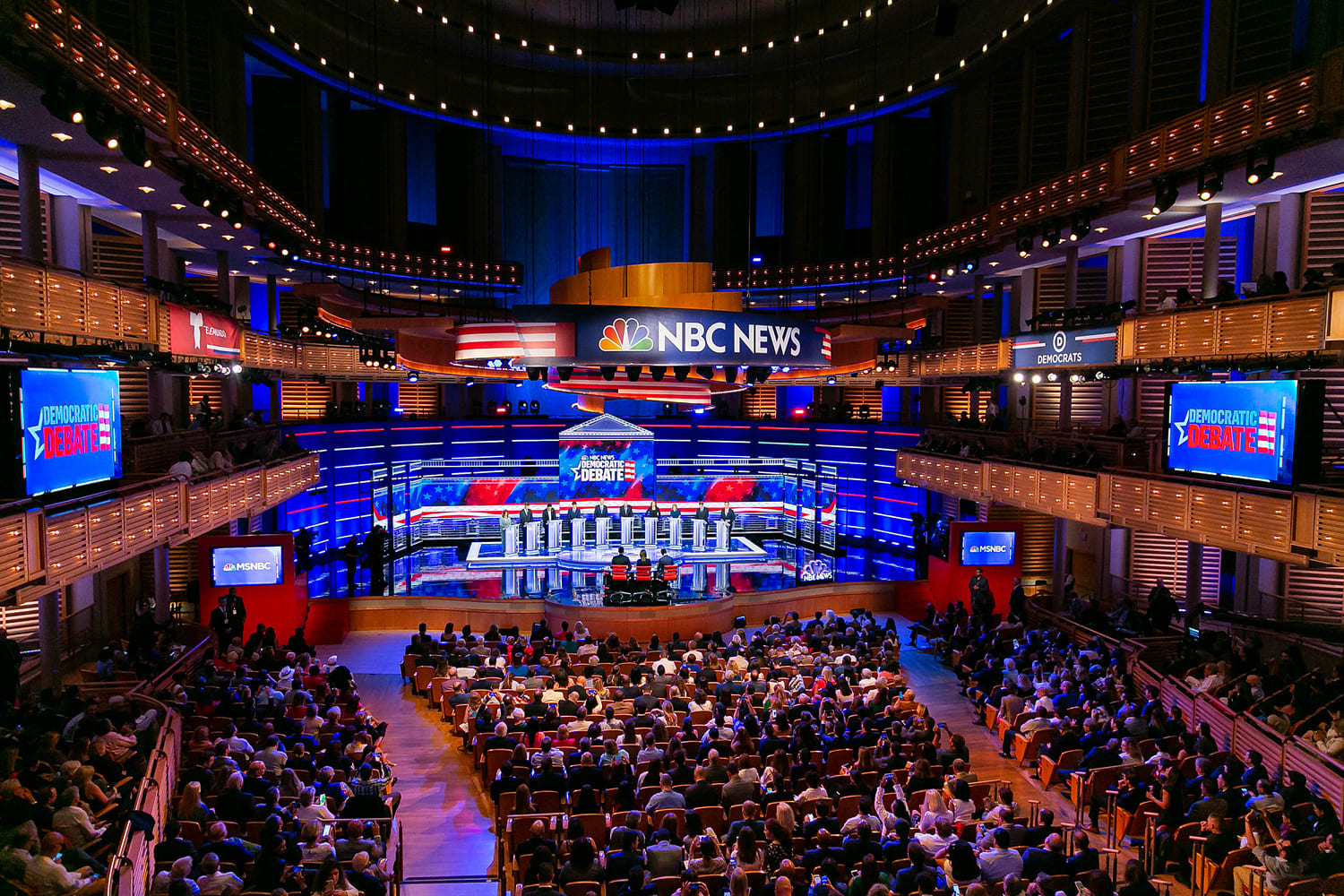
In a convention center built to hold forty thousand people, hummed alive by the clatter of espresso machines, simultaneous translation headsets, and the shuffling of heavy cardstock placards, sudden silence is heavier than any speech.
It happened just past three in the morning in the final hours of COP31. A delegate from a low-lying island nation in the Pacific took off his headset, folded his hands over a draft text that had been stripped of its spine, and simply stared at the ceiling. Across the plenary floor, negotiators from the European Union and a coalition of climate-vulnerable nations sat motionless in their ergonomic chairs, refusing to raise their gavels for a compromise that refused to name the culprit.
The talks had collapsed. Not over a misplaced comma or a dispute over clerical funding, but over two words that the world’s largest oil and gas producers still refuse to let sit permanently on paper: fossil fuels.
To read the wire reports the next morning, you would think COP31 ended in a routine procedural deadlock. Headlines spoke of "stalled negotiations" and "divergent national priorities." That language is clean. It is sterile. It smells like recycled printer paper and airport lounges.
It also misses the entire point.
The Anatomy of a Broken Promise
To understand why the European Union and dozens of allied nations walked away from the table rather than sign a watered-down COP31 agreement, you have to strip away the diplomatic jargon and look at what was actually on the table.
For three decades, United Nations climate conferences operated under a polite fiction. Delegates talked endlessly about "emissions," "carbon intensity," and "abatement technologies." They discussed the smoke, while carefully avoiding any mention of the fire. It was like holding an annual medical conference on lung cancer where delegates were forbidden from saying the word cigarette.
That silence finally cracked at COP28 in Dubai, when nations agreed for the first time to "transition away from fossil fuels in energy systems." It was hailed as the beginning of the end of the oil age. Yet by COP29 in Baku and COP30 in Belém, petrostates and major fossil fuel exporters spent every waking hour trying to walk that pledge back, burying it under caveats, loopholes, and vague promises about "unabated" fuels.
By the time delegates arrived for COP31, the battle lines were etched in stone. On one side stood the European Union, small island developing states, and a growing bloc of Latin American and African nations demanding an explicit, time-bound roadmap for a fossil fuel phase-out. On the other stood a stubborn coalition of oil-producing giants arguing that developing economies still needed hydrocarbons to grow, and that the focus should remain strictly on capturing emissions rather than halting extraction.
When the final gavel threatened to fall on a draft text that erased any binding commitment to phase out coal, oil, and gas, the EU and its partners made a calculated, historic choice. They refused to sign a lie.
"A bad deal is worse than no deal," one European negotiator told reporters outside the hall, her voice hoarse from forty-eight hours without sleep. "If we put our names on a document that pretends we can solve the climate crisis while expanding oil and gas production indefinitely, we are not just failing. We are lying to our own children."
Consider the Kitchen Table in 2036
Step out of the plenary hall for a moment. Leave behind the badges, the lanyards, and the carbon-offset flight itineraries.
Imagine a woman named Elena. She is a hypothetical composite, though her life is built from the very real data points of millions of people living along the Mediterranean coast today. Elena runs a small bakery three streets back from the harbor. In the summer of 2026, her air conditioning unit failed during a week when the thermometer refused to dip below forty degrees Celsius, even at midnight. Her flour costs jumped eighteen percent after a spring drought wiped out regional wheat yields. Her municipal water supply was rationed between noon and six in the evening.
Elena does not read UN draft resolutions. She does not track the subtle linguistic shift between "phase-down" and "phase-out."
What Elena knows is that the heat arrives earlier every May and lingers deeper into October. She knows that her insurance provider quietly dropped flood coverage for ground-floor businesses last autumn. And when she turns on the evening news and hears that world leaders could not agree to stop burning the very fuels heating her ovens, her street, and the sea at the end of her block, she feels a specific, cold kind of betrayal.
This is the invisible stake of COP31.
Climate diplomacy runs on a dangerously slow clock, while physics runs on an unforgiving one. Every fraction of a degree of warming is not an abstract line on a graph presented at a side event; it is the difference between a harvest that survives and one that withers, between a coastal seawall that holds and one that fractures during a king tide.
According to the Intergovernmental Panel on Climate Change and the International Energy Agency, global greenhouse gas emissions must fall by nearly half by 2030 to keep the 1.5-degree Celsius threshold within reach. There is no mathematical pathway to that target that allows for the continued, unrestrained expansion of coal, oil, and natural gas. None. You cannot negotiate with thermodynamics.
The Trap of the "Unabated" Loophole
Why did the talks fail so spectacularly over phrasing? To an outsider, watching diplomats argue for sixteen hours over a single adjective looks like madness.
It is not madness. It is strategy.
Consider how the language of delay works in practice. During the final night of COP31, opponents of a phase-out pushed hard to insert the word unabated before every mention of fossil fuels. In plain English, "unabated" fossil fuels are those burned without technologies like carbon capture and storage to trap the resulting emissions before they enter the atmosphere.
On paper, that sounds reasonable. Why ban the fuel if you can catch the smoke?
Here is the catch, and it is a massive one. Carbon capture technology currently removes less than 0.1 percent of global carbon dioxide emissions. Scaling it up to handle even a fraction of current oil and gas consumption would require building an industrial pipeline network larger than the entire existing global oil infrastructure, at a cost running into trillions of dollars, while consuming enormous amounts of energy just to run the capture plants.
Relying on "unabated" language as a substitute for a genuine fossil fuel phase-out is like telling a patient with severe heart disease that they can keep eating deep-fried butter every morning because a theoretical surgery might be invented twenty years from now to clean out their arteries.
The European Union’s negotiating team recognized the trap immediately. Signing off on a text packed with carbon-capture loopholes would have handed fossil fuel companies a fresh twenty-year license to explore, drill, and lock the world into high-carbon infrastructure—all while claiming to be "Paris-aligned."
The Painful Paradox of the Global South
Yet it would be dishonest to paint the collapse of COP31 as a simple morality play between heroes and villains. The truth inside those windowless rooms is far messier, and far more human.
While major petrostates fought to protect trillions of dollars in stranded assets, dozens of developing nations found themselves trapped in a brutal economic vise. Consider a finance minister from a sub-Saharan African nation where half the population still lacks reliable electricity. To that minister, a demand from wealthy European nations to immediately halt all fossil fuel financing feels deeply hypocritical.
Europe and North America built their industrial wealth, their hospitals, their railways, and their social safety nets on two centuries of cheap, abundant coal and oil. Now, having consumed the lion's share of the world's atmospheric carbon budget, rich nations were asking poorer ones to leapfrog straight to renewable energy—often without delivering the trillions of dollars in climate finance needed to make that leap affordable.
At COP31, that trust deficit turned toxic. Developing nations demanded firm, predictable grants—not high-interest loans that deepen national debt—to fund solar grids, battery storage, and climate adaptation. Wealthy nations hedged, pointing to domestic inflation and tight budgets.
Without a massive, credible financial package on the table, asking energy-poor countries to sign a strict fossil fuel phase-out felt like asking them to lock themselves into permanent poverty. Conversely, without a firm commitment to phase out fossil fuels, wealthy nations argued that throwing money at climate adaptation was like bailing water out of a sinking boat while someone else kept drilling holes in the hull.
Both sides were right. And because neither side could bridge the gap, the boat kept taking on water.
What Happens When Consensus Breaks?
The UN climate process operates by consensus. In theory, consensus ensures that every voice—from a superpower of a billion people to an atoll nation of ten thousand—carries equal weight. In practice, consensus means that the most reluctant nation in the room sets the speed for everyone else.
When COP31 failed to produce a unified deal, critics immediately declared the UN climate process dead. They pointed to the empty chairs, the exhausted translators, and the lack of a final communique as proof that global cooperation had shattered beyond repair.
Look closer, though, and a very different picture emerges.
Walking away from a hollow compromise is not the end of climate action; it is the end of pretending. For years, the annual COP summit provided political cover for governments to applaud a consensual text in November and approve new oil leases in December. By refusing to rubber-stamp a weak agreement, the EU and its coalition partners stripped away that cover.
The real battle has already shifted away from UN plenary halls and into three far more decisive arenas: capital markets, trade policy, and domestic courts.
- The Economics of Energy Have Flipped. Regardless of what diplomats write in a treaty, solar and wind power are now the cheapest sources of new electricity in almost every market on Earth. Battery storage costs have plummeted by more than eighty percent over the past decade. Global investment in clean energy now outpaces spending on fossil fuels by nearly two to one. Markets do not wait for UN consensus; they follow returns.
- Trade Borders Are Hardening. Mechanisms like the European Union’s Carbon Border Adjustment Mechanism are beginning to put a direct price on carbon-intensive imports like steel, cement, and aluminum. If a country refuses to decarbonize its grid, its exporters pay the price at the European border. Diplomacy became optional; tariffs did not.
- The Legal Reckoning Has Begun. Across the globe, youth groups, municipalities, and vulnerable communities are taking governments and fossil fuel majors to court, armed with attribution science that can link specific heatwaves and floods directly to corporate emissions.
The Weight of the Unsaid
I remember standing outside a climate summit venue years ago during a torrential autumn downpour that had flooded the shuttle bus routes. Beside me under a narrow awning stood a young climate activist from Bangladesh, her sneakers soaked through, clutching a laminated sign whose ink had begun to bleed in the rain.
She wasn't angry. She was tired.
"They treat our survival like a bargaining chip," she said quietly, watching black sedans splash past toward the VIP exit. "They negotiate percentages as if the ocean cares about their compromises."
That image stays with me every time a summit ends in deadlock.
The failure of COP31 is frightening. Anyone who tells you otherwise is selling false comfort. We have lost another year we could not afford to lose, in a decade that scientists have repeatedly warned is our final window to prevent irreversible tipping points—from the collapse of Greenland’s ice sheet to the dieback of the Amazon rainforest.
Yet there is a strange, clarifying honesty in the wreckage of COP31. For the first time, the nations most committed to a livable future refused to trade away the truth just to get a press release. They chose an honest stalemate over a dishonest handshake.
Now the burden falls where it has always belonged: not on a single UN document drafted at four in the morning, but on every government, utility, bank, and voter willing to act without waiting for permission from the slowest actor in the room.
Back in that empty plenary hall, long after the cameras were packed away and the microphones switched off, a janitor rolled a heavy bin down the center aisle, sweeping up discarded coffee cups, crumpled position papers, and a single forgotten nameplate—waiting for the lights to go out before the next storm hit the coast.