There are nights when the sky feels like a quiet room, and then there are nights when the room goes entirely dark.
For most of us, looking up is a rare luxury. We rush from the sliding glass doors of our kitchens to the sanctuary of our cars, eyes glued to glowing rectangles, shielding ourselves from the cold. We forget that a massive ball of basalt and iron has been keeping our tides in check for billions of years. We forget that the universe is violently, beautifully active right above our rooflines. Meanwhile, you can read other developments here: The Anatomy of Factional Friction: Decoding the Mechanics of Intra-Party Dissent.
Thursday night changes that rhythm.
Upward. That is the only direction that matters when a near-total lunar eclipse sweeps across the United States. To see the complete picture, we recommend the detailed article by The Washington Post.
Picture Sarah, a third-grade teacher in Ohio, who has spent the last ten years trying to get ten-year-olds to care about planetary alignment. She knows the textbooks are dry. Diagrams of white spheres and dotted-line cones do little to spark the imagination. But Thursday is different. Thursday is theater. (Note: Sarah is a hypothetical composite of the millions of teachers and parents coaxing kids outside with heavy coats and hot cocoa this week).
She herds her family onto the back porch, bypassing the television screen that usually hums in the corner of the living room. The air bites. It smells of dead leaves, chimney smoke, and the peculiar, metallic tang of an approaching winter frost.
Then, the shadow begins to bite.
The Mechanics of a Celestial Sleight of Hand
We need to talk about geometry, but let us do it without the chalkboard dust.
An eclipse is not a curse, nor is it a trick of light crafted by Hollywood. It is a collision of orbits. The Earth, bulky and heavy with oceans, steps directly between the sun and the moon. As it does, it casts a long, tapered cone of shadow into space.
On Thursday night, the moon does not just graze that shadow. It dives nearly all the way into it.
To understand why this feels so profound, you have to remember how light works in the vacuum of space. If you were standing on the moon looking back at Earth during this alignment, you would see a black disc ringed in fire. Every sunrise and sunset on Earth happening simultaneously would paint a halo of burning copper around our planet's edge.
That crimson ring is what spills over the lunar surface.
The moon doesn't vanish. It turns the color of old copper, rusted iron, or dried blood. Astronomers call it the blood moon effect, but that sounds too aggressive for what is actually a remarkably tender transformation. It is the light of every forest fire, desert sunset, and dawn horizon on Earth, bent through our atmosphere and projected onto the moon's cratered face.
The Human Cost of Looking Down
We spend our lives insulated from these scales.
Think about the last time you stood completely still in the dark for twenty minutes. Not waiting for a rideshare, not walking a dog who is pulling desperately at a leash, but simply standing. Doing nothing.
Modern life trains us to optimize every second. We multitask our leisure. We listen to podcasts at one-and-a-half speed while folding laundry. We check email notifications while waiting for the microwave to ding.
An eclipse refuses to be sped up.
When the moon begins its slow, agonizing descent into darkness on Thursday night, it mocks our rush. It moves at thousands of miles an hour through the void, yet to our eyes on the ground, it crawls. It forces patience upon us.
Stand outside for an hour. Your toes will grow numb. Your neck will ache from staring upward. You will wonder why you bothered when you could be inside under a weighted blanket watching a documentary about space instead of experiencing it.
That discomfort is the point.
When you feel the chill seeping through your jeans, you remember that you live on a wet rock spinning through a freezing void. The illusion of total domestic safety drops away for just a moment. You realize that you are tethered to a cosmic ballet whether you pay attention to it or not.
What Happens When the Shadow Lifts
The peak of this near-total eclipse arrives late, testing the stamina of early risers and shift workers alike. Across the eastern seaboard, across the jagged spine of the Rockies, and down to the sun-baked stretches of the southern deserts, millions will step onto balconies and into empty parking lots.
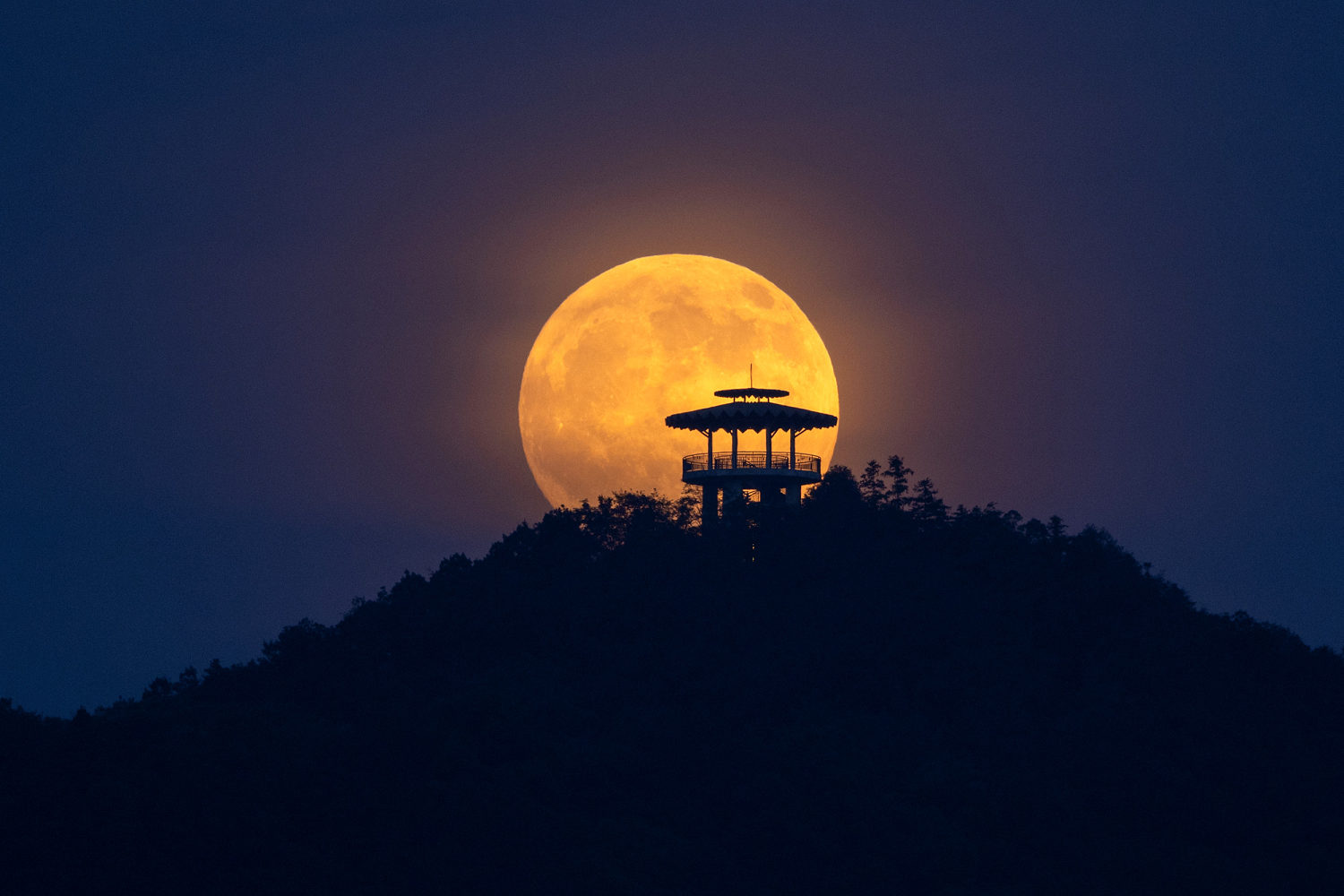
For a brief window, ninety-something percent of the lunar disc will slip into the umbra. The stars, usually drowned out by the brilliant glare of a full moon, will snap back into focus. The constellations will crowd the sky, realizing the local powerhouse has dimmed its lights.
Then, the reverse begins.
The shadow slips away, sliding off the eastern limb like silk being pulled from a table. The familiar, blinding white glare returns. The spell breaks. People will zip up their coats, mutter about the cold, and shuffle back indoors to check their phones.
Nothing tangible will have changed. The mortgage is still due. The inbox is still overflowing. The political news is still grim.
Yet, something shifts in the people who stayed outside long enough to watch the copper fade back to silver. They remember that the world is bigger than their immediate panic. They remember that grandeur still exists, completely free of charge, requiring no subscription, no password, and no download.
Thursday night is an invitation to look up.
Do not check the livestream. Do not settle for a high-resolution photograph taken by an observatory in Chile. Step outside. Let the cold bite your face. Watch the moon blow out its candle, and remember what it feels like to be small in the best possible way.