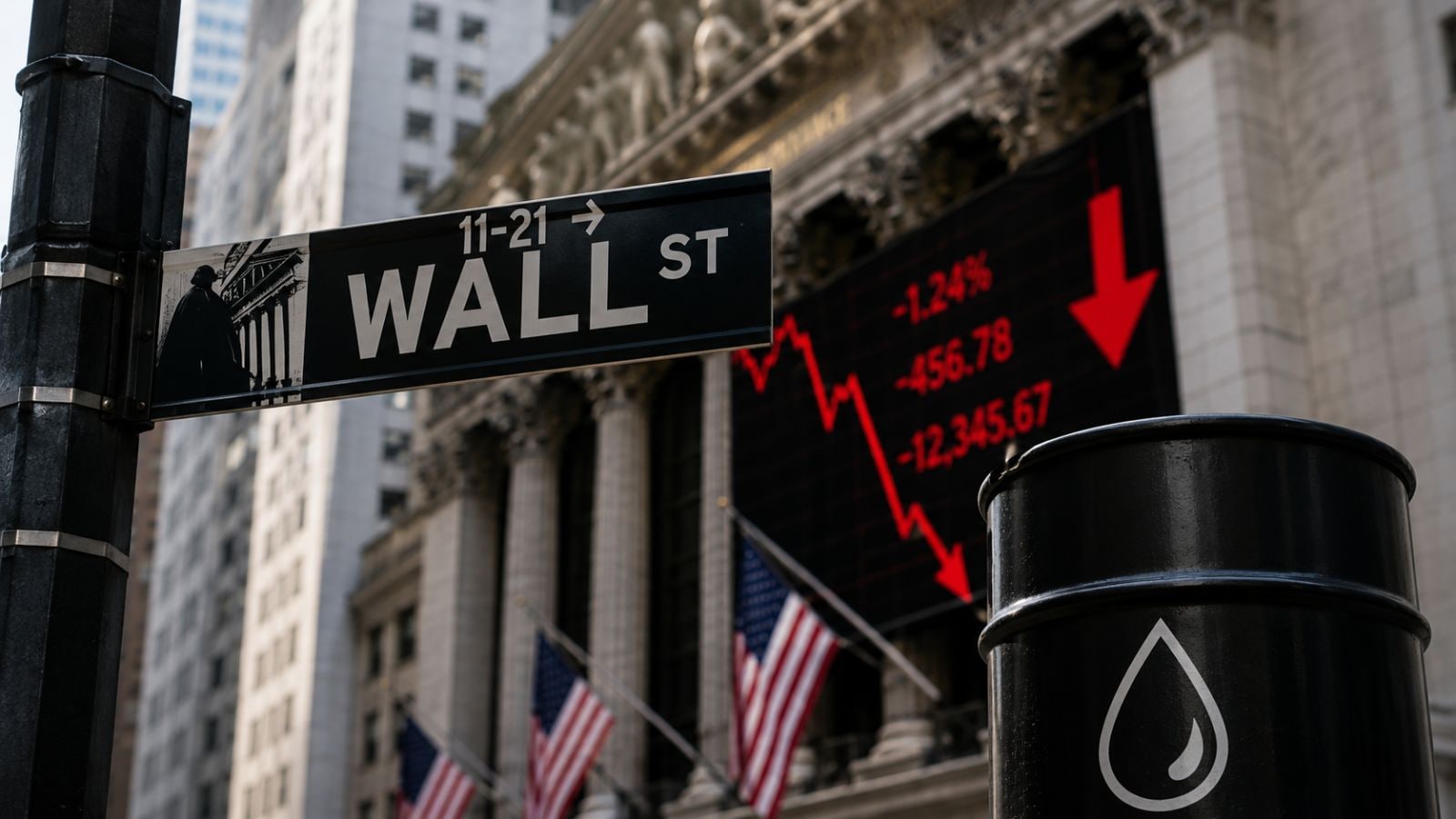
The fluorescent lights in the San Francisco apartment hummed at a frequency that made Marcus’s teeth ache. It was 2:14 AM on a Tuesday, and the glow of three monitors illuminated the dark circles under his eyes. On the center screen sat a spreadsheet containing a number so large it looked like a typographical error.
Marcus—a composite character representing the thousands of mid-level systems engineers currently working across Silicon Valley—stared at his unvested equity package. For four years, those shares were monopoly money. They were digital promises traded for eighty-hour weeks, missed anniversaries, and the quiet dread that the code he was writing might eventually render his own degree obsolete. Now, whispers from the executive floor confirmed what the financial press had been predicting for months. His employer, one of the foundational artificial intelligence labs, was preparing its S-1 filing. The bell on the New York Stock Exchange was about to ring. Read more on a connected issue: this related article.
Wait.
Before we celebrate the minting of a new class of tech billionaires, we need to look at what is actually happening beneath the mahogany desks of Wall Street. When an AI giant goes public, it is not merely a financial transaction. It is the moment an experimental, wildly expensive science project is handed over to the ruthless mechanics of quarterly earnings. And whether you own a single share of stock or simply pay into a standard index fund for your retirement, your money is about to become the fuel for the biggest capital gamble in human history. Further analysis by The Motley Fool highlights related perspectives on the subject.
The Architecture of a Trillion-Dollar Mirage
To understand why the biggest players in artificial intelligence are racing toward initial public offerings right now, you have to follow the heat. Literally.
Walk through a modern data center in northern Virginia or central Iowa, and the first thing that hits you is not the noise, though the roar of the cooling fans rivals a jet engine on a tarmac. It is the dry, static-charged warmth radiating off rows of black server racks. Inside those racks sit tens of thousands of specialized graphics processing units, each costing roughly the price of a mid-sized sedan, chewing through megawatts of electricity just to predict the next logical word in a sentence or render a three-second video of a golden retriever wearing sunglasses.
For the past several years, private venture capital firms and mega-cap tech partners footed that bill. They poured tens of billions of dollars into closed-door laboratories, operating on pure faith. When OpenAI first shattered public consciousness, followed closely by fierce rivals like Anthropic, xAI, and Cohere, the financial rules were suspended. Growth was the only metric that mattered. Losses were treated as badges of honor, proof that a company was buying enough compute power to stay in the race.
I remember sitting in a cramped conference room in lower Manhattan back in 1999, watching a twenty-six-year-old founder explain to a room of skeptical pension fund managers why his company didn't need a path to profitability because "eyeballs are the new currency." The air smelled like stale espresso and cheap cologne. Everyone in that room knew the math didn't work, yet everyone signed the checks anyway because the fear of missing the train was sharper than the fear of the crash.
The mathematics of the current AI boom are infinitely heavier than the dot-com era, yet the psychological fever is identical. Private markets are finally hitting a wall. Even the wealthiest sovereign wealth funds and venture syndicates cannot indefinitely absorb capital expenditures that rival the gross domestic product of small nations. To build the next generation of frontier models—systems that require clusters of a hundred thousand chips or more—these companies need access to the deepest, most liquid pool of capital on earth. They need retail investors. They need pension funds. They need the public markets.
Meet the Titans Approaching the Bell
If you look at the roster of heavyweights inching toward Wall Street debuts, you are not looking at uniform businesses. You are looking at radically different philosophies of power, wrapped in corporate charters that barely existed five years ago.
Consider OpenAI, the undisputed gravitational center of the industry. For years, it operated under a bizarre, hybrid corporate structure—a non-profit board governing a capped-profit subsidiary—designed originally to ensure artificial general intelligence would benefit humanity rather than shareholders. Wall Street despises ambiguity. Institutional investors do not write multi-billion-dollar checks to charities with an existential mission statement. Watching OpenAI systematically dismantle its non-profit guardrails to convert into a traditional for-profit entity has been like watching a monastery slowly install slot machines in the nave. With annualized revenues soaring into the multi-billions and a private valuation that has already eclipsed traditional defense contractors and legacy automakers, an OpenAI IPO would instantly rank among the largest market debuts in history. Yet behind the staggering top-line growth lies a terrifying burn rate, driven by relentless training runs and the sheer cost of serving hundreds of millions of weekly active users.
Then there is Anthropic, founded by former OpenAI executives who left over disagreements about safety and commercialization. If OpenAI is the aggressive, move-fast-and-break-things juggernaut, Anthropic has positioned itself as the disciplined, enterprise-focused alternative. Backed heavily by billions from Amazon and Google, its Claude models have quietly become the backbone for corporations terrified of data leaks and erratic outputs. When Anthropic steps up to the podium at the exchange, its pitch to institutional buyers will be predictability. It is selling digital infrastructure to Fortune 500 companies, betting that steady, high-margin business contracts will look far more attractive to conservative fund managers than consumer hype.
And we cannot ignore the wildcards. Elon Musk’s xAI, built at breakneck speed by leveraging the real-time data firehose of the social platform X and assembling one of the largest supercomputing clusters in Memphis in a matter of months, represents a completely different beast. Musk has a history of using public markets as a megaphone and a balance sheet simultaneously. Meanwhile, specialized infrastructure players—companies like CoreWeave, which pivoted from cryptocurrency mining to renting out massive clusters of Nvidia chips—and enterprise-focused labs like Cohere and Mistral in Europe are lining up in the wings.
Think of this wave not as a single gold rush, but as the simultaneous arrival of the railroad barons, the steel magnates, and the telegraph operators. Some are selling the tracks. Others are selling the locomotives. A few are just selling maps to a territory no one has actually surveyed yet.
The Trap of the Quarterly Clock
Here is the invisible danger that rarely makes it into the breathless financial coverage of these upcoming IPOs. Once a company goes public, its soul is chopped into ninety-day increments.
Let us return to Marcus in his San Francisco apartment, or rather, let us project forward eighteen months after his company’s triumphant debut on the Nasdaq. The confetti has been swept off the trading floor. The early investors have cashed out a portion of their stakes, buying vineyards in Napa and brownstones in Brooklyn. Now, the Chief Financial Officer has to get on an earnings call every three months with twenty-eight-year-old analysts from Goldman Sachs and Morgan Stanley.
Those analysts do not care about the philosophical alignment of neural networks. They do not care about the subtle emergent reasoning capabilities discovered during a midnight training run. They care about gross margins. They care about customer acquisition costs. They care about why capital expenditures rose forty percent quarter-over-quarter while enterprise seat licenses only grew by twelve.
Historically, when transformative technologies transition from private laboratories to public equities, the pressure to deliver immediate returns forces a subtle, irreversible corruption of the product. Look at what happened to social media. In their private years, platforms promised connection and open expression. Once public, the relentless demand for ad revenue forced their algorithms to optimize for outrage, division, and compulsive scrolling, because anger keeps eyes glued to screens longer than joy ever could.
Now imagine that exact same quarterly pressure applied to artificial intelligence.
If an AI model costs ten cents to answer a complex medical query, and a rival offers a slightly dumber, hallucination-prone model for half a penny, what does a publicly traded board of directors demand? They demand cost-cutting. They demand quantization, compression, and aggressive monetization. Suddenly, the conversational assistant you rely on to summarize legal contracts or tutor your teenager begins subtly steering answers toward sponsored products, or quietly downgrading its reasoning depth during peak hours to save server costs.
What the Prospectus Won't Tell You
If you ever sit down to read an S-1 filing—the dense, hundreds-of-pages legal document a company must submit to the Securities and Exchange Commission before going public—you will find a section titled "Risk Factors." Lawyers write these sections to protect executives from future lawsuits, burying genuine existential threats inside pages of monotonous legalese.
When these AI giants finally publish their risk factors, read between the lines. You will see admissions that would make a traditional value investor break out in a cold sweat.
First, there is the depreciation treadmill. In a traditional railroad or telecom boom, once you lay the copper wire or the steel track, that asset generates cash for thirty or forty years with basic maintenance. In the AI economy, the foundational hardware turns into expensive scrap metal every twenty-four months. A data center packed with today’s premier chips becomes economically uncompetitive the moment the next architectural leap hits the market, consuming too much electricity for too little computational output. These companies are borrowing against the future to buy assets that decay at the speed of Moore’s Law.
Second, there is the wall of human data. To make these systems smarter, engineers fed them the entirety of the open internet—every digitized book, every Reddit thread, every scientific paper, every line of open-source code. That well is running dry. We have effectively strip-mined the collective written output of human civilization. Training the next generation requires synthetic data—machines teaching machines—which carries the bizarre risk of model collapse, a digital form of inbreeding where errors compound until the output turns to gibberish.
Third, there is the looming shadow of copyright litigation and regulatory reckoning. Billions of dollars in market value are currently resting on the assumption that courts will rule the ingestion of copyrighted human creativity as "fair use." If a single landmark ruling forces these newly public companies to pay retroactive royalties to every author, musician, journalist, and visual artist whose work trained their weights, balance sheets will shatter overnight.
I confess, looking at the sheer scale of these numbers makes even seasoned market watchers feel a profound sense of vertigo. Are we witnessing the birth of the next Microsoft and Apple, companies that will compound wealth for decades and fundamentally elevate human productivity? Or are we watching the inflation of a systemic bubble so vast that when the air finally hisses out, it will drag down the retirement accounts of teachers, firefighters, and nurses who never even realized they were betting on silicon?
The honest answer is that both things can be true at the exact same time. In 1999, the internet was genuinely going to change every facet of human existence. The visionaries were completely right about the technology, and completely wrong about the timeline and the valuations. Amazon lost over ninety percent of its stock value between late 1999 and 2001 before rising from the ashes to become an empire. Hundreds of its peers simply vanished, leaving behind empty office parks and worthless stock certificates.
The Quiet Transfer of Risk
There is a crucial difference between 1999 and today, however, and it lies in who holds the bag.
In the late nineties, tech startups went public early, often with just a few million dollars in revenue, allowing everyday investors to participate in the explosive upside—and absorb the violent volatility—from the ground floor. Today, companies stay private for a decade or more. By the time an AI titan finally rings the opening bell on Wall Street, the easiest, most astronomical multiples have already been harvested behind closed doors by venture capitalists, sovereign wealth funds, and private equity insiders.
When the doors finally open to the public, the valuation is often already priced for absolute perfection. Perfection means zero regulatory intervention, uninterrupted energy supplies to power gigawatt-scale data centers, continuous breakthroughs in algorithmic efficiency, and an enterprise customer base willing to pay hundreds of dollars per employee every single month indefinitely.
If you buy shares on opening day, you are not an early explorer discovering a new continent. You are buying waterfront real estate at peak summer prices from the developers who drained the swamp.
And even if you never log into a brokerage account to buy a single share of an AI IPO, you do not get to sit this one out. Because of the sheer size of these debuts, within months of listing, these companies will be absorbed into the S&P 500 and total market index funds. Automated payroll deductions from millions of ordinary workers will flow straight into their stock every second Friday, propping up valuations regardless of underlying profitability. The risk is quietly socialized across the entire financial ecosystem, while the control remains tightly locked inside dual-class share structures that give founders total voting power.
The Morning After the Bell
Back in San Francisco, Marcus finally closed his laptop at 3:30 AM. He walked over to the window and looked down at the empty street below, where a driverless taxi glided silently past a row of darkened storefronts, its spinning lidar sensors mapping the asphalt with cold, tireless precision.
For Marcus, the upcoming IPO means freedom. It means paying off his parents' mortgage, buying a house without three roommates, and finally breathing without the constant pressure of a ticking clock. You cannot blame him for wanting his payout. He built the engine; he deserves his share of the fare.
Yet as the lights of that autonomous car disappeared around the corner, a different kind of silence settled over the block. Once the shares are sold, once the ticker symbols flash across the bottom of financial news broadcasts in glowing green and red, the experiment ends. The laboratory doors lock from the outside. From that morning forward, the machines will no longer belong to the dreamers, the researchers, or even the engineers who stitched them together line by line. They will belong to the market, and the market never sleeps, never waits, and never forgives a missed quarter.