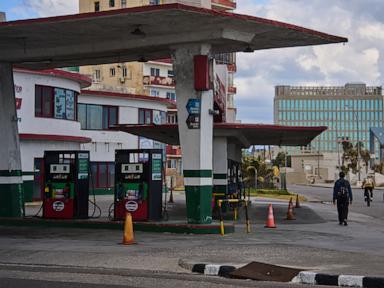
The ice in the glass melts before you can finish pouring the water. In Havana, this is not just an inconvenience; it is a ticking clock. When the power goes out, the fans stop. The mosquito netting transforms from a shield into a suffocating shroud. In the dark, you listen to the city breathe—a heavy, anxious collective sigh from millions of people waiting for the hum of an old, oil-fired grid to kick back to life.
Power is not abstract here. It is the difference between keeping a week’s worth of pork fresh or watching it spoil by morning. It is the difference between a child sleeping or crying through the humid night.
For decades, that power arrived in the bellies of massive tankers steaming across the Caribbean. Mostly, it came from Venezuela. But Venezuela’s own house is on fire, and its oil exports to the island have plummeted by half over the last year. Left in the dark, Cuba is looking toward an old ally with a new leader who is willing to take a massive geopolitical gamble.
Mexico is stepping back into the engine room.
The Anatomy of an Island in the Dark
To understand why a few ships of crude oil matter so much, look at how a kitchen functions under a blackout. Think of Cuba’s energy grid like a classic car from the 1950s. It is beautiful to look at from a distance, but under the hood, it is held together by duct tape, prayer, and salvaged parts. The island relies almost entirely on thermoelectric plants that are past their expiration dates. They burn heavy crude, a thick, sluggish fuel that requires constant maintenance to keep from clogging the system.
When these plants fail, everything stops. Water pumps die. Hospitals switch to rattling diesel generators with finite fuel supplies. The economy freezes.
Last year, Mexico’s president, Claudia Sheinbaum, quietly began shifting her country's foreign policy gears. Mexico had paused its oil shipments to Cuba during the final months of the previous administration, largely due to intense economic pressure from the United States and the financial bleeding of Mexico's state-owned oil giant, Pemex. But a crisis of this scale creates a humanitarian gravity that is hard for neighboring nations to ignore.
The shipments are starting again.
But this is not a simple act of charity. It is a high-stakes calculation where every move risks triggering a cascade of financial penalties.
The Invisible Ledger
Consider the journey of a single tanker leaving the port of Coatzacoalcos, heading east across the Gulf of Mexico. It carries hundreds of thousands of barrels of Olmeca crude. On the surface, it is a lifeline. Beneath the surface, it is a massive liability for Mexico.
Pemex is the most indebted oil company in the world. It owes billions to creditors and operates under the constant scrutiny of international credit rating agencies. Every barrel of oil given to Cuba on credit—or as a donation—is a barrel that cannot be sold on the open market for hard cash. For a company suffocating in debt, that hurts.
Then there is the shadow of Washington. The US embargo on Cuba includes laws like the Helms-Burton Act, which can penalize foreign companies trading with the island. Mexico must walk a razor-thin wire. If they push too hard, they risk irritating their largest trading partner just as trade agreements are up for renegotiation. If they do nothing, they watch a neighboring island collapse into a humanitarian vacuum, potentially triggering a massive migration wave right toward the Mexican border.
So, the tankers move under a cloud of bureaucratic discretion. They are tracked by maritime analysts who watch transponders wink on and off in the Caribbean night. Everyone knows what is happening, but few want to speak the words aloud.
The Human Friction of Foreign Policy
It is easy to view this through the lens of geopolitics—as a chess match between Washington, Mexico City, and Havana. But geopolitics behaves differently when it hits the ground.
Imagine a mechanic at the Antonio Guiteras power plant in Matanzas. He has been awake for twenty-four hours. The air inside the plant is thick with the smell of sulfur and scorching metal. He is waiting for a specific grade of crude because burning the wrong density will cause the boilers to choke, triggering another nationwide blackout. To him, Mexican oil is not a diplomatic statement. It is a spare hour of sleep. It is a functional refrigerator.
Mexico’s decision to restart these shipments highlights a deep, historical bond that defies Washington's directives. Mexico has long maintained a policy of non-intervention and solidarity with Cuba, a stance deeply baked into its diplomatic DNA since the mid-twentieth century. Sheinbaum is signaling that while she values the relationship with the US, Mexico’s foreign policy will not be dictated entirely from abroad.
Yet, this oil is a bandage on a compound fracture.
Cuba’s energy crisis cannot be solved by tankers alone. The infrastructure itself is decaying. Without billions of dollars in capital investment to transition to renewable energy or rebuild the thermoelectric plants from scratch, the island will remain trapped in this cycle of temporary relief and sudden darkness.
The Waiting Game
The sun sets over the Malecón, the iconic seawall where Havanans gather to catch the ocean breeze when the indoors become too hot to bear. People look out over the water. They are looking for the silhouette of a ship on the horizon.
They know that oil is coming. They also know it will run out.
The true stakes of this energy lifeline are measured in time. Every shipment buys Cuba a few weeks of stability, a few months of breathing room to patch its leaking pipes and quiet its protesting population. For Mexico, it buys the moral capital of an older brother helping a sibling in distress, balanced against the quiet fury of its financial balance sheets.
The tankers will arrive, the oil will be pumped into the hungry, rusted bellies of the island's power plants, and the lights will flicker back on. For a night, or perhaps a week, the fans will spin, the water will run cold, and the city will sleep. But the horizon remains wide, empty, and heavy with the knowledge of tomorrow's fuel gauge.


