The plastic sheeting of an isolation tent does not melt quietly. It screams. When the fire caught the triage center in Butembo, the smell of burning PVC mingled with the sharp, metallic tang of chlorine and the thick scent of tropical dust.
Inside, three patients who had been vomiting blood just hours earlier found a sudden, terrifying surge of adrenaline. They did not run toward the doctors. They ran into the dark, vanishing into the crowded, winding alleys of the Democratic Republic of Congo’s eastern borderlands.
To an outsider reading a news ticker, this sounds like madness. Why would anyone flee the very people trying to save their lives? Why would a community attack a clinic built to keep a lethal virus from swallowing them whole?
The wires call it a "security incident." They blame "local resistance" or "misinformation." But those sterile phrases mask a much deeper, more terrifying human truth. When Ebola strikes, the medical response can look a lot like an invasion.
The Geometry of Fear
Consider the anatomy of an epidemic from the perspective of a father in North Kivu. Your daughter wakes up with a fever. In this part of the world, fever usually means malaria. You buy some tablets at the kiosk. The fever stays. Then come the aches, the diarrhea, the terrifying crimson tint in her eyes.
Suddenly, a white Toyota Land Cruiser roars down your unpaved street, kicking up Choking plumes of red dust.
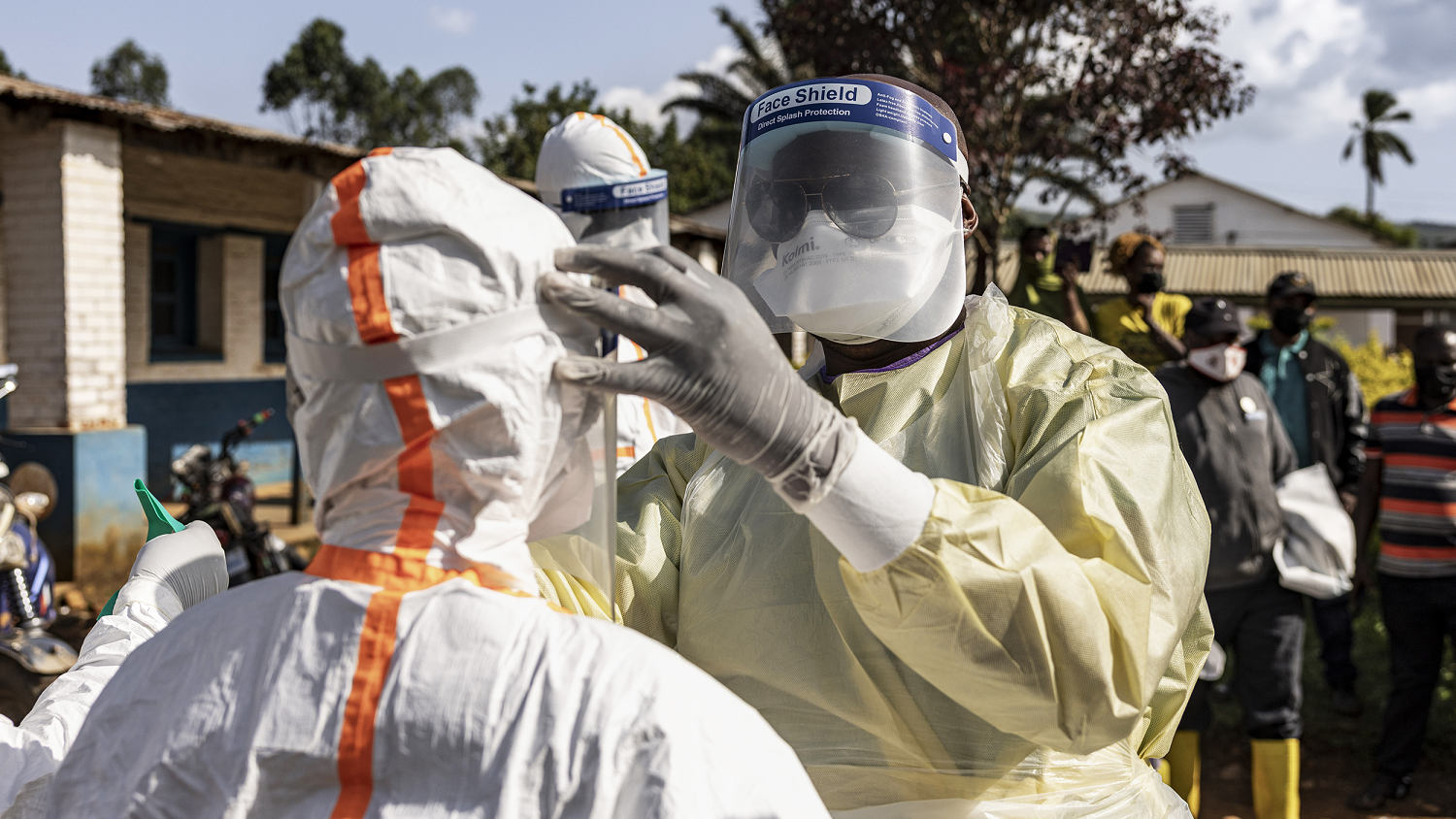
Out step human beings who no longer look human. They are encased in thick, bright yellow protective suits. Their faces are hidden behind fogged plastic visors. Their hands are double-gloved in heavy rubber. They speak French or a dialect of Swahili that sounds foreign to your ears. They do not touch your daughter with a comforting hand; they touch her with spray nozzles full of bleach.
They take her away in the back of the truck. They tell you that you cannot accompany her. They tell you that if she dies, you cannot touch her body, wash her hair, or bury her in the ancestral land.
To a grieving family, this does not look like healthcare. It looks like an abduction.
The rumor mill fills the void left by terror. The foreigners brought the virus to make money. The clinics are harvesting organs. The yellow suits are the uniforms of a cult. If you go into that plastic tent, you never come out alive.
When a mob forms outside a treatment center, bricks in hand, they are not acting out of a desire to spread disease. They are trying to rescue their children from what they perceive to be a house of horrors.
When Science Speaks the Wrong Language
The breakdown in the Democratic Republic of Congo is not a failure of virology. It is a failure of empathy.
Epidemiologists arrive armed with statistics, contact-tracing matrices, and containment protocols. They look at a map and see a hot zone. But the people living in that zone see twenty years of war, forgotten massacres, and systemic neglect.
For decades, the international community looked away while militias terrorized these villages. Then, an Ebola outbreak occurs, and suddenly millions of dollars in foreign aid pour in. Helicopters land. Elite doctors arrive.
The locals ask a logical question: Why do you care so much about a virus that kills us in days, when you never cared about the rebels who have been slaughtering us for years?
When the response forces its way into a community without answering that fundamental question, it breeds deep, corrosive cynicism. The medical apparatus becomes just another armed faction occupying their land.
But the real problem lies elsewhere. It rests in the absolute erasure of dignity.
When a person tests positive for Ebola, their entire social network is dismantled. Contact tracers trace their steps, putting neighbors and friends under a twenty-one-day microscope. If a loved one dies inside the treatment center, the traditional, deeply sacred burial rites are forbidden because the corpse is highly infectious.
Instead, men in biohazard gear drop the body into a body bag, spray it with chlorine, and bury it in a numbered grave while the family watches from behind a plastic fence, twenty meters away.
The trauma of that distance is a psychological wound that bleeds into the community long after the virus has cleared the bloodstream. It creates a powerful incentive to hide. People hide their sick in forests. They bury their dead under bedroom floors at midnight. They run.
The Phantom Vector
When those three patients fled the burning clinic in Butembo, they did not just escape a building; they became vectors of an invisible firestorm.
Ebola moves through liquid. A single drop of sweat, a stray fleck of saliva, or a tear contains enough viral copies to decimate a family. When a patient flees into a dense urban environment, the contact-tracing map explodes.
A single missing patient can turn a contained cluster into a regional catastrophe that jumps borders into Uganda or Rwanda.
The medical teams know this. The panic inside the response headquarters is palpable when an identification number on a spreadsheet suddenly goes missing. The radio channels crackle with anxiety. Where is Patient 402? Who has seen her?
But hunting down a fearful, traumatized human being like a fugitive only reinforces the narrative that the doctors are jailers. It hardens the resistance. It turns villages into fortresses where health workers are greeted with volleys of stones and machetes.
We have spent billions of dollars perfecting the science of vaccines and experimental therapeutics. The rVSV-ZEBOV vaccine is a marvel of modern biotechnology. It can shield a body from the virus with astonishing efficiency.
Yet, a vaccine is entirely useless if the person you need to inject is hiding in a banana grove, terrified that the syringe contains poison.
Rewriting the Protocol of Trust
How do you stop an outbreak when the community sees you as the enemy? You take off the armor. Not the physical PPE—the virus is still a merciless killer—but the behavioral armor of the omniscient expert.
In the later months of the North Kivu outbreak, a few brave local doctors and community leaders began to alter the strategy. They realized that the response needed to stop looking like a military operation and start looking like a conversation.
They stopped using foreign trucks to transport the sick. Instead, they hired local motorbike taxis—the lifeblood of the regional economy—outfitting the drivers with protective gear and clear plastic sidecars so patients could see the faces of their neighbors as they rode to the clinic.
They changed the architecture of the treatment centers. They replaced the opaque orange tarps with large, transparent glass walls.
Suddenly, a mother could sit outside the hot zone, look through the glass, and see her son sitting up, eating a bowl of rice, and talking to a nurse. She could see that the nurses were not harvesting organs; they were wiping brows and holding hands.
The mystery evaporated. With the mystery went the terror.
They also brought in the elders. Instead of banning traditional burials outright, they negotiated. They allowed a family member, dressed in protective gear provided by the clinic, to sprinkle holy water or say the final prayers over the body bag. They restored the human element to the cold geometry of containment.
The Price of the Last Mile
The international community loves a clean victory. We want to hear that a virus has been eradicated by a new drug or a massive check written by a billionaire's foundation.
But the final battle against an epidemic is never won in a laboratory. It is won or lost in the final mile, on a muddy road, in a whisper between a terrified mother and a local health worker who took the time to listen before reaching for a needle.
The fire in Butembo was eventually put out. The ashes were cleared away, and the plastic walls were rebuilt.
But the lesson of that burning clinic remains unlearned every time we treat a public health crisis as a purely logistical challenge. If we treat people merely as numbers, as biological hazards to be managed and contained, they will fight back with the only tool they have left: flight.
The next time an outbreak flares up in a forgotten corner of the globe, the headlines will undoubtedly focus on the rising case counts and the scramble for funding.
Look closer. Look for the shadows moving away from the headlights of the white trucks. Listen for the silence of a village that has decided to face a deadly virus alone rather than trust a world that only notices them when they are dying.