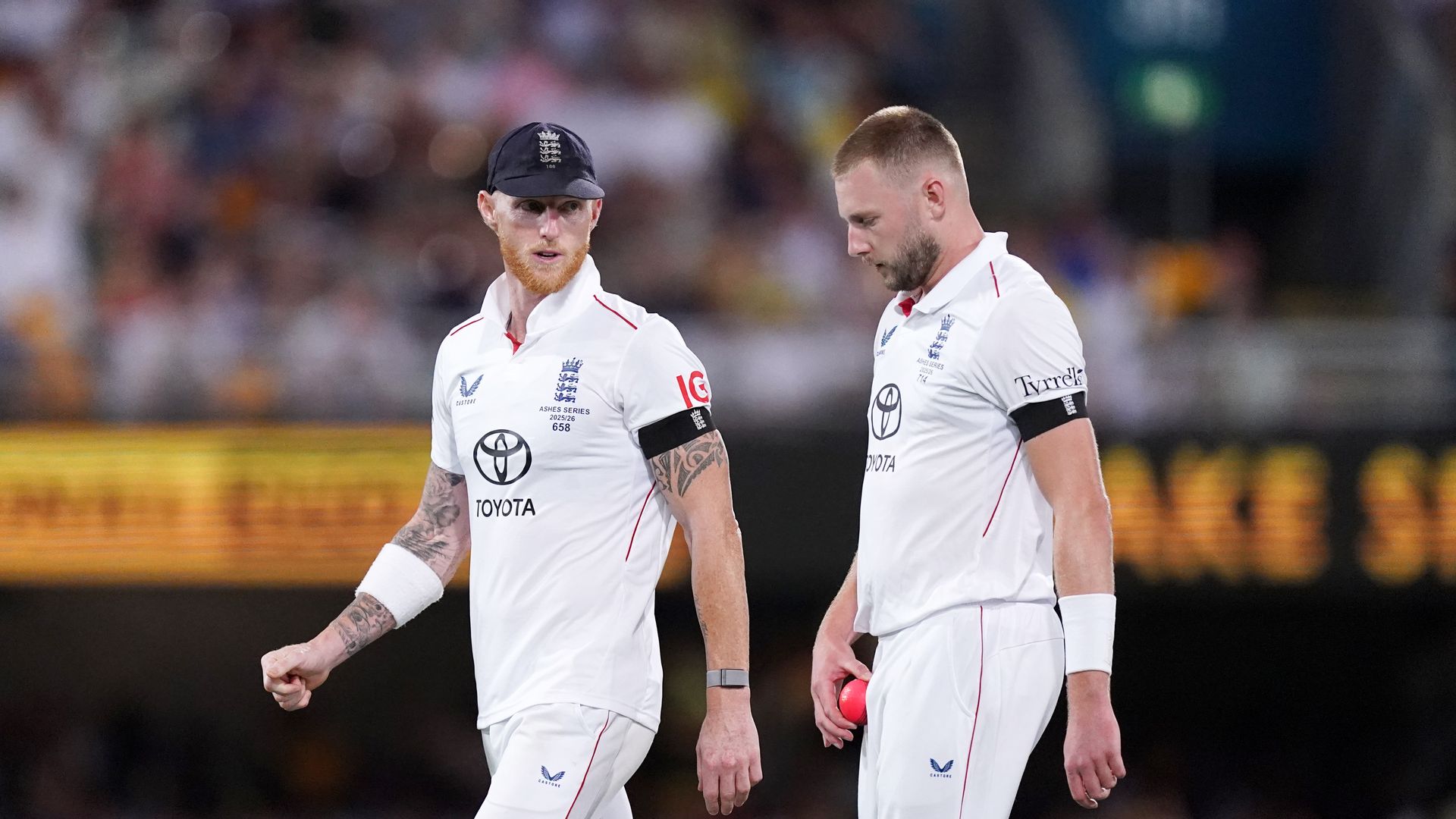
The rain that falls over South London in June has a way of dampening everything except the noise. On Sunday afternoon at the Kia Oval, that noise was a deafening, 253-run thrashing. New Zealand’s bowlers tore through the tail of the host nation's batting lineup, leveling the Test series and leaving a bitter taste in the mouths of thousands of soaked spectators. But the real crisis was not happening out on the square. It was happening behind closed doors, where the very soul of the national side was being weighed against the cold mathematics of bureaucratic judgment.
Every modern sportswriter knows the formula for an off-field scandal. It requires a dimly lit venue, a ticking clock past midnight, a collision of young, wealthy athletes, and a subsequent press release full of sanitized legalese. When the England and Wales Cricket Board announced that Ben Stokes and Gus Atkinson had been stood down for the second Test match against New Zealand, the public imagination instantly filled in the blanks with the worst possible assumptions. We assumed arrogance. We assumed entitlement. We assumed violence.
But the truth of what happened in Chelsea during the early hours of Monday, June 8, is far more human, far more frustrating, and deeply revealing of the impossible microscope under which modern sporting icons live.
The Gravity of the Invisible Clock
To understand the stakes, consider the psychological reality of an elite cricketer. For weeks on end, players are locked in a relentless cycle of physical exertion, media scrutiny, and high-intensity performance. When a Test match concludes, the sudden release of pressure creates a dangerous vacuum. The boundaries of the pitch vanish, but the boundaries of the contract remain.
The primary rule broken that night was not a moral law; it was a temporal one. A midnight curfew exists to protect athletes from the world and, occasionally, from themselves. By lingering past that hour, the English captain and his young fast bowler stepped across an invisible line.
In the eyes of the governing body, a broken curfew is an institutional insult. It signals a lapse in the collective discipline required to anchor a dressing room. For a leader like Ben Stokes, whose entire captaincy identity is built on a foundation of absolute commitment and visceral loyalty, the infraction carried a unique sting. He was not just a player sneaking past a security guard; he was the commander leaving his post after dark.
Two Attacks, Zero Retaliation
What followed the curfew violation was a sequence of events that almost cost two men their careers. In the crowded, volatile ecosystem of a high-end London nightclub, elite athletes are not just patrons—they are targets. They carry an invisible premium on their heads for anyone looking to prove something or spark a confrontation.
According to the definitive findings of the ECB's disciplinary investigation, Gus Atkinson became the target of a chaotic, entirely unprovoked assault. A rugby academy player swung blindly, missing Atkinson but striking a member of the England security team who later required stitches to close the wound. A second unprovoked attack followed shortly after.
Consider the restraint required in that precise second. Atkinson is a professional fast bowler, an athlete whose entire livelihood depends on explosive physical power and fine-tuned aggression. Every instinct trained into his body since adolescence screams at him to strike back, to defend his space, to meet force with force.
He didn't.
He absorbed the aggression, refused the bait, and withdrew. The investigation definitively established that Atkinson never retaliated, nor did he initiate a single fraction of the hostility. Meanwhile, his captain was not even in the room. Stokes did not witness the altercation, nor was he linked to the flying fists.
Yet, when the morning papers broke the story, the nuance was immediately swallowed by the headline. The public does not wait for a disciplinary board to review CCTV footage. To the world, they were simply two heavily paid sportsmen misbehaving in the dark while their team faced a crucial series.
The High Cost of the Moral Margin
The punishment was swift. Both men were extracted from the squad for the second Test at the Oval. The institutional machinery needed to make an example of them, to signal that no individual—not even the talismanic captain who remade English cricket in his own image—is bigger than the crest on the shirt.
The result of that extraction was a sporting disaster. Under the interim captaincy of Joe Root, England looked adrift, a ship without its primary engine. Watching from afar, Stokes had to endure the agonizing spectacle of his team collapsing by more than two hundred runs, knowing his absence was a direct consequence of a choice made in the small hours of a Monday morning. That is the true weight of a leadership error: you do not suffer the consequences alone; your absence punishes the people who depend on you.
On Sunday, June 21, the ECB finally issued its final verdict. The language was precise, designed to balance institutional authority with factual justice. The players breached their contractual obligations regarding standard of conduct. They received formal written warnings. They will not be fined, and they will miss no further cricket. Crucially, the board declared them entirely blameless for any violent conduct.
The Return to the Decider
The ledger is now clear, but the emotional ledger remains open.
Ben Stokes has been reinstated as captain for the deciding Test at Trent Bridge. Gus Atkinson returns alongside him. The institutional crisis has ended with a written reprimand, but the narrative arc of this summer has been permanently altered. When Stokes walks out for the toss in Nottingham, he will not just be facing the New Zealand captain; he will be facing the lingering judgment of an audience that remembers the headline far better than the acquittal.
Elite sport does not offer clean redemptions. It offers temporary survival. The text messages from head coach Brendon McCullum have been supportive, noting that Stokes returned to county cricket with Durham this week with an undeniable "pep in his step." He scored runs, he cleared his lungs, and he felt the reassuring weight of willow in his hands again.
But the margin for error has evaporated. A captain can survive a tactical blunder on the field; he can rarely survive the perception that his focus has drifted from the collective cause. The written warning from the ECB will sit in a filing cabinet, but the real warning will be written in the eyes of the crowd at Trent Bridge.
English cricket has its leader back, and the leader has his freedom back. Now comes the hard part: proving that the man who can control a game of cricket in front of millions has learned how to control the quiet hours when the stadium lights go out.