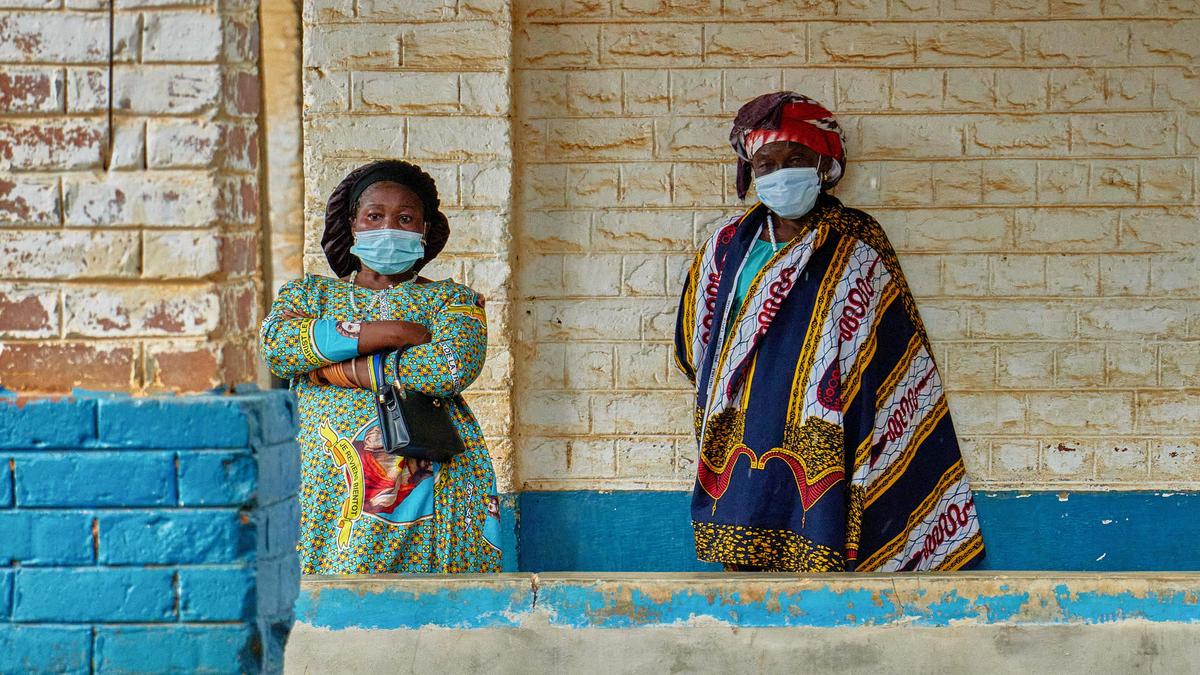
The numbers coming out of central Africa are jumping so fast that international health agencies are scrambling to keep up. It’s a crisis unfolding in real-time. Over 200 people are dead in the Democratic Republic of the Congo (DRC) from an Ebola epidemic that just breached the border into Uganda. Ten more countries are on high alert.
If you think this sounds like a rerun of old health scares, you're missing the terrifying detail that makes this outbreak fundamentally different.
The epidemic is driven by the Bundibugyo ebolavirus strain.
This isn't the Zaire strain you read about in the history books or the one that caused the massive West African crisis a decade ago. For the Zaire strain, medical teams have highly effective monoclonal antibodies and proven vaccines. For the Bundibugyo strain, there are no approved vaccines. There are no approved treatments. Health workers are fighting a highly contagious hemorrhagic fever entirely empty-handed, relying on basic supportive care while trying to contain a virus that is actively moving across international borders.
A Broken Containment Shield
The latest data paints a grim picture. The DRC Health Ministry updated the death toll to 204 from 867 suspected cases spread across three provinces. Just 24 hours earlier, the World Health Organization (WHO) had the count at 177 deaths. The virus is moving faster than the bureaucracy can track it.
The epicenter sits in the eastern DRC, specifically in the conflict-torn Ituri province, before spilling over into South Kivu. Eastern DRC has faced three decades of relentless violence involving dozens of armed groups. State services are virtually nonexistent in rural areas like Ituri.
To make matters worse, South Kivu is heavily controlled by the M23 rebel group. Rebels have zero experience managing a highly contagious viral epidemic. When a government cannot safely enter its own territory to isolate patients, trace contacts, and bury the dead, containment becomes a fantasy.
The failure of containment became clear when the virus showed up in Uganda. Five cases are now confirmed there. The infections involve a cross-border driver, a local health worker who treated an infected patient, and a Congolese woman who traveled back and forth. Uganda quickly suspended public transport to the DRC, but the damage is done. People move, and the virus moves with them.
Dr. Jean Kaseya, head of the Africa Centres for Disease Control and Prevention (Africa CDC), made it clear that "high mobility and insecurity" are the twin engines driving this crisis. The Africa CDC has officially designated 10 additional nations as high-risk zones
- Angola
- Burundi
- Central African Republic
- Republic of Congo
- Ethiopia
- Kenya
- Rwanda
- South Sudan
- Tanzania
- Zambia
Disbelief and Violence on the Ground
We often assume that when a deadly virus appears, communities welcome medical help. Real-world experience tells a darker story. Fear, misinformation, and deep-seated distrust of authorities are causing chaos at the medical frontlines.
In Ituri's Mongbwalu region, local residents attacked and partially burned down an Ebola treatment center. During the chaos, 18 suspected Ebola patients fled the facility back into the community. Another treatment center in Rwampara was intentionally set on fire.
"At the time of the intervention, the community was not aware of the Ebola virus disease outbreak."
That quote from the International Federation of Red Cross and Red Crescent Societies highlights how blind the initial response was. The Red Cross confirmed that three of its volunteers died in Ituri after contracting the virus while managing dead bodies during a humanitarian mission. They didn't even know Ebola was what killed the people they were burying.
When a community doesn’t believe the virus is real, or thinks the treatment centers are killing people, they hide their sick relatives. They wash infected bodies before traditional burials, exposing dozens of family members to highly infectious bodily fluids. This is exactly how an outbreak transitions from a localized cluster into a raging regional epidemic.
Global Fallout and Travel Bans
While the WHO maintains that the global risk is "low," they have upgraded the national risk in the DRC to "very high" and the regional risk to "high." International governments aren't waiting around to see if things get worse.
The Indian government issued a strict advisory telling its citizens to avoid non-essential travel to the DRC, Uganda, and South Sudan. Major transit hubs, including Delhi's Indira Gandhi International Airport, launched 24/7 thermal screening and visual monitoring at entry points. Inbound passengers from central Africa face a mandatory 21-day self-monitoring period.
The United States went a step further, expanding its existing Ebola travel restrictions to include Green Card holders arriving from the affected regions. Air routes are being blanketed with mandatory in-flight health announcements. Isolation bays and rapid-response ambulances are sitting on tarmacs ready to intercept febrile travelers.
The international community is terrified of a repeat of the 2014 West Africa disaster, which claimed over 11,000 lives. Back then, slow institutional responses allowed the virus to enter dense urban centers. This new outbreak has already hit Goma, Butembo, and Katwa—major urban areas in North Kivu with high population densities and massive transit links.
The Immediate Response Strategy
Defeating an outbreak without a vaccine means going back to the brutal, exhausting basics of epidemiological warfare. If you are an international aid worker, a local health official, or a policy maker, the priorities on the ground right now aren't about lab research. They are about raw execution.
- Enforce Zero-Contact Burials: Traditional washing of deceased relatives must stop immediately. Teams must use body bags and specialized chemical disinfectants for every single casualty in the affected zones.
- Decentralize Triage: Large, centralized treatment centers become targets for local militias and terrified crowds. Setting up smaller, mobile isolation tents attached to existing, trusted community clinics keeps a lower profile and builds local trust.
- Secure Logistics Corridors: The DRC government and international partners must negotiate immediate, temporary health ceasefires with rebel groups like M23 to allow medical supply lines and contact tracers to move without fear of ambush.
- Aggressive Contact Tracing: Every person who interacted with the five confirmed cases in Uganda and the 867 suspected cases in the DRC must be tracked down and monitored for the 21-day incubation window.
The window to lock this down to central Africa is slamming shut. Without immediate, aggressive ground intervention that treats the political instability as just as dangerous as the virus itself, those ten at-risk African nations won't just be on a warning list. They will be the next front lines.