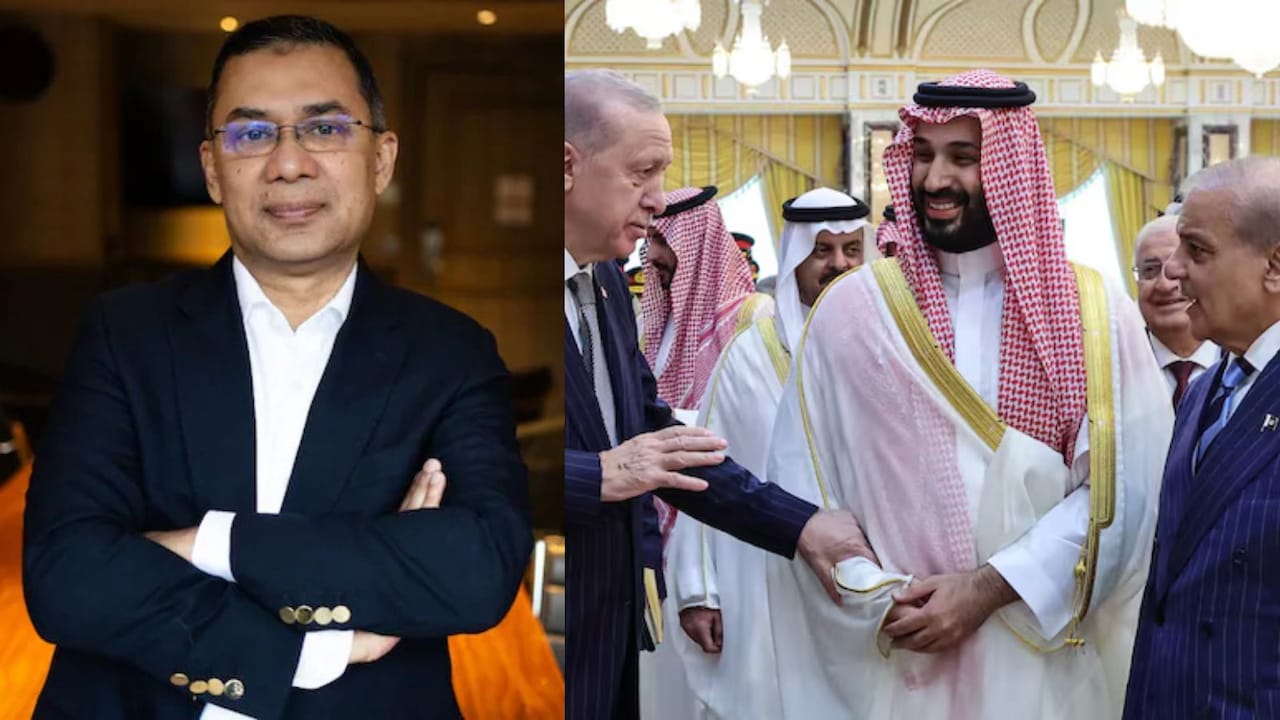
The foreign policy establishment in New Delhi is currently experiencing a collective panic attack. The trigger is Dhaka's calculated openness toward the Mecca Joint Defence Agreement, the trilateral security pact forged between Saudi Arabia, Pakistan, and Turkey. Analysts across television studios and think tanks are hyperventilating, framing Bangladesh's diplomatic maneuver as an existential threat to India's eastern flank and the holy grail of regional security.
They are missing the entire point. Expanding on this theme, you can also read: The Digital Switchboard Silence and the Cost of Speaking Abroad.
The lazy consensus treats South Asian geopolitics like a zero-sum football match. If a neighboring state flirts with a West Asian security architecture containing Pakistan, old-school security hawks immediately cry betrayal and project catastrophic military scenarios onto the Bay of Bengal. This is infantile analysis. Bangladesh is not sliding into Islamabad's orbit, nor is it abandoning geographic reality for pan-Islamic romanticism. Dhaka is executing a masterclass in transactional statecraft, and India’s anxiety stems from its own diplomatic overreach, not Bangladeshi perfidy.
The Anatomy of a Phantom Threat
Let us dismantle the panic. The Mecca Pact, signed in August 2026, brings together Saudi capital, Turkish drone manufacturing, and Pakistan's military apparatus under a mutual defense umbrella. Alarmists in Indian media love to label it an Islamic NATO, invoking the ghosts of 1971 and imagining Pakistani divisions materializing on the borders of West Bengal and Assam. Experts at NBC News have also weighed in on this trend.
This is sheer fantasy.
A military alliance is only as credible as its logistics, its integrated command structure, and the alignment of its core national interests. The Mecca Pact currently possesses none of these features in a cohesive, institutionalized format. Turkey has its own regional ambitions in the Mediterranean and the Caucasus, Saudi Arabia is fixated on economic diversification and managing its immediate neighborhood, and Pakistan is economically constrained.
When Bangladesh's newly appointed state ministers for foreign affairs signaled a positive approach toward the framework, they weren't plotting a military encirclement of India. They were signaling economic pragmatism. Millions of Bangladeshi migrant workers sweat in the Gulf, generating the remittances that keep the national ledger afloat. Securing institutional longevity for those economic lifelines through closer ties with Riyadh is not an act of war; it is basic economic survival.
The Real Crisis in New Delhi
India's strategic elite are projecting their own failures onto Dhaka. For years, New Delhi's foreign policy has tilted heavily toward a tight nexus with Israel and Washington, while letting relations with traditional West Asian heavyweights and immediate neighbors drift into transactional coldness. By alienating Iran and leaning into rigid, bilateral dominance over smaller neighbors, Indian foreign policy created a strategic vacuum.
Nature and geopolitics abhor a vacuum. When Dhaka experiences a domestic political transition—anchored by a fierce "Bangladesh First" economic doctrine—it is going to diversify its partnerships. Expecting Bangladesh to remain permanently enclosed within a single security dependency is institutional arrogance.
The panic over the Siliguri Corridor—the narrow "Chicken's Neck" connecting mainland India to its northeastern states—is invoked every time Dhaka breathes independently. Let's speak plainly: the security of the Northeast does not depend on whether Bangladesh signs a diplomatic communiqué with Saudi Arabia. It depends on India's internal governance, economic integration of the region, and maintaining respectful, equal bilateral ties. Treating every sovereign overture from a neighbor as a casus belli only pushes those nations further into alternative alignments.
The Playbook for Realists
If New Delhi wants to secure its borders, it needs to abandon the mindset of an imperial overlord and adopt the posture of a confident regional anchor.
- Stop the Moralizing: Dhaka does not owe New Delhi a veto over its foreign policy. Every time Indian commentators throw tantrums over Bangladesh diversifying its diplomatic portfolio, they insult a sovereign nation's agency.
- Double Down on Economic Interdependence: Power in the twenty-first century is denominated in supply chains, energy grids, and digital infrastructure, not imaginary troop movements across the delta. India should integrate Bangladesh so deeply into regional economic frameworks that military pacts thousands of miles away become irrelevant.
- Accept Multi-Alignment: The era of exclusive spheres of influence is dead. Middle powers like Bangladesh will deal with everyone—China, the US, Saudi Arabia, and India—simultaneously. Get used to it.
The real danger to regional stability is not Bangladesh joining a West Asian diplomatic framework. The danger is an insecure India overreacting to phantom threats and turning a cooperative neighbor into a genuine adversary through sheer diplomatic clumsiness.
Stop fearing the map and start fixing the policy.
Bangladesh Considers Joining Mecca Defence Framework
This video provides an in-depth breakdown of Bangladesh's evolving foreign policy shift and its strategic considerations regarding the Mecca defense framework.
http://googleusercontent.com/youtube_content/1