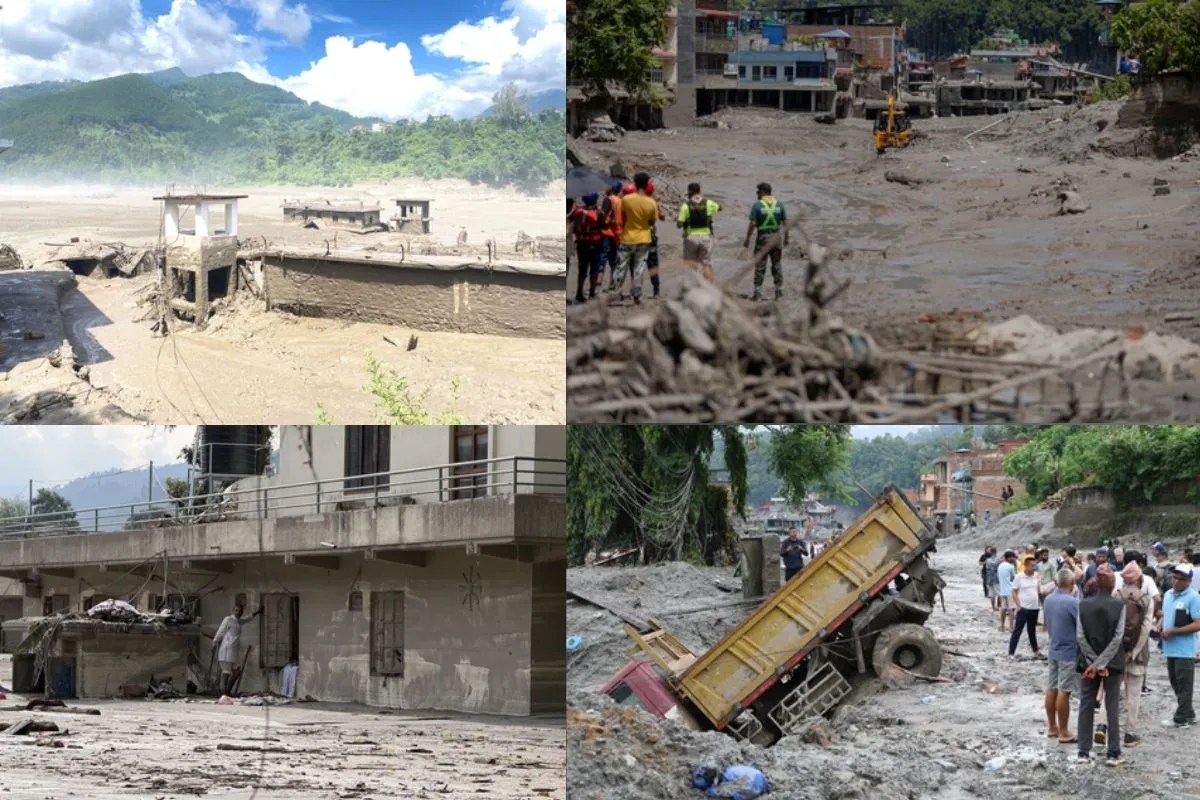
The water arrived without warning, moving fast enough to sweep concrete foundations clean off the bedrock. In the remote mountain villages of Nepal, the monsoon does not merely rain; it dismantles. Entire communities have been left staring at gravel flats where their homes once stood, facing a winter without shelter, stored crops, or clean water. Survivors speak of a terrifying roar echoing down narrow gorges before the mudwalls collapse, burying livestock and family heirlooms in a single, violent rush.
Official reports tally the dead and count the immediate distribution of emergency tarps. But those tallies obscure a harder truth. These catastrophes are not freak anomalies of nature. They are the predictable outcome of rapid, unregulated infrastructure development colliding with fragile Himalayan ecosystems.
Anatomy of a Himalayan Disaster
When torrential rains saturate steep mountain terrain, physics takes over. Water seeks the path of least resistance, carrying millions of tons of topsoil, boulders, and debris down steep gradients. Over the past decade, however, the velocity and destructiveness of these flash floods have intensified.
Unmanaged rural road expansion serves as a primary accelerant. Bulldozers carve unpaved tracks into unstable mountain slopes to connect isolated settlements. Engineers often dump excess excavated debris directly down the hillside. When heavy monsoon rains hit, this loose earth liquefies instantly, triggering massive landslides that obliterate everything downhill.
Local farmers watch the hillsides scar over year after year. They know the risks. Yet economic survival forces them to stay put, farming marginal land on steep valley floors vulnerable to shifting river channels.
The Economics of Relocation Failure
Government response plans rely heavily on temporary relief camps and nominal cash payouts. A few thousand rupees rarely suffice to rebuild a destroyed stone house or replace lost agricultural land. Families are caught in a cycle of poverty and displacement.
- Financial Destitution: Agricultural fields are buried under meters of sterile sand and silt, rendering them unfarmable for generations.
- Infrastructure Collapse: Suspension bridges, micro-hydro plants, and local trails wash away, cutting off remote valleys from medical supplies and markets.
- Systemic Neglect: Relief distribution is frequently delayed by blocked roads, leaving stranded villagers to scavenge for food.
Bureaucrats in Kathmandu draft policies from air-conditioned offices far removed from the riverbanks. They view the disaster zone through the lens of relief logistics rather than structural reform. Until local communities gain the authority and funding to mandate slope stabilization and proper drainage, every monsoon season will yield the same tragic headlines.
The water eventually recedes, leaving behind cracked mud and the skeletons of washed-out homes. The villagers remain, digging through the debris with bare hands, waiting for a safety net that rarely arrives in time.



