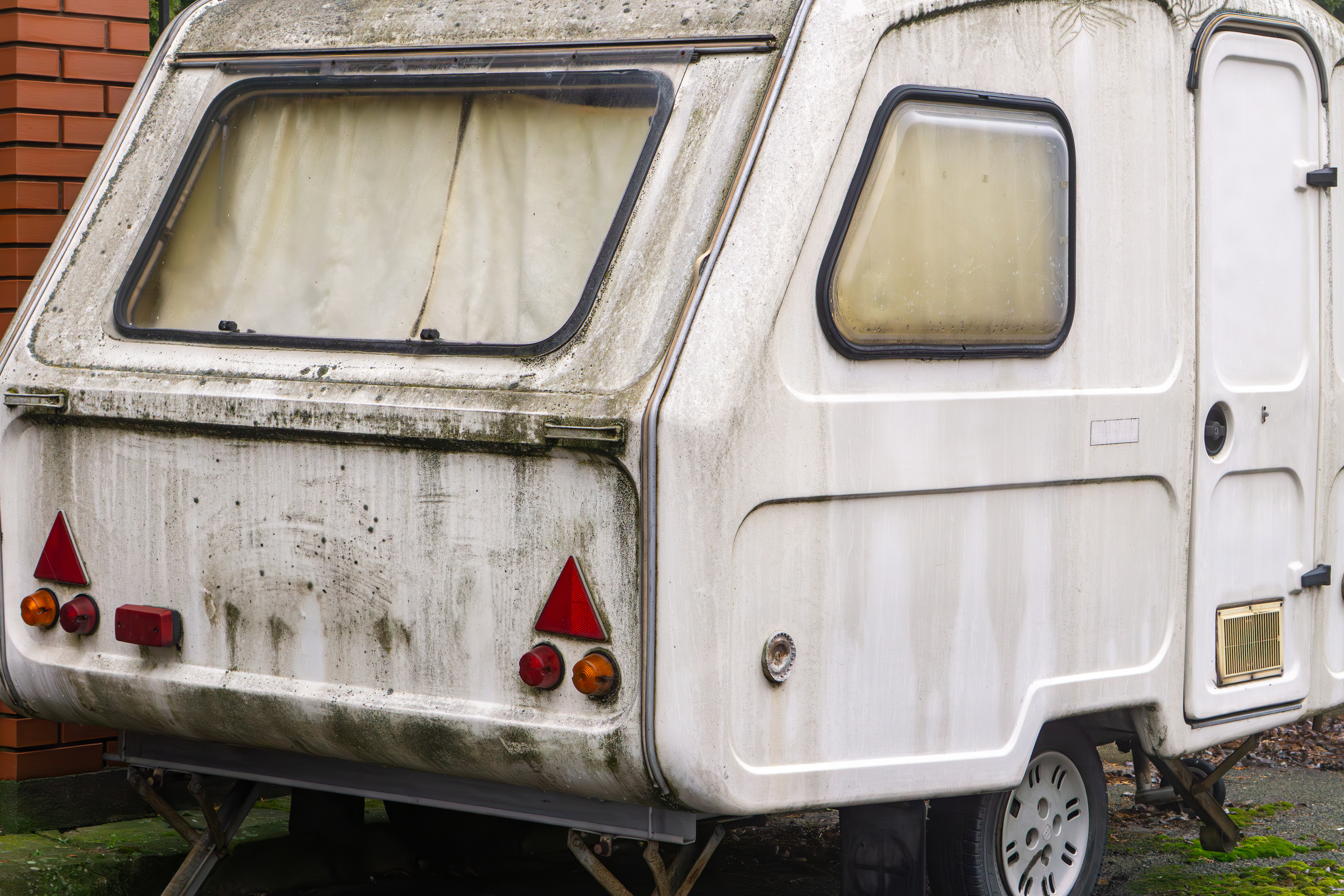
The local news cycle loves a "mystery" caravan. You’ve seen the headlines. A homeowner wakes up, looks out their window, and sees a massive, dual-axle hunk of aluminum sitting in their neighbor’s garden. They call the council. They call the papers. They cry about "eyesores" and "lost views." They claim there is "nothing they can do."
They are right about the last part. They are dead wrong about why.
We need to stop treating the appearance of a caravan as a neighborhood tragedy. Most people view property law as a static shield designed to protect their suburban aesthetic. It isn't. It’s a dynamic battlefield of land-use rights. That "mystery" caravan isn't a lapse in enforcement; it is usually a clinical, perfectly legal exploitation of the Permitted Development framework.
If you’re angry about a caravan next door, you aren't a victim of a mystery. You’re just illiterate in the language of the Town and Country Planning Act 1990.
The Myth of the "Illegal" Structure
The lazy consensus suggests that if you didn't ask for permission to put a giant box on wheels in your yard, you’ve broken the law. This is the first lie.
In the UK and similar common-law jurisdictions, a caravan is not a "building." It is a "chattel"—an item of movable personal property. As long as that caravan is used in a manner "incidental to the enjoyment of the dwelling house," it doesn't require planning permission. It is legally no different from a very large garden gnome or a parked SUV.
I have watched local authorities waste tens of thousands of pounds in taxpayer money trying to litigate these cases, only to be humiliated by the Caravans Sites and Control of Development Act 1960. The definition of a caravan is incredibly broad. It includes structures that come in two parts and are assembled on-site.
The neighbor screaming about "unauthorized development" is shadowboxing with a ghost. The law doesn't care about your property value. It cares about whether the structure is permanent. If it has wheels (even if they are hidden) and can be moved, it wins.
The "Incidental Use" Loophole You’re Ignoring
The competitor articles always focus on the "mystery" of who is living there. They frame it as a clandestine operation. It’s not.
To keep a caravan legally parked in a garden, the owner only has to prove it is an extension of the house’s existing functions.
- Need an extra bedroom for a teenager? Legal.
- Need a home office because the spare room is now a nursery? Legal.
- Need a "granny annex" for an aging relative? Legal.
The moment you try to rent that caravan out as a separate dwelling with its own postal address and utility bill, you’ve crossed the line. But as long as the inhabitant is eating dinner in the main house and using the main house’s laundry, that caravan is effectively a detachable room.
Stop asking "how can they do this?" Start asking "why didn't I think of this?" In a housing market where a loft conversion costs $60,000 and takes six months of bureaucratic hell, a $10,000 second-hand caravan is a stroke of genius. It’s not a nuisance; it’s a middle finger to the predatory construction industry.
Why Councils Pretend to be Helpless
You’ll often hear council spokespeople say they are "investigating" or that "the process is complex." This is bureaucratic code for "we know we’re going to lose, but we have to look busy so the taxpayers don't revolt."
Enforcement officers are terrified of these cases. Why? Because the burden of proof is on the council to show that the caravan has changed the "use class" of the land.
Imagine a scenario where a homeowner claims their cousin is staying in the caravan for three months while their house is being renovated. The council has to prove that the cousin isn't eating in the main kitchen. They have to prove the caravan is a self-contained unit. That requires surveillance. It requires resources. Most importantly, it requires a level of intrusiveness that the courts rarely grant for a civil planning dispute.
The "mystery" isn't how the caravan got there. The mystery is why anyone expects the government to spend five figures to remove a trailer from a driveway.
The Aesthetic Narcissism of the Modern Suburb
The outcry against garden caravans is rooted in a toxic brand of aesthetic narcissism. We have been conditioned to believe that when we buy a house, we are also buying a permanent, unchanging view of everyone else’s property.
This is a hallucination.
Land ownership is the right to utilize space. If your neighbor decides to store a boat, a caravan, or a collection of vintage tractors in their garden, they are exercising their rights. The idea that your "right to a view" trumps their "right to use their land" has no basis in actual law.
We see this same entitlement in the "Not In My Backyard" (NIMBY) movements that stall high-density housing. The garden caravan is just the micro-version of this conflict. It represents the democratization of space. It’s an affordable way to expand a living footprint without feeding the beast of the banking and development sectors.
The High Cost of Winning
Let’s say you actually manage to get a caravan removed. You spend months petitioning, you harass the planning office, and you finally get an enforcement notice served.
What have you won?
You have now ensured that your neighbor—the person who lives ten feet away from you—hates you with the fire of a thousand suns. I’ve seen neighborhood feuds triggered by caravan disputes that lasted twenty years. I’ve seen people spend more on legal fees than the caravan was worth, only for the neighbor to replace the caravan with a "permitted" shed that was even uglier and blocked even more light.
There is a brutal honesty to a caravan. It says: "I need more space, and I’m not going to ask permission to survive."
How to Actually Handle the Situation
If a caravan appears in the garden next door, the "People Also Ask" sections of Google will tell you to check for planning breaches. They’ll tell you to look for "change of use."
Forget that. It’s a waste of time.
If you want to solve the problem, stop acting like a junior detective and start acting like a neighbor. The "mystery" usually disappears when you realize the person in that caravan is a human being trying to avoid homelessness or a student trying to beat a rigged rental market.
The real disruption here isn't the caravan. It’s the fact that our housing infrastructure is so broken that a trailer in a garden has become a viable, necessary alternative.
The caravan is a symptom. Your outrage is a distraction.
If you can’t stand looking at it, buy a taller fence. If you can’t afford a taller fence, maybe consider moving into a caravan yourself. The overhead is lower, and you can take your "view" with you when you leave.
Stop calling the council. Start minding your own business.