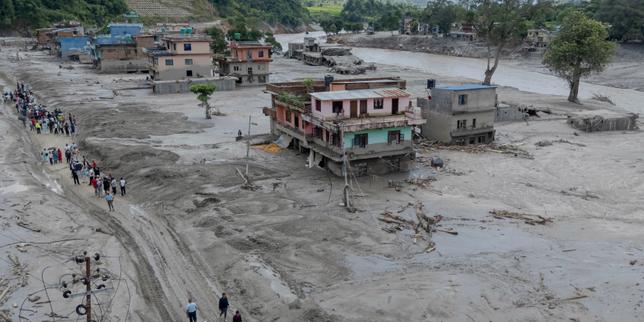
Mountain communities rarely get a warning before a disaster strikes. When an avalanche of ice and rock triggered catastrophic flash floods along the Nepal-Tibet border, entire villages vanished under thick mud and raging water.
Governments and international bodies are now racing against the clock. With hundreds of people still missing, nations are ramping up humanitarian aid to tackle one of the worst climate-related disasters in the Himalayan region. Building on this theme, you can find more in: Why China Stripping Zhang Youxia and Liu Zhenli Changes Everything.
The Global Emergency Response
The scale of destruction caught agencies off guard. Roads are blocked, and over thirty-five bridges are completely destroyed. Ground transport is practically impossible in many areas.
Despite these logistical nightmares, foreign aid started moving within hours. India stepped up immediately as a first responder, airlifting tens of tonnes of vital medical supplies, food packets, and tents directly into Kathmandu. Analysts at The Guardian have also weighed in on this matter.
Other heavy hitters joined quickly. The United Nations released millions from its emergency response fund to supply clean water and mobile medical shelters. China deployed specialized rescue teams alongside cash assistance and massive shipments of relief hardware. Meanwhile, Western nations like the United Kingdom, the United States, and Australia pledged millions in financial backing while coordinating with local authorities to track down missing tourists and citizens.
Why This Crisis Is Different
Natural disasters in mountain terrain present a unique nightmare for rescue workers. Heavy machinery can't reach remote valleys when every single access route is washed away.
Security personnel and local volunteers are doing the heavy lifting on foot. They are combing through debris fields manually.
Worse yet, the danger hasn't passed. Geologists and climate experts on the ground warn that debris blockages have formed unstable natural lakes upstream. If those natural dams burst, a second wave of destructive water could wipe out whatever infrastructure survived the initial impact.
Getting Resources Where They Matter
Money means nothing if it sits in bank accounts while people starve or lack clean drinking water. The primary challenge right now is coordination.
Nepal's government is working closely with international clusters like the World Health Organization and the World Food Programme to distribute supplies efficiently. Temporary bridges are being planned to restore basic connectivity.
If you want to help, stick to established humanitarian funds already working directly with local authorities on the ground rather than unverified channels. The road to recovery for these mountain regions will take years, and sustained international attention remains vital long after the headlines fade.