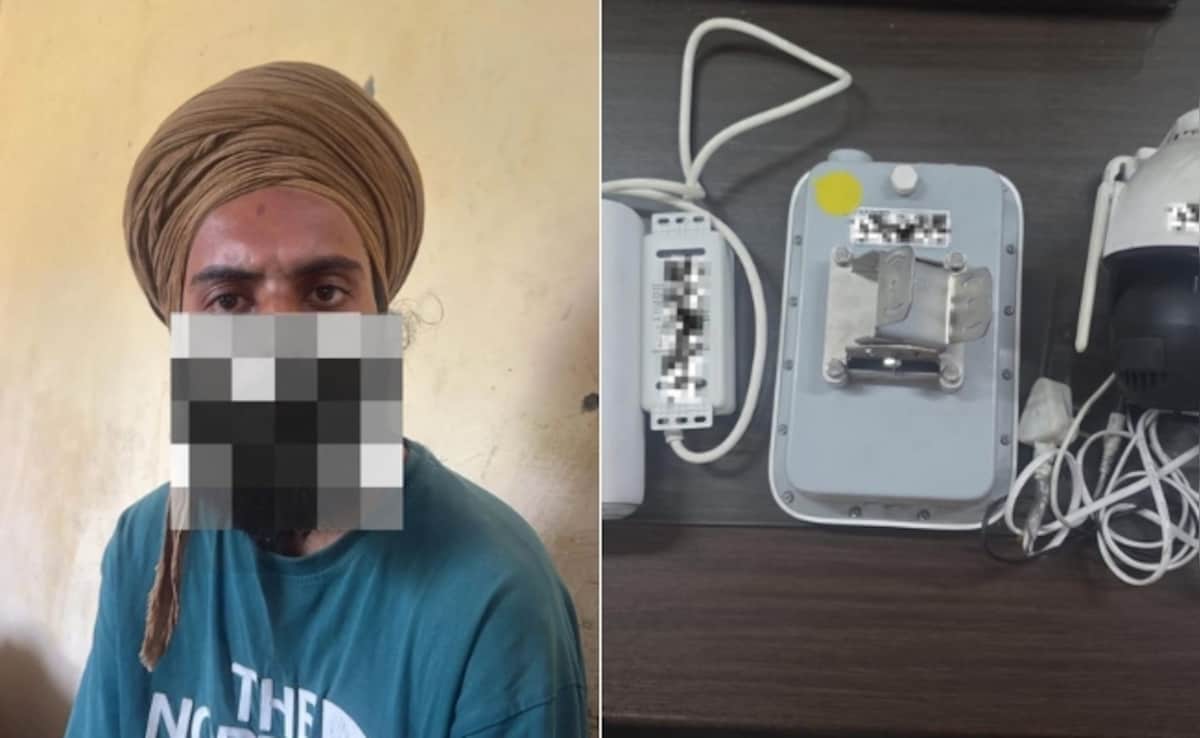
The headlines practically write themselves. A civilian in a sensitive border region installs an off-the-shelf closed-circuit television camera. The feed captures military convoys. The data crosses an international border. Instantly, the media establishment throws up its hands in collective panic, screaming about espionage, cheap tech, and the immediate compromise of national security.
It is a neat, terrifying narrative. It is also completely missing the point.
The lazy consensus surrounding cross-border surveillance incidents—like the recent reports of a civilian setup along a highway in Punjab capturing Indian Army movements—focuses entirely on the wrong villain. The public outcry demands harsher regulations on consumer electronics, stricter local policing, and the demonization of low-level actors. We treat a hundred-dollar camera like a weapon of mass destruction.
This reaction exposes a fundamental misunderstanding of modern signals intelligence and operational security. The threat is not the hardware on the pole. The threat is the systemic failure to adapt military protocols to a world where darkness no longer exists.
The Myth of the Invisible Convoy
For decades, military logistics relied on a simple assumption: if you move large formations down a public road in the middle of the night, you are functionally invisible.
That assumption is dead. It has been dead for a decade.
When a state actor wants to track troop movements across a border, they do not rely on a local shopkeeper gluing a camera to a highway sign. They use synthetic aperture radar satellites that pierce cloud cover at midnight. They use signals intelligence assets that intercept the unencrypted cellular pings of hundreds of soldiers who forgot to put their personal phones into airplane mode. They map commercial data aggregators that buy location logs from ordinary weather apps installed on those devices.
To believe that an amateur camera rig is a catastrophic intelligence breakthrough is to misunderstand how modern espionage works.
Imagine a scenario where a foreign intelligence agency completely ignores civilian assets. They still know exactly when a brigade moves because the local supply chain spikes. They see the sudden order for thousands of rations. They track the logistical tail. A camera on a highway does not create the data point; it merely confirms what a competent analyst already deduced twelve hours prior from commercial satellite imagery available to anyone with a credit card.
The Flawed Premise of Absolute Public Secrecy
The immediate reaction from bureaucratic authorities is always the same: ban, restrict, regulate. They want to create data exclusion zones around every major transport artery.
This strategy fails because it scales terribly. You cannot police every square meter of a civilian highway in a densely populated border state. More importantly, attempting to hide massive, rumbling multi-ton military assets from public view on a shared national highway is an operational absurdity.
If your operational security relies entirely on the hope that not a single civilian looks out their window, takes a smartphone video, or installs a security system for their own property, your operational security is already nonexistent.
True resilience does not come from trying to force the civilian world into a state of permanent blindness. It comes from assuming you are constantly being watched and altering your behavior accordingly.
Digital Exhaust and the Real Espionage Vector
The focus on physical cameras obscures the far more dangerous reality of digital exhaust. This is where the real vulnerability lies, and it is where defense establishments consistently fail to patch the leaks.
Consider the baseline vulnerabilities that exist entirely outside of civilian view:
- Unencrypted Comms: The reliance on commercial or poorly encrypted communication networks during transit.
- Geotagged Metadata: Personnel uploading photos to social media platforms with active location services.
- Predictable Scheduling: Moving assets along predictable routes at identical intervals, making predictive modeling trivial for adversaries.
Fixing these vulnerabilities requires institutional discipline, not local ordinances banning security cameras. It requires implementing strict emissions control protocols for every single soldier in transit. It means treating every public road as a hostile observation environment by default.
If a military unit moves down a highway with the assumption that they are being live-streamed, they utilize deception tactics. They use decoy movements. They vary their timing. They fragment their convoys. They do not complain that the world can see them; they change what the world is allowed to interpret.
The High Cost of Misdirected Panic
When we focus the national conversation on low-level, physical breaches, we waste finite security resources on theater. Local police forces are dispatched to audit every corner store camera, creating a false sense of accomplishment while the systemic architecture of data exfiltration remains untouched.
I have watched organizations spend millions of dollars building physical walls to block lines of sight, only to leave their internal networks vulnerable to basic phishing attacks or their personnel exposed via commercial fitness tracking apps that map the exact perimeter of their bases.
We are fighting a twentieth-century war against visibility instead of a twenty-first-century war against data aggregation.
The hardware is cheap, ubiquitous, and permanent. The internet cannot be un-invented, and the border regions of the world will only become more saturated with connected devices, not less. Expecting a civilian population to remain analog so the military can avoid updating its transit protocols is a losing strategy.
Stop looking at the camera on the highway. Start looking at the doctrine that allowed the movement to be meaningful in the first place. Turn off the phones, scramble the schedules, and accept that visibility is a baseline condition of the modern world. Act accordingly.