The silence is the first thing that hits you.
Every year, across Tunisia, a strange and total quiet descends upon millions of homes. It happens precisely at 8:00 AM. It is not the silence of a sleeping household, but the tense, breathless stillness of a nation holding its breath. Expanding on this theme, you can also read: Why Putting Counter Drone Systems On Warships Is A Desperate Illusion.
Then, the screens go dark.
If you try to refresh your feed, the loading circle spins indefinitely. If you try to send a WhatsApp message to a coworker, it hangs on a single, unyielding gray checkmark. The modern world, with all its chaotic digital chatter, simply vanishes. For a few hours every morning, an entire country is deliberately severed from the global network. Observers at Gizmodo have also weighed in on this matter.
This is not the work of cyberterrorists. It is not a infrastructure failure or a sudden solar flare. It is a calculated, government-sanctioned blackout designed to solve a single, desperate problem: preventing teenagers from cheating on their high school exit exams.
Welcome to the Baccalauréat in Tunisia, where the fight for academic integrity has turned a standardized test into a matter of national security.
The Ghost in the Exam Room
To understand why a state would take the nuclear option of cutting off the internet for its entire population, you have to understand the sheer weight of the Bac. Inherited from the French colonial era, this exam is not just a test. It is a societal gatekeeper. It determines everything. Your career, your social standing, your family’s honor, and your chance to escape economic stagnation—all of it rides on a few sheets of paper distributed over one intense week in June.
The pressure is suffocating. And where there is desperate pressure, human ingenuity takes a dark turn.
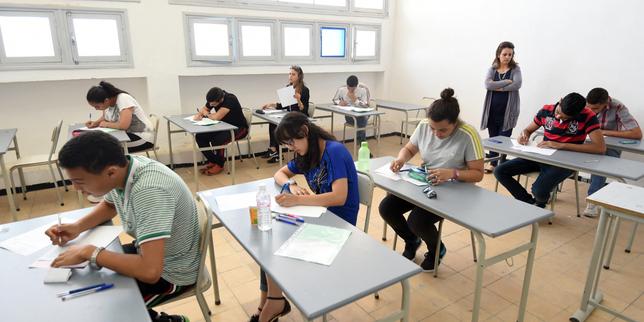
Let us look at a hypothetical student. We can call her Amina. Amina is seventeen, sitting at a wooden desk in a humid classroom in Tunis. Her palms are sweating. For months, her parents have spent their meager savings on private tutors, skipping meals to ensure she has a fighting chance. The weight of their expectations sits on her chest like an anvil.
A few years ago, a student in Amina’s position had a dangerous alternative to studying. For a few hundred dinars, they could buy a microscopic Bluetooth earpiece, flesh-colored and completely invisible to the naked eye. A co-conspirator sitting in a car outside the school walls, equipped with a smartphone and a PDF of the exam leaked minutes after distribution, could dictate the answers directly into the student's ear.
By the mid-2010s, cheating had evolved from scribbling formulas on a desk into a highly organized, tech-driven black market. Dictation rings, high-definition miniature cameras disguised as pens, and instant messaging groups turning exam security into a sieve. The credibility of the national degree was collapsing.
When a system’s core currency—trust—becomes worthless, the state faces an existential crisis. If everyone passes by fraud, the value of the education disappears.
So, the authorities stopped playing catch-up with the technology. They decided to kill the medium.
The Collateral Damage of Absolute Security
The logic behind the blackout is simple, brutal, and effective. If there is no mobile data and no fixed internet during the first hour of each exam session, a leaked paper cannot be broadcast to the outside world. The invisible earpieces go dead. The digital lifelines are severed.
But a modern economy does not function in a vacuum.
Consider what happens next: the moment the clock strikes eight, the economic gears of the country grind to a halt. Freelancers lose connection with international clients. Remote workers are suddenly absent from critical morning meetings. E-commerce platforms freeze, deliveries are delayed, and digital payment systems sputter.
The state attempts to minimize the damage by targeting mobile networks and specific fixed-line providers during peak testing hours, but the ripple effects are undeniable. It is a blunt instrument used to perform a delicate surgical operation. It is like shutting down an entire city’s power grid to stop a single shoplifter.
The first time you experience it as an outsider, it feels dystopian. You sit in a café, watching people stare blankly at their phones, realizing how fragile our connection to the collective human knowledge base really is. The infrastructure we view as a permanent utility is revealed to be a faucet that can be turned off with a single bureaucratic stroke.
Yet, if you speak to parents in Tunis, many do not rage against the government. They rage against the culture that made the blackout necessary. They accept the inconvenience because they want a fair fight for their children. They want to know that the kid sitting next to Amina cannot buy a better future with a hidden earpiece and a fast data plan.
The Cat-and-Mouse Game of the Digital Age
The Tunisian approach highlights a profound irony of our time. We spent decades building an interconnected world to democratize information, only to find that total access to information can destroy the structures we use to measure human capability.
Tunisia is not alone in this desperate measure. Across parts of North Africa and the Middle East, from Algeria to Syria, governments have resorted to variations of the internet kill-switch during exam season. Each year, human rights organizations criticize the practice, pointing out the economic losses and the restriction of freedom of expression. They argue for localized cell-jammers or better physical security.
But cell-jammers are expensive, and tech adapts. Jammers can be bypassed by shifting frequencies; physical searches can be evaded by increasingly clever hiding spots. A total network shutdown, however, is a physical law. You cannot route around a dead wire.
The real problem lies elsewhere. The blackout is a confession of systemic vulnerability. It is an admission that the traditional educational model, which relies on the memorization and regurgitation of facts under strict supervision, is fundamentally incompatible with the smartphone era.
We are testing students on their ability to act like analog computers in a world where digital computers are ubiquitous.
The Long Road to Noon
Back in the classroom, Amina stares at her exam paper. The initial panic begins to fade, replaced by the mundane reality of ink and paper. Without the digital noise, without the temptation or the fear of a rival cheating their way to the top, the room belongs entirely to the students and their thoughts.
Outside, the country waits. Businesses schedule their days around the Ministry of Education’s timetable. The internet will return at noon, rushing back into the country’s smartphones like water through a broken dam. Notifications will pile up, emails will flood in, and the modern world will resume its breathless pace.
But until then, the silence remains. It is a reminder of the extraordinary lengths a society will go to preserve an old idea of merit, even if it means turning off the future for a few hours every morning.
The ink dries on the page. The clock ticks toward midday. And a nation waits for its connection to be restored, one student at a time.