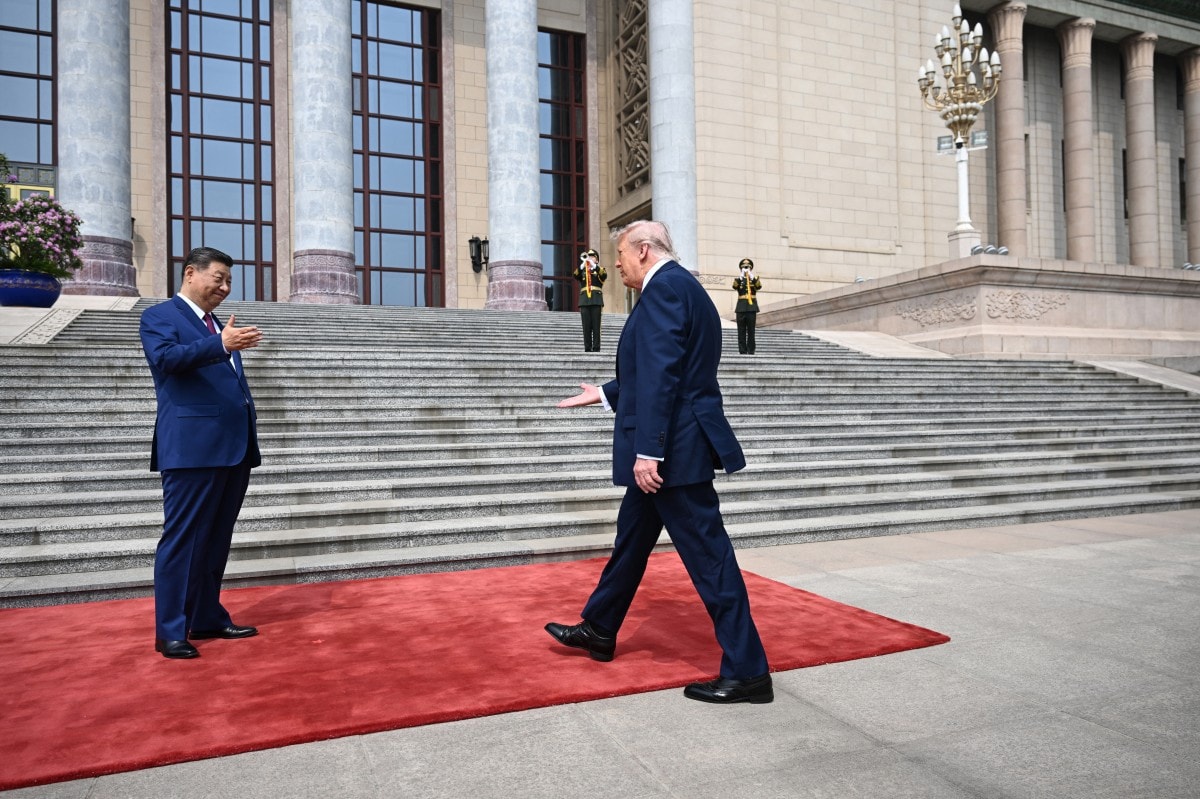
The mainstream media is obsessed with the theater of the "Great Leader." They see Donald Trump’s praise for Xi Jinping as a sign of weakness or, worse, a bizarre personal infatuation. They look at the "fantastic ties" rhetoric and assume we are heading toward a cozy era of global cooperation.
They are dead wrong. For an alternative perspective, check out: this related article.
What the pundits miss—the ones who have never sat in a boardroom negotiating with a state-backed behemoth—is that in high-stakes geopolitics, flattery is a blunt-force instrument. It is a smokescreen for the most aggressive decoupling strategy in modern history. The "Great Leader" talk isn't a white flag; it’s the velvet glove over a brass knuckle.
The consensus view suggests that warm words lead to soft policies. History, and the actual mechanics of trade, tell a different story. Similar analysis on this trend has been provided by Business Insider.
The Flattery Trap and the Art of the Aggressive Hug
If you’ve spent any time in international trade, you know the most dangerous person in the room is the one calling you "friend" while checking your pocket for a wallet. Trump’s rhetoric regarding Xi Jinping is a tactical maneuver designed to isolate the leader from the institution. By praising Xi’s strength, Trump creates a binary: the leader is "great," but the trade practices are "criminal."
This isn't about mutual admiration. It’s about personalizing a conflict to bypass the bureaucratic sludge of the State Department. When you call a rival "fantastic," you aren't surrendering; you are setting the stage for a transaction where the "friendship" is the only thing keeping the tariffs from doubling.
The media calls this inconsistency. I call it leverage.
Why a Fantastic Relationship is the Last Thing We Need
The "lazy consensus" screams for stability. They want predictable markets, steady supply chains, and a "return to normalcy." But "normalcy" is exactly what gutted the American Midwest for thirty years.
A "fantastic" relationship with China, by traditional diplomatic standards, means:
- Ignoring intellectual property theft to keep the peace.
- Allowing the subsidization of EV batteries to crush domestic manufacturing.
- Accepting a trade deficit that functions as a massive wealth transfer.
The moment the US and China truly get along is the moment the US ceases to compete. Conflict is the only mechanism that forces the repatriation of critical technology. If the friction disappears, the incentive to build domestic semiconductor fabs or rare earth processing plants vanishes. Stability is the silent killer of American innovation.
The Illusion of the Two Party Consensus
People love to ask, "Will a change in tone fix the economy?"
The premise of the question is flawed. The economy doesn't need "fixing" through friendship; it needs re-architecting through friction. We have spent decades optimizing for price. We should have been optimizing for resilience.
I’ve watched executives at Fortune 500 companies weep over their supply chain dependencies. They spent twenty years "leveraging" (to use a word I despise) cheap labor in Shenzhen, only to realize they no longer own the blueprints to their own products. A "fantastic" relationship just encourages more of this addiction. It’s the dealer telling the addict they have a great partnership.
Subsidies, Semiconductors, and the Reality of State Capitalism
We need to stop pretending China is a market economy. It is a command economy wearing a Gucci suit.
When Xi Jinping is praised for being a "strong leader," it’s an acknowledgement of his ability to direct capital with a precision no Western CEO can match. He can pivot an entire nation toward quantum computing or green energy with a single directive.
If the US plays the "friendship" game, we lose. The only way to counter state-directed capital is with aggressive, protectionist friction.
The Cost of Competition
Let’s be clear about the downsides. My contrarian stance isn't free:
- Inflationary Pressure: Decoupling makes things expensive. You will pay more for your iPhone.
- Market Volatility: The "Great Leader" tweets cause 500-point swings in the Dow.
- Retaliation: American farmers often bear the brunt of these "fantastic" ties when China stops buying soy.
But the alternative—the "stable" path—is a slow slide into industrial irrelevance.
The Sovereignty of Supply
Imagine a scenario where 90% of your antibiotics and 80% of your advanced sensors come from a nation you are trying to "get along" with. In a crisis, that "fantastic" relationship is worth zero.
The rhetoric we see today—the praise for Xi—is a distraction for the masses while the real work of stripping away dependency happens behind the scenes. The tariffs aren't going away. The export controls on high-end chips aren't going away. The "friendship" is the anesthetic for the surgery.
Stop Asking if They Like Each Other
The most common question I hear is, "Do they actually respect each other?"
Who cares?
This isn't a high school prom. This is a cold-blooded struggle for the top spot in the global hierarchy for the next century. Whether they exchange birthday cards or insults is irrelevant to the structural reality of the Thucydides Trap.
The "Great Leader" narrative is a tool for domestic consumption and a psychological play against a leader who thrives on "face." If you give Xi "face" through public praise, you gain the political capital to squeeze his economy through private policy. It’s a classic misdirection.
The Actionable Truth for Investors and Leaders
If you are waiting for a "thaw" in US-China relations to plan your next five years, you are already behind.
- Bet on Friction: Assume the rhetoric will remain warm while the regulations turn frigid.
- Diversify or Die: Any business model that relies on "fantastic" ties for its margin is a ticking time bomb.
- Watch the Actions, Ignore the Adjectives: When a politician calls a rival "brilliant," check to see which export ban they signed that morning.
The era of global integration is over. The era of strategic hostility disguised as mutual respect has begun.
If you want a "fantastic" relationship with China, move to 1995. If you want to survive the 2020s, embrace the conflict. The praise is a placeholder. The friction is the point.
Stop looking for peace in a theater of war.