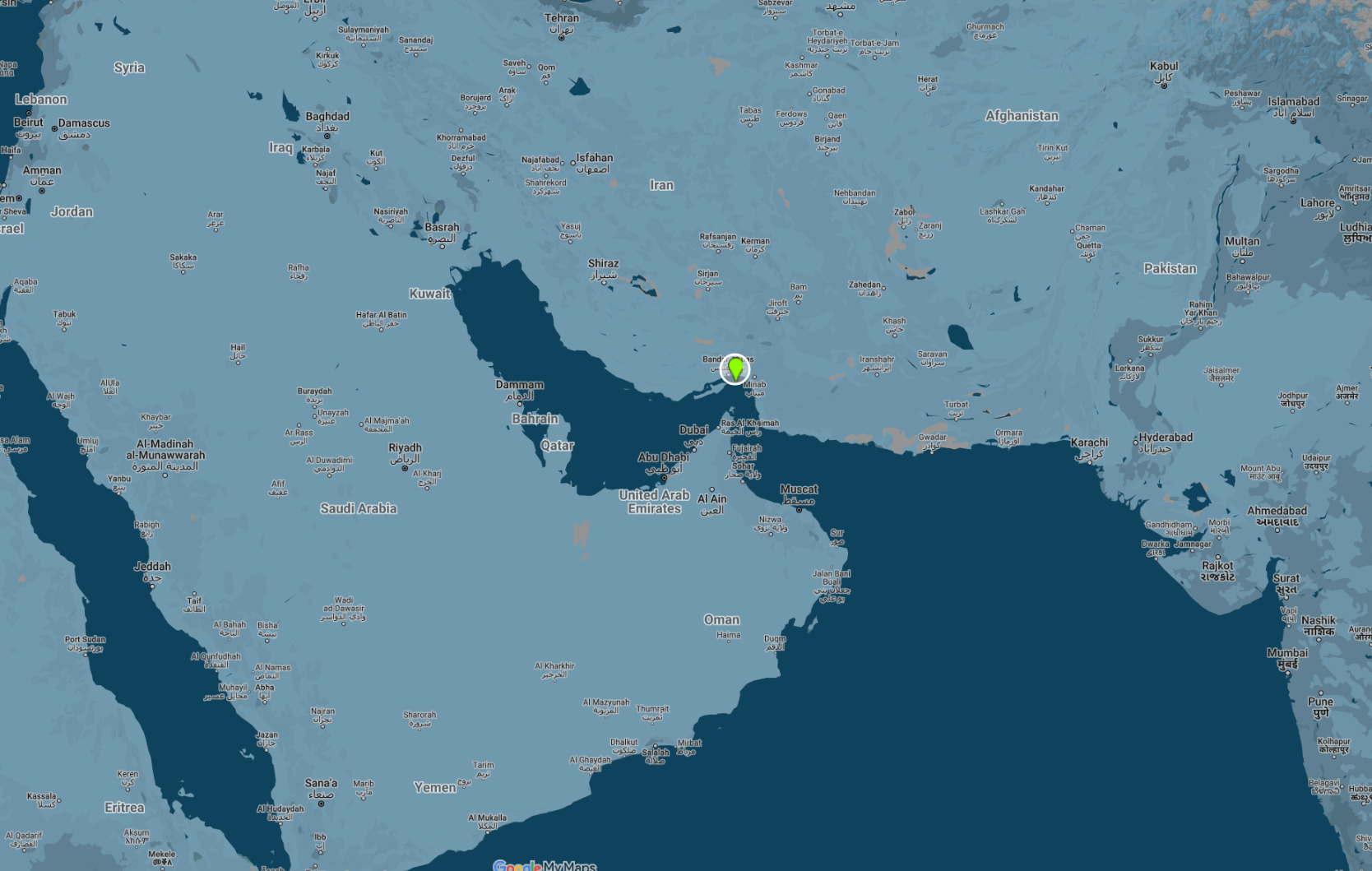
Geopolitics is often a theater of the absurd, and the current narrative surrounding the Strait of Hormuz is the latest poorly scripted play. The Indian Express and other mainstream outlets are peddling a frantic story: the Strait is closed, global energy is choking, and Pakistan is the noble neighbor "throwing open" land routes to save the day.
It is a fairy tale.
The reality? The "emergency land routes" through the Taftan and Gabd crossings aren't a strategic masterstroke. They are a desperate, logistical nightmare being sold as a solution to a problem that isn't even what you think it is.
The Blockade is a Pricing Signal, Not a Physical Wall
Mainstream media loves the word "blockade." It conjures images of steel chains across the water. In the modern era, a blockade of the Strait of Hormuz is rarely a total physical stoppage of every vessel. It is an insurance event.
When tensions spike, the actual flow of oil rarely hits zero. Instead, the "War Risk" premiums charged by Lloyd’s of London syndicates skyrocket. We are talking about a jump from 0.05% to 0.5% or 1.0% of the hull value for a single seven-day trip. For a Very Large Crude Carrier (VLCC) worth $120 million, that is an extra million dollars just to wake up in the morning.
The Indian Express frames Pakistan's opening of land routes as a relief valve for this pressure. It isn’t. You cannot replace the throughput of a maritime artery that carries 21 million barrels of oil per day with a fleet of Bedford trucks bouncing over the gravel of Balochistan.
The Math of the Bedford Truck
Let’s dismantle the "land route" logic with basic arithmetic—something the "expert" analysts seem to have skipped.
A standard VLCC carries roughly 2 million barrels of crude. A standard tanker truck on the Quetta-Taftan highway carries about 250 barrels, assuming it isn't overloaded to the point of axle failure. To replace the cargo of one single ship, you need 8,000 trucks.
To replace even 10% of the daily flow through Hormuz, you would need a literal conveyor belt of 8,400 trucks every single day, 24 hours a day. Pakistan’s infrastructure—specifically the N-40 and N-10 highways—would turn into a graveyard of twisted metal and blown tires within forty-eight hours under that volume.
The idea that land routes provide "relief" is a logistical hallucination. These routes are for survival-level trade—onions, cement, and small-scale fuel smuggling—not for stabilizing regional energy security.
The Security Vacuum Nobody Wants to Mention
The competitor article ignores the elephant in the room: the security of the Trans-Sistan route.
The land routes from Iran into Pakistan traverse some of the most volatile terrain on the planet. We are talking about the borderlands of Sistan-Baluchestan and Pakistani Balochistan. This isn't a "seamless" corridor. It is a region plagued by insurgent groups like Jaish al-Adl and the Baloch Liberation Army (BLA).
I’ve seen how these "alternative routes" operate. When you move high-value energy or consumer goods via land through these corridors, you aren't just paying for fuel and drivers. You are paying for private security, "informal taxes" to local tribal leaders, and the very high probability that 5% of your convoy simply disappears.
When the mainstream press talks about "emergency routes," they envision a highway in Switzerland. They should be envisioning a Mad Max set where the rule of law ends 10 kilometers outside the city limits of Quetta.
Why Pakistan is Actually Doing This
If the land route can’t replace the sea, why is Islamabad making such a noise about it? It isn't about regional stability. It’s about a desperate need for hard currency and the legitimization of informal trade.
For years, the border trade between Iran and Pakistan has been the "gray market" heartbeat of the region. By "throwing open" these routes officially, Pakistan is attempting to:
- Tax the Untaxable: Bring the massive Iranian fuel smuggling trade under the umbrella of official customs.
- Geopolitical Leverage: Signal to Washington that if the IMF remains difficult, Pakistan has other "friends" it can turn to, regardless of sanctions.
- Internal Pressure: Quiet the unrest in Balochistan by allowing local traders a legal way to make a living, even if the "legal" part is just a veneer.
It is a domestic survival strategy disguised as a regional humanitarian gesture.
The "Iranian Oil" Illusion
The competitor piece suggests this helps Iran circumvent the blockade effects. This is a misunderstanding of Iranian export mechanics.
Iran doesn't need "emergency land routes" to Pakistan to sell its oil. It has perfected the "Dark Fleet" strategy. They use ship-to-ship transfers, AIS-spoofing, and flag-hopping in the South China Sea. Moving oil by truck into Pakistan is the least efficient way for Tehran to monetize its hydrocarbons.
In fact, Iran’s interest in these land routes is more about importing basic commodities—wheat, rice, and poultry—that it can't easily get through sanctioned banking channels. It’s a barter economy. If you think this is a "strategic shift" in the global energy map, you are looking at the wrong map.
The Hidden Cost: Deteriorating Infrastructure
There is a technical debt here that no one is discussing. Pakistan’s road network is already reeling from the 2022 floods and years of underfunding.
Heavy freight is a destroyer of asphalt. By diverting even a fraction of regional trade to land, Pakistan is effectively liquidating its road infrastructure to gain a few million in customs duties. It is the definition of "eating your seed corn." In three years, the very roads they are "opening" will be impassable craters, and the cost to repair them will exceed the trade revenue generated by a factor of ten.
The Real Question You Should Be Asking
Instead of asking "Will land routes save the economy during a blockade?", you should be asking: "Why is the narrative being pushed so hard now?"
The answer is simple: it’s a distraction. It distracts from the fact that neither Iran nor its neighbors have a viable Plan B for a sustained maritime conflict. The land routes are a psychological sedative for a panicked market. They provide the appearance of movement while the actual gears of the regional economy are grinding to a halt.
Stop Looking at the Map, Look at the Ledger
If you want to understand the "Hormuz crisis," stop looking at satellite photos of tankers. Look at the ledger of the National Iranian Oil Company and the foreign exchange reserves of the State Bank of Pakistan.
The land route is a PR victory and a logistical footnote. Anyone telling you otherwise is either selling you a truck or a political agenda. The Strait of Hormuz remains the only game in town. If it closes, the lights don't just go out in the West; they go out in the very countries pretending they have a backdoor.
The "emergency land route" isn't a bridge. It's a plank. And the region is being told to walk it.