Dust. That is the first thing you taste when a mortar lands two blocks away from a bakery in Taiz, settling onto your tongue like powdered chalk while the smell of scorched flour drifts through shattered glass.
Suffocating.
To read a dispatch about Taiz in the newspapers is to encounter a neat little box of numbers: a population of hundreds of thousands, a front line stretching across the Yemeni highlands, a blockade imposed by Houthi forces that turned normal highways into death traps. Cold ink reduces a living, breathing city to a strategic coordinate. Yet behind every wire report sits a mother measuring powdered milk with a trembling spoon, a taxi driver calculating how many liters of diesel remain in a rusted jerrycan, and an entire urban memory suspended between defiance and exhaustion.
(Note: The following account is a composite narrative grounded in documented realities of the siege of Taiz; the characters below are hypothetical figures created to illustrate real patterns of civilian life documented by humanitarian agencies and journalists.)
When a Highway Becomes a Bottleneck
Before the war fractured Yemen in 2014 and 2015, Taiz was known as the cultural heart of the country—a terraced mountain city nestled beneath the towering shadow of Jabal Sabir, famous for its schools, theaters, coffeehouses, and lively streets. Goods moved easily between the highlands, the Red Sea coast, and the southern port of Aden. A trip that once took less than an hour or two along paved mountain roads could be planned with a casual glance at a watch.
Then the front lines hardened. When Houthi forces surrounded major approaches to the city and anti-Houthi coalition forces held the urban core, geography turned into a weapon. A siege does not always look like medieval knights outside castle walls. Sometimes it looks like a sniper perched on a ridge overlooking a bend in the asphalt, or a checkpoint where a sack of rice costs three times what it did a month before.
Consider a hypothetical resident named Nabil, a schoolteacher in his forties who spent years walking his daughters to class along streets lined with stone facades. When the main arteries were cut or militarized, a twenty-minute drive turned into a grueling, multi-hour detour over rocky mountain tracks where vehicles bounce over boulders, axles snap, and families pay exorbitant fares just to reach a clinic or a relative's house.
Think of it like a human artery pinched by a tourniquet. Blood does not stop immediately, and the hand does not fall off in a single second, yet every cell downstream starves a little more with each passing heartbeat. In a besieged city, fuel is the oxygen, food and medicine are the nutrients, and every detour is a narrowing vessel.
Honestly, when you look at maps of the siege from afar, it is easy to feel bewildered—how can a city of this scale remain locked in limbo for so many years while peace talks flare up, stall, and flare up again? Even seasoned observers struggle to explain why opening roads in Taiz proves so maddeningly difficult compared to quieter front lines.
The answer lies in what those roads represent. To the Houthis, controlling the surrounding heights and checkpoints provides leverage, a bargaining chip, and a military buffer against forces aligned with Yemen's internationally recognized government and regional backers. To those inside Taiz, the siege is not an abstract bargaining chip; it is a daily sentence of confinement. Every time a truce stalls over road openings, ordinary people feel the weight of politics pressing directly onto their dinner tables.
The Quiet Arithmetic of Survival
Hunger in a besieged city rarely arrives as a sudden drama. It creeps in through quiet arithmetic.
Imagine a hypothetical mother, Layla, standing before a small stove in a third-floor apartment where the windowpanes have long been replaced with plastic sheeting. Outside, the dry highland breeze rattles the plastic like a snare drum. Inside, she counts coins that buy less every week as inflation and supply bottlenecks chew through household savings.
In Yemen's broader war—one of the world's worst humanitarian crises—millions have faced acute food insecurity, collapsing public salaries, and strained healthcare systems. Inside Taiz, restricted access makes even basic logistics precarious. Aid convoys face delays, bureaucratic hurdles, and security risks; commercial imports must navigate steep transport costs and fractured supply chains.
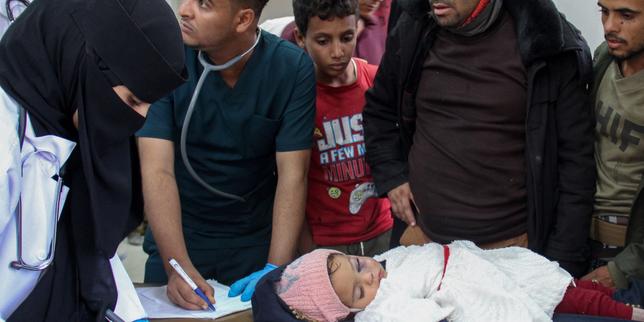
When a family cannot afford meat, eggs, or fresh vegetables day after day, childhood changes shape. Children grow smaller for their age. A simple bout of diarrhea or a respiratory infection becomes dangerous when clinics lack reliable electricity, clean water, or stocked pharmacies. Doctors and nurses in Taiz have worked for years under crushing pressure, stretching thin supplies and improvising care while dealing with their own unpaid or irregular salaries.
But the real problem lies elsewhere as well: siege life corrodes the invisible glue of a community. Neighbors who once traded recipes and argued over football now spend their energy hunting for cooking gas or water from communal tanks. Grief becomes routine. A funeral procession moves through a side street, mourners step carefully over rubble, and ten minutes later shopkeepers pull down metal shutters as distant artillery echoes off the cliffs.
Why Taiz Became a Symbol
Why has Taiz carried such heavy symbolic weight throughout Yemen's conflict?
Part of the answer is historical and political. Taiz was a cradle of Yemeni republicanism and civic activism long before the current war erupted. Its residents have a long tradition of political mobilization, independent thought, and resistance to authoritarian control from any quarter. When Houthi forces pushed southward from their northern strongholds, Taiz stood squarely in their path—and refused to fall completely.
That refusal turned the city into a flashpoint. For anti-Houthi forces and residents who oppose Houthi rule, Taiz embodies resilience against a movement they view as imposing rule by force. For the Houthis, taking or strangling Taiz has been tied to strategic control of central and southwestern Yemen.
Yet symbols are fragile things when people are tired. Anyone who has lived under prolonged conflict knows that pride does not fill a cooking pot. A young man in Taiz might feel fierce defiance when someone mocks the city's endurance, yet still wake up at dawn wondering whether there is any future left for him between crumbling walls and scarce jobs. Admitting that tension—between fierce identity and bone-deep fatigue—is essential if we want to understand the human truth of the place rather than turning real people into cardboard heroes.
Ceasefires, Promises, and the Weight of Waiting
Over the years, diplomatic efforts—including UN-brokered truces and bilateral talks—have repeatedly raised hopes that the siege of Taiz might finally lift. Announcements of road reopenings spark brief waves of relief. People imagine visiting relatives across the lines without risking stray fire or paying extortionate fees.
Then the momentum falters. Accusations fly between sides over who broke pledges, who planted mines, or which routes should open first. The road stays closed, or opens only partially under tight restrictions.
Consider what happens next: each dashed hope leaves a residue of cynicism. A teenager who has spent half their youth hearing that peace is "just around the corner" stops believing announcements from distant capitals or hotel conference rooms. For families in Taiz, waiting is not passive; it is an exhausting occupation that steals years of schooling, health, and ordinary joy.
Even when fighting quiets in one neighborhood, the psychological siege lingers. Sounds trigger flinching. Curfews and checkpoints shape where people dare to walk after dusk. And when international headlines shift to newer crises elsewhere in the globe, those trapped behind the blockade feel a second kind of isolation—the ache of being forgotten while still living inside an active emergency.
What Remains When the Dust Settles
Still, if you listen closely to the stories coming out of Taiz, survival is not only about deprivation. It shows up in stubborn acts of normalcy: teachers holding classes in damaged buildings, neighbors sharing a pot of lentils when one household runs dry, families planting small herbs in tin cans on balconies catching the highland sun.
A city is more than concrete, checkpoints, and front lines. It is the stubborn refusal of ordinary people to stop being human in the middle of an unnatural winter.
High above the stone houses and winding roads, Jabal Sabir still rises into the thin mountain air, indifferent to slogans and ceasefires alike, watching a city that has learned how to breathe through dust and still call itself home.


