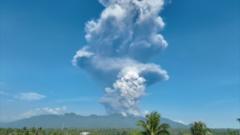
The recent eruption of Mount Dukono in North Maluku has sent plumes of volcanic ash over 2,600 meters into the sky, once again paralyzing local aviation and coating the surrounding villages in a thick layer of gray grit. This isn’t a one-off catastrophe; it is the latest chapter in one of the longest continuous volcanic eruptions on the planet. While global headlines often treat these events as sudden spectacles, the reality on the ground in Halmahera is a permanent state of high-stakes adaptation. Residents live in a cycle of constant monitoring and rapid response, balancing the fertility of volcanic soil against the respiratory hazards of a mountain that has been effectively erupting since 1933.
The Logistics of a Perpetual Eruption
Mount Dukono is a complex volcano located on the northern end of Halmahera island. Unlike volcanoes that build pressure over decades for a single explosive event, Dukono is an open-vent system. It breathes. It coughs. The Center for Volcanology and Geological Hazard Mitigation (PVMBG) maintains a steady Level II alert for the peak, advising a three-kilometer exclusion zone that is frequently ignored by curious hikers and local farmers.
The mechanics of this specific eruption involve a series of magmatic bursts that eject ash-laden clouds. These plumes are not just smoke; they are composed of pulverized rock, minerals, and volcanic glass. When the wind shifts toward Galela or Tobelo, the impact is immediate. Domestic flights are grounded because the silicate in the ash can melt inside jet engines, turning into a glass-like substance that chokes the turbines. On the ground, the "white-out" conditions create a different kind of gridlock.
Why the Standard Response Fails
International aid models are built for sudden disasters—an earthquake, a tsunami, or a massive singular explosion. They are poorly equipped for "chronic" geological events. In North Maluku, the local government cannot simply declare a temporary emergency and wait for it to pass. The ash is a permanent feature of the local economy.
Traditional agriculture in the shadow of Dukono is a gamble. While volcanic ash eventually breaks down into some of the most nutrient-rich soil on earth, the immediate effect of a heavy fall is the destruction of crops. The weight of the ash collapses the broad leaves of banana trees and smothers spice gardens. Farmers here have had to develop a specific type of resilience, often diversifying their livelihoods to include fishing or mining to offset the months when the mountain decides to blanket their fields.
The Invisible Threat to Public Health
While the visual of a towering ash cloud makes for a compelling photograph, the real danger is microscopic. Volcanic ash particles are typically less than two millimeters in diameter, and the smallest ones—those under ten microns—can be inhaled deep into the lungs.
In Halmahera, respiratory infections spike every time the wind direction changes. The long-term effects of living in a high-ash environment are still being studied, but historical data from similar sites suggest a higher prevalence of silicosis and chronic obstructive pulmonary disease. Local clinics distribute masks, but standard surgical masks do little to filter out the finest particulate matter. There is a desperate need for N95-grade protection, which remains expensive and difficult to source in bulk for remote island communities.
Water Security in the Ash Zone
Beyond the lungs, the ash settles into open water sources. Many villages rely on rainwater harvesting or open wells. When Dukono erupts, these water sources become contaminated with heavy metals and acidic compounds. The chemistry of the water changes, often becoming too acidic for human consumption or even for livestock.
The "solution" has been the trucking in of bottled water, but this creates a massive plastic waste problem on an island with limited recycling infrastructure. It is a cascading series of environmental challenges that the initial news reports never mention.
The Economic Toll of the No-Fly Zone
Air travel is the lifeline of the Indonesian archipelago. When the Darwin Volcanic Ash Advisory Centre (VAAC) issues a warning for Dukono, the economic ripples are felt as far away as Jakarta.
Logistics companies operating in Eastern Indonesia must bake "volcanic delay" into their contracts. This isn't just about delayed tourist flights to the diving resorts of nearby islands; it’s about the delivery of medical supplies, the transport of high-value seafood exports, and the movement of government officials. The unpredictability of the plume height means that a flight scheduled for 10:00 AM might be cleared, while the 2:00 PM return leg is canceled.
Infrastructure Under Pressure
The acidity of the ash also accelerates the degradation of physical infrastructure. Metal roofs—the standard in Indonesian rural architecture—corrode at an accelerated rate when coated in damp volcanic ash. Power lines are weighed down, and electrical transformers can short out if the fine dust penetrates their casings. Maintaining a functional modern town in this environment requires a maintenance budget significantly higher than that of a non-volcanic region.
The Spectacle and the Science
Seismologists at the Dukono observation post work in a state of perpetual vigilance. Their job isn't to predict "the" eruption, but to monitor the intensity of the ongoing one. They look for changes in the frequency of volcanic tremors and the composition of gases being emitted. A sudden decrease in ash output can sometimes be more terrifying than a large plume, as it might indicate a blockage in the vent that could lead to a much larger, more explosive pressure release.
This scientific reality stands in stark contrast to the burgeoning "volcano tourism" industry. Despite the danger, social media has driven a surge in travelers seeking the perfect photo of an active crater. This creates a nightmare for local rangers. Rescuing an injured tourist from the rugged, ash-slicked slopes of Dukono during an active venting cycle puts the lives of first responders at unnecessary risk.
Rethinking Regional Development
The persistence of Mount Dukono’s activity suggests that the region needs more than just emergency kits; it needs a fundamental shift in how infrastructure is built.
- Enclosed Water Systems: Moving away from rainwater catchment to deep-well systems with advanced filtration.
- Architectural Shifts: Utilizing steeper roof pitches and corrosion-resistant materials to prevent ash accumulation and damage.
- Telecommunications Redundancy: Ensuring that local communication doesn't rely on line-of-sight microwave links that can be disrupted by heavy ash fall.
Halmahera’s Precarious Balance
Living with Dukono is not about conquering nature; it is about a begrudging negotiation. The mountain provides the fertile ground that has sustained the island's population for centuries, but it demands a constant tax in the form of labor, health, and economic stability.
The plumes rising today are a reminder that the earth is still very much in the process of making itself. For the people of North Maluku, the sound of the mountain is not a distant threat, but the background noise of their daily lives. They clear the ash from their porches, put on their masks, and wait for the wind to turn.
Success in this landscape requires a move away from the "disaster" mindset toward one of "permanent volcanic management." This involves integrating geological reality into every aspect of urban planning and public health. Until that happens, the villages around Dukono will remain in a state of suspended animation, forever cleaning the dust of the deep earth off their windowsills.