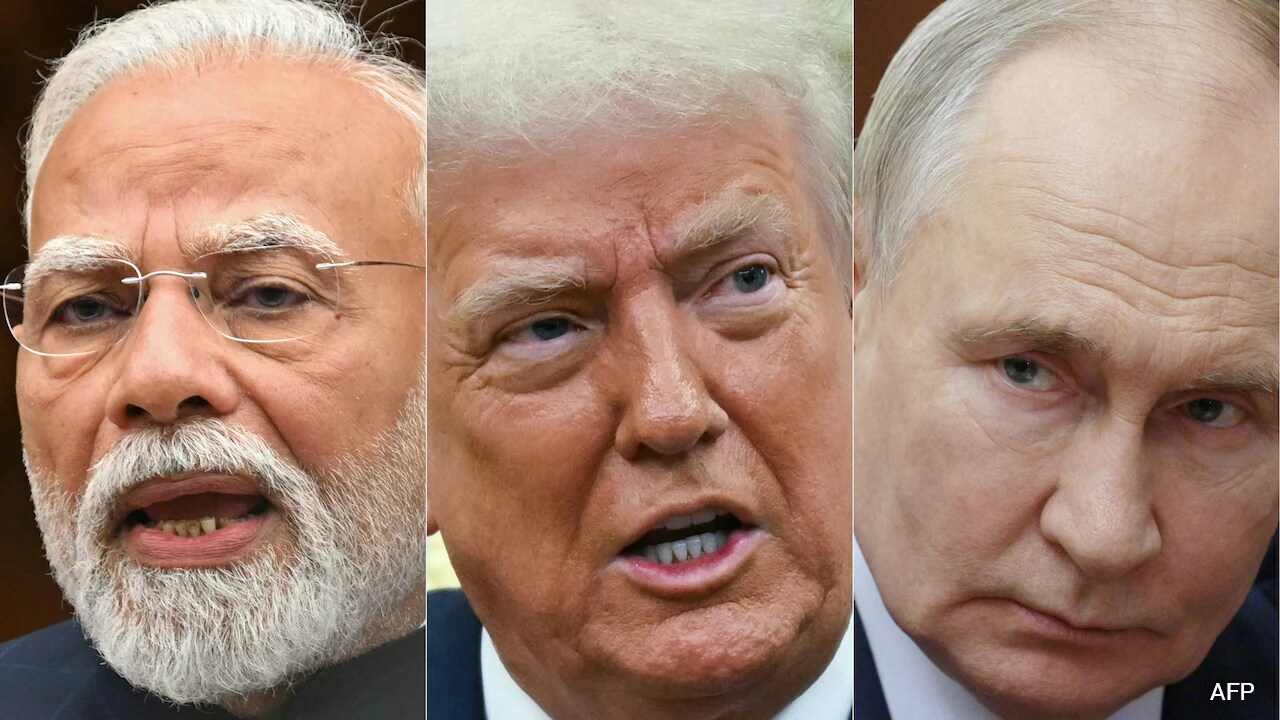
The United States Senate moves toward sweeping secondary penalties targeting nations buying Russian energy, centering a brutal economic spotlight on New Delhi and Beijing. Washington threatens a secondary tariff threshold reaching one hundred percent on trade partners maintaining petroleum and defense ties with the Kremlin. This aggressive legislative pivot threatens to rupture traditional trade architectures across Asia. The underlying mechanics of these proposed bills reveal an escalation in economic statecraft. Lawmakers on Capitol Hill intend to choke off remaining export revenue streams financing military campaigns in Eastern Europe.
Secondary sanctions bypass traditional jurisdiction limitations by punishing third-party entities doing business with a designated target. India and China absorb immense volumes of discounted crude oil diverted from Western markets following the onset of the conflict. This arrangement provides Moscow with vital financial oxygen while offering Asian refineries lower feedstock costs. Washington views this transaction chain as a direct breach of international containment strategies.
The Energy Arbitrage Engine
Markets adapt rapidly to regulatory shocks. When Western nations implemented oil price caps and embargoes, Russian producers simply redirected their tankers toward Asian ports. Refiners in Gujarat and Shandong reconfigured processing units to handle heavier Urals crude. The math favored aggressive purchasing. Discounted barrels meant higher refining margins and insulated domestic consumers from global price spikes.
This trade flow represents billions of dollars in shifted capital. Traditional maritime insurance providers and tanker fleets owned by Western companies largely withdrew from carrying Russian cargo. Moscow responded by assembling a shadow fleet of aging vessels operating outside standard regulatory oversight. Transactions migrated away from the dollar-dominated Swift banking network toward bilateral currency arrangements. Rupees and yuan settled energy invoices, accelerating de-dollarization trends that central bankers watch with mounting anxiety.
Yet this workaround carries hidden vulnerabilities. Maritime choke points remain susceptible to naval interdiction or insurance restrictions. Port authorities face mounting compliance pressures from Western regulators tracking illicit vessel transfers. The resilience of the energy arbitrage engine depends entirely on the willingness of major Asian buyers to absorb geopolitical blowback from Washington.
Washington Legislative Machinery And Executive Discretion
The legislative push originating in the Senate reflects bipartisan frustration over persistent trade leaks. Proponents of the sanctions argue that half-measures prolong conflicts by maintaining enemy war chests. A one-hundred-percent tariff threat on nations trading with Moscow is designed to force a stark binary choice. Trading partners must decide whether access to the American consumer market outweighs the benefits of discounted Russian commodities.
However, translating a bill into enforced policy requires navigating executive branch priorities. The White House historically retains waiver authorities to prevent self-inflicted economic wounds. Imposing prohibitive tariffs on the world's most populous nations risks triggering severe domestic inflation within the United States. Consumer goods, industrial inputs, and electronics flowing from Chinese factories would face immediate price distortion. Supply chains recovering from previous shocks cannot easily absorb another systemic disruption without fracturing.
Diplomatic channels hum with frantic negotiations behind closed doors. State Department officials attempt to calibrate pressure without permanently alienating strategic partners in the Indo-Pacific. India occupies a distinct diplomatic position, balancing historical defense dependencies on Moscow with burgeoning security partnerships with Washington through the Quad framework. Beijing faces fewer diplomatic constraints regarding the United States, viewing economic pressure as part of a broader containment strategy orchestrated by Western capitals.
The Cost Of Compliance For New Delhi
India walks a diplomatic tightrope. Refiners purchased millions of barrels of discounted crude, saving the national economy billions in import bills. Domestic political stability relies heavily on managed fuel prices. Sudden supply cutoffs would spike inflation instantly, straining household budgets across the subcontinent.
Defense procurement adds another layer of complexity. Decades of military hardware agreements mean Indian armed forces rely heavily on Russian spare parts, maintenance protocols, and joint development programs. Replacing this military ecosystem overnight remains an absolute logistical impossibility. Transitioning toward Western or indigenous defense manufacturing requires years of capital investment and technical redesign.
Washington policymakers often underestimate the domestic political cost demanded of foreign leaders. Expecting New Delhi to abruptly sever energy and defense ties is unrealistic. Indian diplomats counter Western pressure by emphasizing sovereign strategic autonomy. Foreign Minister Subrahmanyam Jaishankar repeatedly defended these purchases as a necessary measure to protect domestic consumers from volatile global markets.
Beijing And The Acceleration Of Alternative Systems
China absorbs the bulk of Russian energy exports through expanded overland pipelines and maritime routes. For Beijing, cheap energy acts as a strategic subsidy for industrial manufacturing sectors facing domestic headwinds. Furthermore, geopolitical alignment with Moscow provides diplomatic cover against Western pressure on multiple fronts.
The threat of secondary tariffs accelerates preexisting efforts to insulate the Chinese economy from American financial leverage. Beijing expands cross-border interbank payment systems designed to bypass Western oversight entirely. Digital currencies issued by central banks gain traction as alternative settlement mechanisms.
Economic decoupling reaches a new phase when trade restrictions are weaponized at this scale. Multinational corporations operating inside China face mounting pressure to split supply chains entirely. The bifurcation of global commerce into distinct Western-aligned and alternative economic blocs hardens into permanence.
The Manufacturing Reality Check
Economic theories regarding sanctions often ignore the friction of physical supply chains. Refined petroleum products originating from Indian ports eventually find their way to international markets, including Europe and North America. Diesel and jet fuel processed from discounted Russian crude cross borders legally under current regulatory loopholes. Closing these loopholes requires tracing hydrocarbon molecules through complex global blending processes.
Enforcement agencies lack the manpower and visibility to police every maritime transfer. Ship-to-ship transfers occurring in international waters obscure the original provenance of crude oil. Documentation is routinely falsified to mask port calls. Imposing a blanket tariff regime forces customs officials to police opaque supply networks where tracing origin is an expensive guessing game.
The ripple effects extend far beyond energy markets. Agricultural commodities, fertilizer components, and rare earth elements intertwine global trade in ways that resist simple punitive measures. When Washington targets one node in the network, commodity flows simply reroute through secondary hubs.
The Strategic Stalemate
The Senate's aggressive posturing exposes the limits of unilateral financial power in a multipolar world. While the United States controls the dominant reserve currency and deep capital markets, alternative trading networks continue to expand. Threatening a one-hundred-percent tariff forces targeted nations to accelerate hedging strategies rather than capitulate to legislative demands.
New Delhi and Beijing calculate that American political cycles and domestic economic realities will eventually moderate executive enforcement. Inflationary pressures in the West act as a natural brake on reckless trade wars. The resilience of these trade corridors demonstrates that global commerce refuses to march in lockstep with geopolitical mandates.
The proposed legislation signals a permanent shift toward fragmented globalization. Economic interdependence now functions as a vector of conflict rather than a guarantor of peace. As supply chains fracture and alternative financial rails cement their footing, the cost of enforcing global compliance rises steeply for every participant in the international system.