Dawn in the capital usually arrives with the steady, predictable hum of traffic along the Garden Ring and the smell of fresh coffee drifting from kiosks near the metro. The sky shifts slowly from bruised violet to pale blue. People rush. They check phones. They complain about the morning chill.
Then, the air splits.
Not with a distant rumble, but with a sharp, tearing metallic screech that vibrates straight through the glass and into the floorboards.
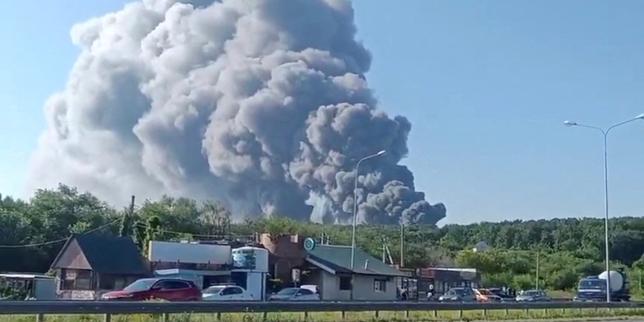
Hours later, the official tallies emerge from the wire services, stripped of emotion and reduced to cold mathematics. Five dead. Several injured. A drone strike in the Moscow region. To a distant observer scrolling through a newsfeed on a glowing screen, these are numbers on a page. Statistics from a war that feels thousands of miles away, even when it lands on the doorstep.
Consider what happens next: the smoke clears, the sirens fade into the distance, and the algorithms move on to the next breaking notification. But the people living beneath that flight path do not simply scroll away.
The Geography of Fear
To understand the weight of an ordinary Tuesday morning shattered by conflict, look at the geography. Moscow is a sprawling metropolis of millions, a dense web of high-rises, historic boulevards, and quiet suburban dachas where families tend to small vegetable gardens.
For a long time, the war remained an abstraction for many residents here. It was something visible on television screens or discussed in cautious whispers over kitchen tables. It lived in the realm of economic sanctions, rising prices, and geopolitical strategy. It was external. Distant.
A drone changes the coordinates of reality.
When an unmanned aerial vehicle pierces the airspace of a major global capital, the psychological distance collapses instantly. The sky ceases to be a neutral canopy. Every sudden noise, every low-flying civilian aircraft, every rumble of thunder becomes a potential threat.
Imagine waking up to the sound of your windows buckling inward. Not from a storm, but from the concussion wave of an interception miles away. You stand in your kitchen, barefoot on the linoleum, holding a mug that suddenly feels entirely useless. The coffee is still hot, but the world has shifted entirely on its axis.
The Anatomy of an Interception
Air defense is often discussed in clinical terms by analysts who study radar cross-sections and terminal guidance systems. They talk about interception vectors, electronic countermeasures, and payload capacities.
The reality on the ground is infinitely more raw.
When a drone approaches a target like Moscow, it flies low, hugging the contours of the terrain to evade long-range radar. It is a flying lawnmower engine strapped to explosives, guided by satellite navigation and stubborn human intent. It does not carry a face. It does not carry a warning.
When air defense systems engage these targets, the resulting explosion happens high above the streets, but gravity is unforgiving. Shrapnel rains down like jagged hail. Glass shatters across pavement. Brick facades fracture.
Five lives ended in a matter of seconds during this latest assault. Five distinct universes of memory, habit, future plans, and human connection extinguished by a piece of metal falling from the morning sky.
We talk about the resilience of cities, as if concrete and asphalt possess the capacity to endure suffering. They do not. Only people endure. And people break, heal, adapt, and carry the invisible weight of constant vigilance.
The Long Shadow of Normalcy
How do you normalize the abnormal?
This is the psychological tightrope walked by millions of civilians caught in the crossfire of modern technological warfare. They learn to read the news with a knot in their stomach. They check emergency shelter locations not because they expect to use them, but because the alternative—ignoring the possibility—feels like an intolerable gamble with fate.
Consider the parent walking their child to school past a building with its top two floors carved open by a blast. How do you explain the charred concrete? You do not. You tell them everything is fine, while your own hands tremble slightly as you adjust their backpack.
This is the hidden cost of war in the twenty-first century. It is not just the physical destruction of infrastructure or the immediate casualty counts that dominate the morning headlines. It is the steady, quiet erosion of peace of mind. It is the realization that the perimeter has been breached, and the border is no longer a line on a map. It is everywhere.
The sirens have stopped in the Moscow suburbs now. The debris is being swept from the asphalt. Traffic is moving again along the ring roads, slow and heavy, carrying commuters toward another workday.
The numbers are entered into the ledger. The updates slow down.
Yet, looking out across the expanse of the city under a darkening afternoon sky, the air feels heavier than it did twenty-four hours ago. The horizon holds a secret it refuses to tell, and everyone waiting at the bus stop is listening for the sound of the wind changing.