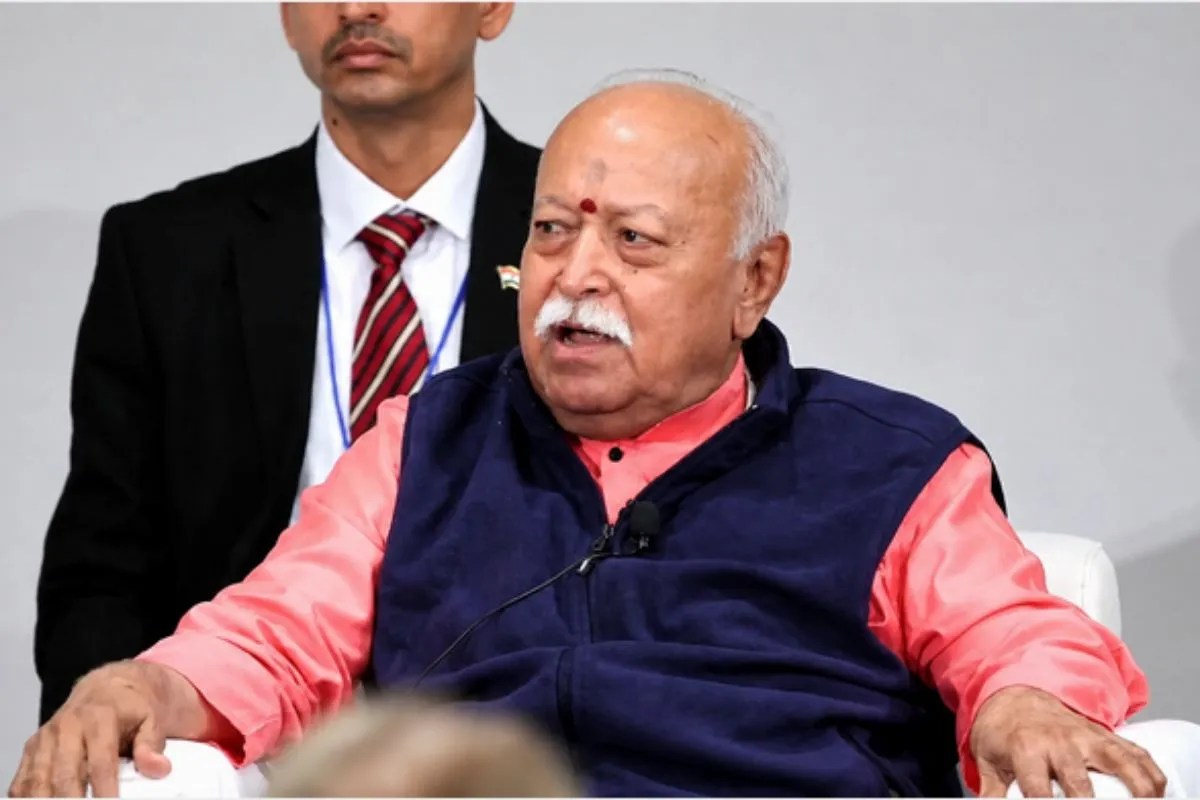
The standard political playbook demands a predictable ritual. A senior figure steps to a podium, utters a carefully calibrated platitude about coexistence, and the commentariat swoops in to applaud or condemn based entirely on tribal affiliation. When Mohan Bhagwat declared that a Hindu who wants an India without Muslims ceases to be a Hindu, the predictable chorus erupted. Liberals cheered the apparent moderation. Hardliners grumbled about ideological drift. Both sides missed the structural flaw in the argument because both are addicted to the same lazy consensus.
The lazy consensus treats national identity as a philosophical membership club where keeping the rules intact depends on internal policing of thoughts and credentials. If you violate the inclusivity clause, your membership card gets revoked.
That framing is useless. It misunderstands how civilizational states actually survive, how cultural grammar operates, and why policing orthodoxy—even progressive orthodoxy—creates the exact fracture it tries to prevent.
Look past the comfort of the rhetoric. The premise that a religious or national identity can be gatekept by behavioral purity tests creates a trap. It shifts the burden of national stability onto subjective doctrinal compliance rather than objective constitutional mechanics.
The Myth of the Doctrinal Gatekeeper
Every major institution operates on the illusion that leaders can define the boundaries of a massive demographic collective by issuing edicts from the top. I have watched organizations, political movements, and social coalitions blow millions trying to curate ideological purity, and the result is always the same. The harder you squeeze, the faster the base fragments.
Bhagwat’s argument relies on a theological definition of Hindutva or Hinduism that attempts to bind civic behavior to scriptural or philosophical heritage. The claim is that the core genius of the tradition is pluralistic absorption, therefore rejecting the other is a betrayal of the source code.
The logic sounds elevated, but it collapses under the weight of political reality. A civilization does not hold together because its members pass a philosophical exam on tolerance. It holds together because its institutions are ruthlessly neutral, its laws are equally enforced, and its citizens have a pragmatic stake in the continuity of the state.
When leaders rely on moral policing to enforce social harmony, they admit institutional failure. If the survival of a minority depends on the personal spiritual awakening of the majority, the system has already broken down. We do not need better thoughts from the majority; we need harder rules that render personal prejudice legally irrelevant.
The Counter-Intuitive Trap of Forced Tolerance
Insisting that someone must love their neighbor to grant them civic space is a dangerous game. It turns citizenship into a theological trial.
Imagine a scenario where the state adopts the position that your right to exist hinges on whether the dominant cultural group views you as a faithful adherent of its own tolerance doctrine. That is not pluralism. That is paternalism with a smiling face. It places minorities in the precarious position of being guests whose lease can be revoked the moment the host population decides they have strayed from their philosophical mandate.
Real pluralism does not require emotional warmth or spiritual agreement. It requires indifference to difference managed by an unyielding legal apparatus.
The obsession with what people think inside their heads distracts from what they are allowed to do with their hands. A society where citizens harbor deep animosity toward one another but are utterly restrained by the fear of swift, impartial state punishment is infinitely more stable than a society where everyone sings songs of harmony while the legal system is weaponized behind the scenes.
Dismantling the Brotherhood Fallacy
The rhetoric of brotherhood is a rhetorical narcotic. It flattens real historical friction, distinct legal codes, and competing political visions into a cozy family portrait that never existed outside of festival pamphlets.
When public figures lean heavily on tropes of universal family, they avoid addressing the structural flashpoints. They ignore the friction over civil codes, resource distribution, historical grievances, and educational narratives. Pretending these conflicts can be dissolved by reminding people to be good Hindus or good citizens is intellectual laziness.
People do not clash because they lack philosophical grounding. They clash because they perceive a zero-sum game over power, space, and dignity.
If you want to understand why communal tensions persist, stop analyzing the moral hygiene of the populace and start analyzing the incentives built into the political economy. Parties across the spectrum profit from polarization. Electoral math rewards grievance mobilization. Until the structural incentives for identity-based political entrepreneurship are dismantled, no amount of moral lecturing from organizational chiefs will shift the needle by a millimeter.
The Brutal Mechanics of Civilizational Resilience
Nations do not endure through sentimentality. They endure through architecture.
The Roman Empire did not survive because its citizens loved each other; it survived because its roads, laws, and administrative systems functioned regardless of who sat in the Senate. The modern Indian state faces a choice. It can continue down the path of cultural soul-searching, debating who qualifies as a true member of the civilizational family, or it can ruthlessly optimize its civic machinery.
Optimizing the machinery means removing identity from the administration of justice. It means ensuring that a crime is a crime, a contract is a contract, and a right is a right, utterly divorced from the religious or demographic weight of the individuals involved.
When the state steps back from playing spiritual referee, it forces citizens to negotiate their differences in the open marketplace of civic life rather than appealing to higher cultural authorities to validate their existence.
The insistence that a bad Hindu is somehow not a Hindu at all is an evasion tactic. It allows the mainstream to outsource the dirty work of structural reform to abstract definitions. It lets leaders pretend that bigotry is an aberration of faith rather than a permanent, manageable hazard of human tribalism that requires institutional containment.
Stop worrying about whether the bigot is practicing their religion correctly. Build a system so ruthlessly fair, transparent, and binding that their bigotry carries a cost too high to pay.
That is not poetic. It is not warm. And it is the only thing that works.