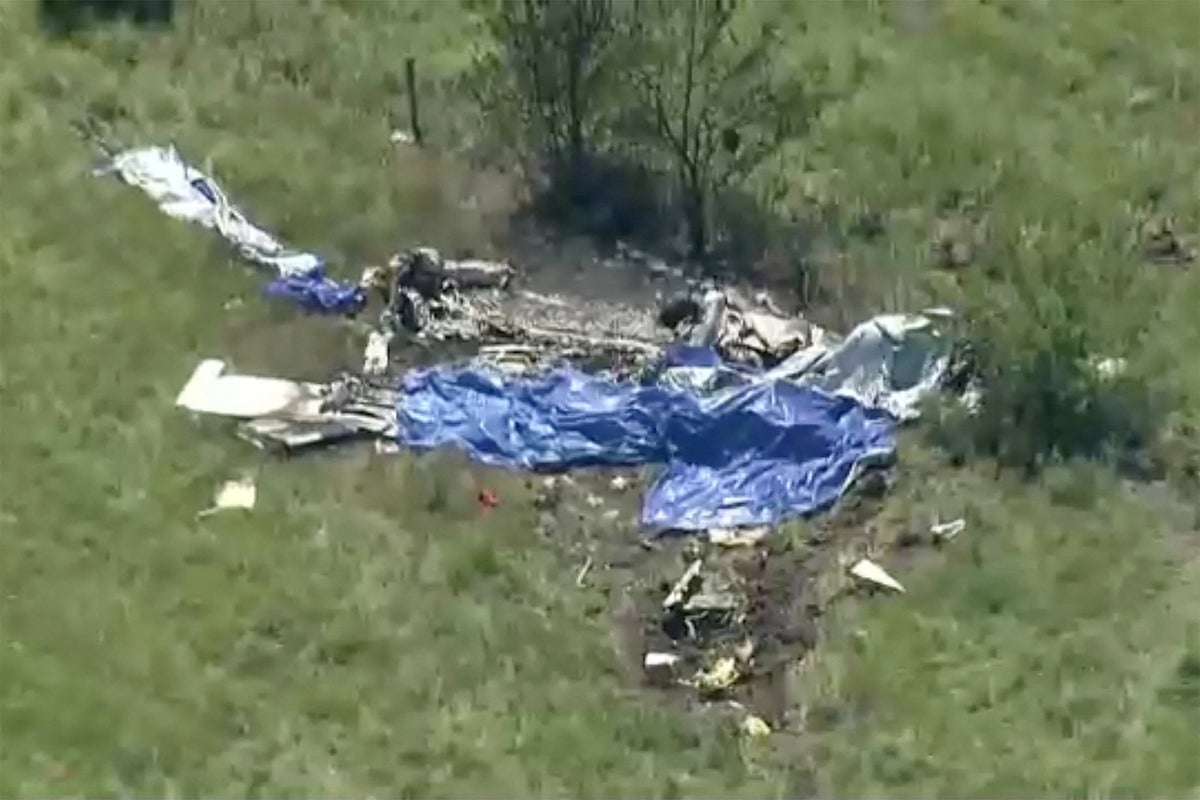
A sunny Sunday morning in Butler, Missouri, just turned into one of the worst aviation disasters the skydiving community has seen in years. Twelve people are dead. Eleven skydivers and one pilot took off from Butler Memorial Airport around 11:30 a.m. on June 14, 2026, expecting a routine jump. Instead, their plane ended up as a charred, mangled heap of blue and silver metal in a field right next to the runway.
Horrific details are emerging. Bates County Sheriff Chad Anderson confirmed that family members of the victims were standing at the airport and witnessed the entire thing happen.
We don't have the final official cause yet. That will take a year or more as the National Transportation Safety Board (NTSB) sifts through the wreckage. But eyewitness accounts and preliminary tracking data give us a pretty clear picture of the aircraft's final moments. Dennis Jacobs, the acting airport manager and director of the Bates County Emergency Management Agency, noted that the single-engine turboprop plane took off, made a left turn, and immediately seemed to lose power. The pilot apparently tried to stretch the glide to a nearby highway for an emergency landing, but the plane stalled, went down nose-first, and erupted into flames. First responders checked the flight path to see if anyone managed to bail out before impact. Nobody did.
What Happened to the Pacific Aerospace 750XL
The aircraft involved was a Pacific Aerospace 750XL manufactured in 2010. If you spend any time around drop zones, you know this plane. It is a workhorse. It is specifically designed for skydiving, cargo transport, and short-takeoff operations. It can carry more than 4,000 pounds and climb quickly to jump altitude.
Flight tracking data from FlightAware shows that this specific aircraft had already completed two successful flights earlier that morning. It logged two flights on Saturday and five on Friday. Nothing in the immediate flight history screamed red flag. The weather was clear and sunny. Air traffic control wasn't providing services at the time, which is completely standard for a small, non-towered municipal airport like Butler, located about 60 miles south of Kansas City.
The abrupt loss of power right after takeoff is a pilot's worst nightmare. At low altitudes, you have almost no time to react. If you try to stretch a glide or turn too sharply back toward a runway without enough airspeed, the wing stalls. Once a plane stalls close to the ground, recovery is mathematically impossible.
The Uncomfortable Truth About Skydiving Aviation Rules
While the general public associates skydiving danger with parachutes failing, industry insiders know the real risk is often the ride up. This Missouri tragedy highlights a massive regulatory loophole that safety experts have been screaming about for decades.
Skydiving operations occupy a bizarre grey area in Federal Aviation Administration (FAA) regulations. If you buy a ticket on a commercial airline, or even a charter flight, the operator must adhere to incredibly strict maintenance, training, and operational rules under Part 121 or Part 135 of the Federal Aviation Regulations.
Skydiving planes don't do that. They operate under Part 91. Those are the exact same rules that apply to a hobbyist flying a tiny weekend plane.
Jeff Guzzetti, a former crash investigator for both the NTSB and the FAA, pointed directly at this double standard following the crash. He noted a long history of skydiving accidents tied directly to inadequate maintenance and deficient safety cultures. Because these planes are technically operated "privately" to drop hobbyists, they avoid the intense federal oversight that commercial passenger planes face.
The NTSB has tried to fix this before. After a horrific 2019 crash in Hawaii that killed 11 people on a skydiving flight, the NTSB explicitly stated that the FAA's regulatory system was too weak to guarantee the safety of these flights. The NTSB pushed for stricter oversight, mandatory safety management systems, and more rigorous pilot training for parachute operations. The FAA largely resisted, arguing that skydiving is an inherent sport risk and that commercial-level regulations would crush small businesses.
Navigating the Real Risks of the Drop Zone
If you love skydiving or want to try it, this news is terrifying. You shouldn't blindly avoid the sport, but you absolutely must change how you evaluate a drop zone. You cannot assume the government is keeping these planes immaculate.
First, check the operator's credentials. Look for drop zones that are group members of the United States Parachute Association (USPA). While the USPA focuses heavily on skydiver safety and instructor ratings rather than mechanical plane maintenance, group members agree to higher safety standards than non-affiliated rogue operations.
Second, look at the fleet. A reputable drop zone keeps clean, well-maintained hangars. If the facilities look decayed, the planes are filthy, or the staff treats pre-flight checklists casually, walk away.
Third, understand the plane. Turboprop aircraft like the Pacific Aerospace 750XL or the Twin Otter are generally highly reliable, but they demand meticulous turbine engine maintenance. Ask questions if you feel uneasy. A transparent, professional operation will happily tell you about their maintenance schedules and pilot qualifications.
The Butler tragedy is a brutal reminder that aviation safety is bought with vigilance. Until the FAA closes the regulatory loopholes surrounding commercial skydiving aircraft, the responsibility of vetting these operations falls squarely on the people stepping inside them.