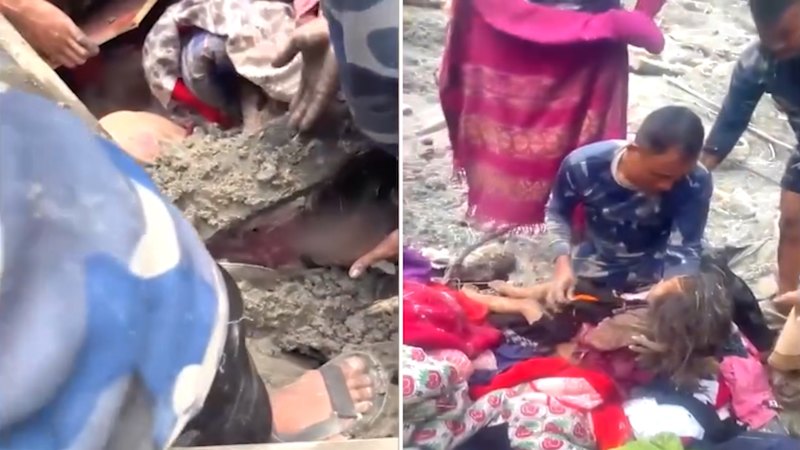
A faint sound beneath a mountain of mud shouldn't carry over the roar of a ruined river valley, but it did. When rescuers pulled a young child and other trapped survivors from the wreckage left by the catastrophic Nepal floods, they weren't just witnessing ordinary extractions. They were staring down a staggering defiance of death.
Heavy rainfall and a sudden glacier collapse triggered a violent torrent of rock, ice, and mud across the Bhote Koshi and Trishuli river systems. Entire settlements like Timure vanished within minutes. The human cost has climbed past 700 dead, with thousands still missing. Yet, inside this overwhelming tragedy, astonishing stories of resilience have broken through the concrete and debris.
When Hope Survives Under Sixty Hours of Mud
In the Rasuwa district, search teams from the Armed Police Force were combing through apocalyptic landscapes when a thin voice caught their attention. Buried for nearly sixty hours beneath the rubble of a collapsed structure, a young child named Manisha Tamang was located alive.
Rescuers had to work frantically through tangled timber, jagged masonry, and thick sludge. They didn't have heavy machinery for every tight crevice. They relied on bare hands, basic tools, and sheer urgency.
When the girl was finally lifted out and transferred to Kathmandu for medical care, it provided a rare spark of light. But she wasn't the only statistical anomaly in a disaster zone where hope was running thin.
The Older Generation Defying the Odds
Miracles in disaster zones rarely follow a single script. Days after the flash floods tore care homes and houses apart, emergency workers recovered 97-year-old Guna Maya Bohara from the wreckage.
Trapped beneath her ruined care home for four days, Bohara survived conditions that younger, fitter individuals failed to endure. Images of her being lifted to safety in the scoop of an excavator quickly circulated as a symbol of radical endurance. Her family later described her as a warrior who refused to surrender to the mountain.
These high-profile rescues highlight a stark reality about disaster zones. Survival often hinges on bizarre micro-pockets of air, structural quirks that prevent total collapse, and the relentless endurance of local rescue personnel who refuse to quit when scanning lifeless terrain.
How Communities Adapt and Respond
Disaster response in the Himalayas is brutally complicated. When bridges collapse, roads dissolve, and communication lines snap, initial response times stretch from minutes to agonizing days.
Local agencies, backed by thousands of deployed security personnel, have had to rely on improvised supply drops. Helicopters drop noodle packets and medical kits to survivors stranded on forest ridges. Customs agents and displaced villagers have recounted fleeing into upper tree lines with nothing but the clothes on their backs, watching their homes wash away in real time.
The physical infrastructure will take years and billions of dollars to rebuild. However, the immediate focus remains locked on the ground operations. Teams are still tracking thousands of missing persons across multiple districts, navigating unstable terrain where secondary landslides remain a constant threat.
If you want to support recovery efforts or track verified relief distribution, look directly toward established humanitarian organizations operating on the ground in South Asia rather than unverified digital fundraisers. Check official updates from disaster management authorities to understand where medical supplies are most urgently needed right now.