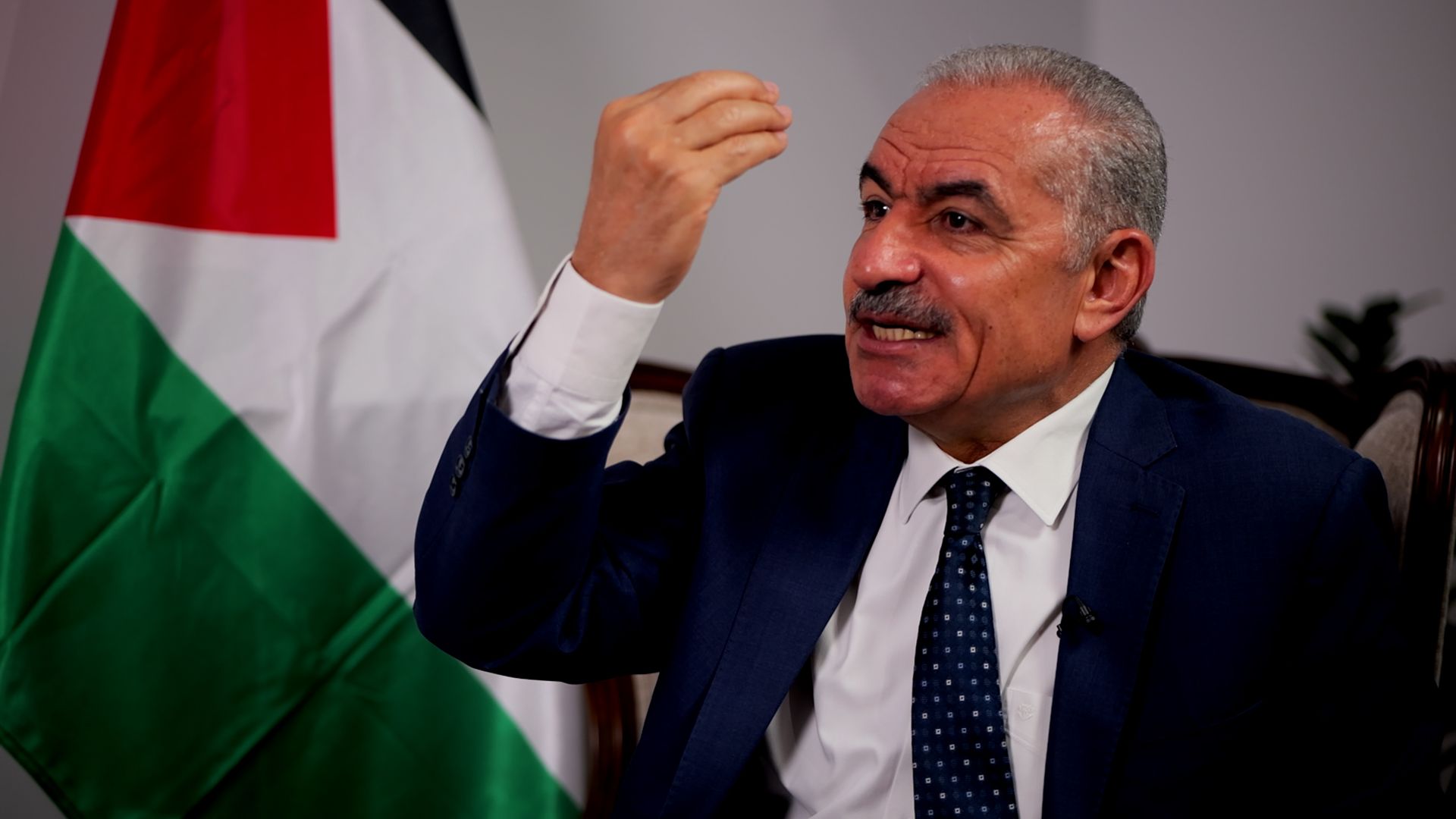
Mainstream foreign policy analysis loves a ghost story. For decades, Western media outlets, think tanks, and diplomatic circles have treated the pronouncements of former Palestinian Authority officials as if they carry weight, ignoring the total collapse of their domestic credibility. When a former Palestinian prime minister gives a highly publicized interview or drops a list of demands, the international press corps treats it as an agenda-setting moment. They analyze the words, debate the implications, and completely miss the reality on the ground.
The Western press treats the traditional leadership of the Palestinian Authority like a functioning corporate board. They are not a board. They are managers of an institution that has lost its lease, its funding, and its staff, yet they still hold press conferences in the lobby. Building on this theme, you can find more in: Why the Strait of Hormuz Crisis Is Forcing India to Rethink Its Neutrality.
To understand why the common analysis of these political declarations is completely flawed, you have to stop looking at the titles and start looking at the structural mechanics of power in Ramallah and Gaza.
The Myth of the Technocratic Savior
The most common narrative pushed by legacy media is that technocratic governance—bringing in highly educated, economically minded ministers—is the key to unlocking a stable Palestinian state. This is a profound misunderstanding of how political legitimacy works in a conflict zone. Experts at USA Today have also weighed in on this matter.
International analysts frequently point to past reform efforts as blueprints for the future. They argue that if you just get the right economist to reform the finance ministry, corruption will vanish, international donors will pour billions into the West Bank, and stability will follow.
I have watched international agencies dump hundreds of millions of dollars into governance programs based entirely on this premise. It fails every single time.
Political legitimacy cannot be imported from a Western university or an international financial institution. In the West Bank, the Palestinian Authority suffers from a profound deficit of domestic trust. According to consistent polling by the Palestinian Center for Policy and Survey Research, a massive majority of the population views the PA as a corrupt burden rather than an asset.
When a former official talks about institutional reform, they are speaking to an audience in Washington, London, and Brussels. They are not speaking to the people in Nablus, Jenin, or Hebron. A leadership that relies on external validation and foreign funding to maintain its positions will never possess the domestic mandate required to make hard compromises. The technocratic approach treats a deeply political, existential crisis as a mere middle-management problem.
The Separation Fallacy: Gaza and the West Bank are Structurally Linked
Another major flaw in standard political commentary is the neat, artificial separation between the governance of the West Bank and Gaza. The lazy consensus states that the West Bank is a space of moderate, secular governance waiting for a partner, while Gaza is an isolated radical enclave that can be ring-fenced or managed independently.
This geographical and political bifurcation is an illusion. The political economy, family networks, and security dynamics of the two territories are fundamentally intertwined.
When a political figure claims that a revitalized administration can simply step into Gaza and assume control without massive internal conflict, they are selling a fantasy to Western diplomats who desperate want an easy exit strategy. The political reality is that no West Bank leader can ride into Gaza on the back of foreign security assistance without being viewed immediately as an occupying force.
The assumption that the West Bank model can be exported to Gaza ignores the fact that the West Bank model itself is currently on life support. The Palestinian Authority relies heavily on security coordination with Israel to maintain internal stability against its own domestic rivals. Believing this structure can be seamlessly scaled up to govern a devastated, highly radicalized Gaza Strip is a failure of basic political arithmetic.
International Aid is a Subsidized Stagnation Machine
Listen to any mainstream political interview on this topic, and you will hear a call for an immediate influx of international donor money to rebuild institutions and stimulate the economy. The underlying assumption is that poverty drives conflict, and therefore, money solves conflict.
The truth is much uglier. International aid has historically acted as a stabilization mechanism for an unsustainable status quo. It subsidizes the occupation while absolving local authorities from the necessity of genuine economic independence or political accountability.
By providing billions in budgetary support, the international community allows the Palestinian Authority to maintain a massive public sector bureaucracy. This bureaucracy functions not as an engine of economic growth, but as a giant patronage network. It keeps hundreds of thousands of people dependent on a government salary, which in turn stifles dissent and prevents the rise of a genuine independent political movement.
If you want to understand why political stagnation has lasted for decades, look at the money trail. The current system suits almost every major institutional player:
- The Palestinian Authority gets its survival guaranteed by foreign funds.
- International donors get to pretend they are contributing to a peace process.
- Regional powers use the financial levers to maintain their own proxy influence.
The only group that loses is the population, which remains trapped in an economic dead end while their leaders cash checks from abroad.
The Flawed Premise of the "Two-State" Rhetoric
Every mainstream commentary piece contains a mandatory paragraph reaffirming commitment to a negotiated two-state solution based on historical borders. It is treated as an unshakeable axiom of international law and diplomacy.
It is also an dead concept. The gap between diplomatic rhetoric and physical reality on the ground has become a canyon.
With hundreds of thousands of Israeli settlers living in the West Bank, an interconnected network of state-built infrastructure, and deep strategic depth concerns in Israeli politics, the territorial basis for a viable, contiguous sovereign Palestinian state has effectively evaporated.
When aging political figures repeat the same talking points they used in the 1990s, they are participating in a form of political theater. They cannot admit the two-state framework is dead because their entire institutional existence, their funding, and their global relevance depend on maintaining the illusion that a state is just around the corner.
The alternative is not necessarily a single democratic state either—that is another utopian fantasy favored by academics that ignores the intense nationalist and religious drivers of both societies. The actual future is what we see right now: a permanent, asymmetric gray zone of controlled conflict, shifting security arrangements, and localized governance pockets.
Stop Asking the Wrong Questions
The international community keeps asking: "Who is the right leader to reform the Palestinian Authority?"
This is the wrong question. The right question is: "Does the institution itself have any structural capability to govern effectively under current conditions?"
The answer is no. No amount of leadership changes, cabinet shuffles, or western-backed anti-corruption initiatives can fix an entity that lacks domestic legitimacy and sovereign control over its geography.
If you want to see where the actual future of Palestinian politics is being decided, look away from the clean offices of Ramallah. Look at the local municipal councils, the independent trade networks, the youth factions in the refugee camps, and the localized armed committees that operate completely outside the control of the formal government. These groups do not care about international white papers, and they do not wait for permission from former prime ministers.
The era of top-down diplomatic engineering is over. The institutions created by the Oslo Accords have run their course. Anyone analyzing the region based on the statements of the political class that managed that failed process is simply reading yesterday's news and pretending it is tomorrow's forecast.