Politics hates a vacuum, but it hates a ghost even more. In Michigan's eighth congressional district, Republican primary voters just handed their party's nomination to a man who quit the race a month ago.
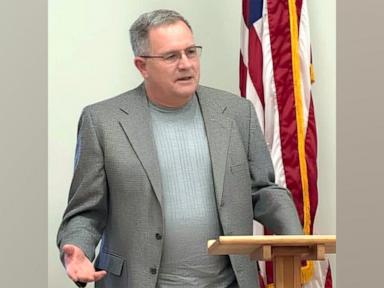
Retired engineer Thomas J. Smith secured over fifty percent of the vote, easily brushing aside Amir Hassan, the candidate hand-picked and heavily promoted by Donald Trump. Smith did not campaign, spent virtually no money, and even endorsed someone else after formally suspending his operation in July. Yet, because Michigan law dictates a rigid deadline for ballot withdrawal, his name remained visible to an electorate eager to send a message.
That message was loud, clear, and deeply disruptive to national party strategists.
For months, the conventional wisdom of primary season has treated presidential endorsements as near-absolute law. Across the country, the Trump seal of approval has carried primary candidates across the finish line with astronomical success rates. In Michigan's eighth district, however, that gravitational pull failed entirely. Understanding why requires looking past the surface-level embarrassment for national consultants and examining the mechanics of low-turnout congressional primaries, where the machinery of local voter sentiment often operates entirely detached from high-level endorsements.
The Anatomy of an Accidental Victory
The mechanics of how a suspended campaign wins an election expose a fundamental flaw in how parties communicate with their base. Michigan requires candidates to file formal withdrawals by late April if they want their names scrubbed from primary ballots. For a low-budget, grassroots-focused candidate like Smith, navigating administrative hurdles proved cumbersome. Federal Election Commission filings for his campaign consisted of little more than a handwritten letter explaining that he could not log into the electronic system.
When Smith stepped away in July, he threw his nominal support behind Al Lemmo, an anti-abortion activist who ultimately finished a distant third. Smith assumed his political career was over. The voters, however, had other ideas.
The district, which represents a crucial battleground in the fight to hold or expand the slim Republican majority in the House of Representatives against Democratic incumbent Kristen McDonald Rivet, became a proxy war for authenticity. Amir Hassan, a former federal law enforcement officer and Navy veteran, entered the race with heavy institutional backing, a high-profile appearance alongside Trump at a Michigan rally, and substantial resources.
Yet institutional backing can quickly become a double-edged sword.
The Cost of Top-Down Coordination
When national figures step into local primaries, they carry the baggage of perception. Hassan faced intense scrutiny from local precinct workers and conservative social media networks regarding his background and recent life changes, including his public conversion to Christianity. While national operatives viewed Hassan as a strong, diverse general election profile capable of appealing to working-class industrial voters, a significant faction of local primary voters viewed him as an outsider steered into the district by distant power brokers.
In local politics, familiarity breeds trust or contempt. Smith was a known quantity as a local engineer and lifelong resident. Hassan, despite his impressive federal service record, was painted by critics as an establishment creation.
When voters walked into the voting booth or filled out absentee ballots, they faced a stark choice between a nationally anointed candidate they did not fully trust and a name they recognized from earlier local forums. Choosing the candidate who had dropped out was not necessarily an endorsement of chaos; it was a rejection of the curated choices handed down by party elites.
This phenomenon is rarely isolated to Michigan. Whenever national committees attempt to clear fields or impose candidates to optimize general election matchups, they risk triggering an immune response from primary electorates who prize independence above strategic electoral calculus.
The General Election Dilemma
The immediate aftermath leaves the Michigan Republican Party in an administrative and political bind. Smith has stated that he is honored to accept the nomination and take on the Democratic incumbent, expressing eagerness to work with House Speaker Mike Johnson. Whether the state apparatus will treat his previous withdrawal as legally binding or if local committees will need to navigate complex replacement procedures remains an open legal question.
More importantly, the result complicates the path forward in a swing district that Republicans must carry to maintain control of the lower chamber. A campaign that functioned entirely by accident now has to pivot into a high-intensity general election against a well-funded incumbent who ran unopposed in her primary.
Party leaders spent the cycle boasting about disciplined candidate selection and high conversion rates for endorsements. Michigan's eighth district just proved that the voters on the ground retain the ultimate veto. No amount of star power or rally appearances can entirely override a local electorate determined to write its own script, even if it means writing in a ghost.