Stop scrolling through the slideshows. Every "Best Dressed" list you’ve seen today is a lie. The fashion press is currently engaged in a massive exercise of collective gaslighting, praising "stunning silhouettes" and "bold choices" while ignoring the fact that the Met Gala has officially devolved into a high-stakes marketing seminar for luxury conglomerates.
If you think the Met Gala is about style, you’re the mark. It’s about asset management.
The Death of Individualism in the House of Luxury
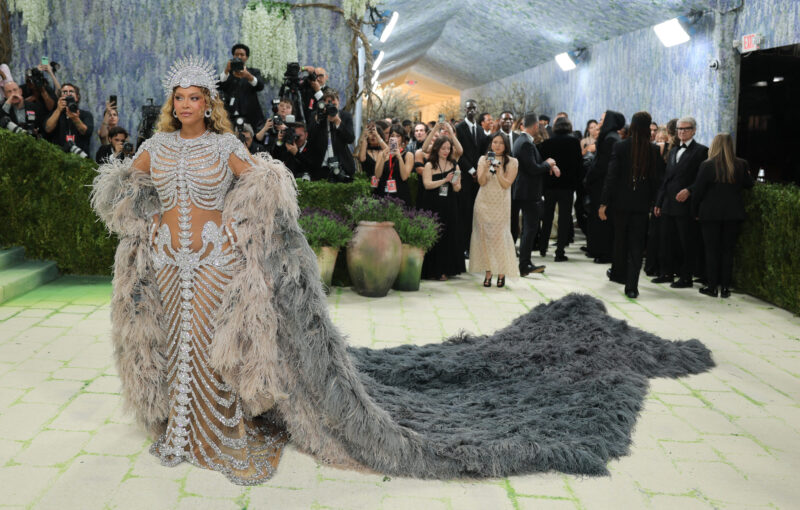
The traditional fashion critic will tell you that a certain actress "won the night" because her gown had a twenty-foot train. I’ve sat in the strategy meetings where these "moments" are engineered. It isn't about the woman; it's about the contract.
In the 2026 circuit, the concept of a star choosing a dress is extinct. We are seeing the total colonization of the red carpet by brand ambassadorships. When a celebrity arrives, they aren't wearing a dress; they are fulfilling a Tier-1 contractual obligation for LVMH or Kering. The "Best Dressed" lists are merely the PR extension of these balance sheets.
The industry elite won’t admit it, but the Met Gala has lost its teeth because it has lost its risk. When a star is locked into a three-year, eight-figure deal with a French house, they don’t wear what fits the theme. They wear what the brand needs to move in the Asia-Pacific market next quarter. This isn’t art. It’s inventory placement.
The Costume Institute Theme is a Suggestion Not a Rule
Every year, the internet gets angry. "They didn't follow the theme!" the comments scream.
Here is the brutal truth: Following the theme is for the B-list.
The truly powerful—the legacy names and the billionaire-backed ingenues—know that the theme is a secondary concern to brand identity. If the theme is "Mechanical Innovation" but the brand’s current aesthetic is "19th Century Romanticism," that star is wearing lace. They will find a way to justify it in a thirty-second carpet interview with a vague reference to "the mechanics of the heart."
The "lazy consensus" of fashion blogging insists on grading these looks based on thematic adherence. That is a fundamental misunderstanding of power dynamics. In the real world of high fashion, being "off-theme" is the ultimate flex. It says, "My brand is bigger than your party."
The Myth of the Overnight Sensation
You’ll see articles claiming a new star "broke out" because of their daring outfit. This is the fashion equivalent of believing in the tooth fairy.
Breakout moments are choreographed months in advance by styling agencies that operate with the precision of a private equity firm. The "daring" look was vetted by legal, approved by a creative director in Paris, and likely underwent three rounds of focus grouping to ensure it was controversial enough to trend but safe enough not to tank the stock price.
We have moved away from the era of André Leon Talley and into the era of the Data Analyst. The "Best Dressed" lists you are reading are generated by engagement metrics, not aesthetic merit. If an outfit gets 50 million impressions, the critics call it "iconic." They have confused volume with value.
Why Aesthetic "Beauty" is the Enemy of Progress
The most dangerous lie told by the competitor's slideshow is that the goal of the Met Gala is to look "pretty."
Pretty is boring. Pretty is the death of the Met.
The most important looks of 2026 are the ones that make you uncomfortable. The ones that look "bad" on a standard "Best Dressed" rubric are often the only ones doing the actual work of fashion. True fashion isn't about flattering a human body—it's about challenging the definition of what a body can be in a digital space.
When you see a star in something bulky, distorted, or frankly ugly, and the critics pan it, that is usually the only garment in the room worth discussing. The rest of the "Best Dressed" winners are just wearing expensive prom dresses with better lighting.
The High Cost of Performance Art
Let’s talk about the "thought experiment" of the sustainable red carpet. We see stars wearing "archival" pieces or "recycled" materials.
Imagine a scenario where a celebrity wears a vintage gown from 1954 to promote "sustainability." The media swoons. They call it a win for the planet.
What they don't tell you is that the carbon footprint of transporting that single garment via private courier, the temperature-controlled storage, the security detail, and the PR teams flying in from three continents to manage the "sustainable" narrative far outweighs the cost of just sewing a new dress.
It is a performance. Most of what you see on the Met steps is a simulation of values, not the practice of them.
Stop Ranking People and Start Ranking Power
If you want a real "Best Dressed" list, you have to look at the seating chart.
The real winners aren't the ones in the loudest dresses. They are the ones who can afford to be understated. The true power players are often the ones the cameras miss—the ones in perfectly tailored, quiet luxury that doesn't photograph well on a smartphone but screams "sovereign wealth" in person.
The obsession with "the look" is a distraction from the architecture of the event itself. The Met Gala is a fundraiser that has become a trade show. Ranking the "Best Dressed" is like ranking the best-painted booth at a tech convention. It’s aesthetic noise.
The industry is currently obsessed with "authenticity," yet the Met Gala is the most synthetic night on the calendar. Every smile is coached. Every "candid" photo is a setup.
The next time you see a "Best Dressed" list, ask yourself who paid for the ranking. Fashion is a business of illusion, and the biggest illusion of all is that the Met Gala belongs to the public.
It belongs to the shareholders. Dress accordingly.