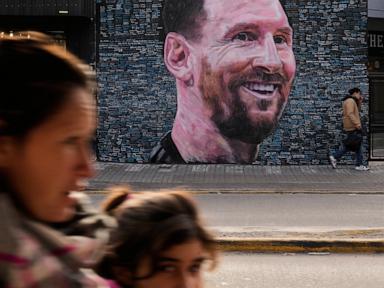
The global sports media is doing what it always does when Lionel Messi scores a goal: suffocating the public with hyperbole. Following his latest international scoring milestone, the narrative is perfectly scripted. We are told Argentina is living in a golden era of permanent euphoria. We are told these records solidify an untouchable legacy.
It is a beautiful story. It is also a lie. If you enjoyed this article, you might want to read: this related article.
The collective obsession with tracking every international goal scored by a 30-something icon is masking a terrifying reality. Argentinian football is cannibalizing its own future to sustain a cult of personality. The celebration of these late-career statistical milestones is not a sign of structural health. It is a distraction mechanism for a federation decaying from the inside out.
While fans scream in the stadiums, the production line that once built the world’s greatest football ecosystem has ground to a halt. The records are piling up, but the foundation is turning to dust. For another look on this event, refer to the latest update from NBC Sports.
The Manufactured Weight of Modern International Stats
To understand why this scoring milestone is an illusion, look at the data rather than the emotional highlight reels. International football formatting has shifted drastically over the last decade. The expansion of tournaments, the proliferation of centralized continental competitions, and the financial necessity of high-profile friendly matches have inflated statistical outputs across the board.
Historically, international goals were scarce commodities. Pelé scored 77 goals for Brazil in 92 official appearances. Diego Maradona scored 29 for Argentina across 1/3 of a century. Today, modern forwards routinely cross the 100-goal threshold. This is not because modern players are exponentially better than past icons; it is because the quality of modern international opposition has collapsed while the volume of fixtures has spiked.
Look closely at the list of nations sacrificed to fuel these modern record runs. Stripping away the emotion reveals a pattern of stat-padding against depleted, lower-tier nations during extended qualification campaigns and commercially driven exhibition matches in the United States. Scoring a hat-trick against a Caribbean nation ranked 140th by FIFA in a match designed exclusively to generate ticket revenue for promoters does not make someone a savior. It makes them an efficient corporate asset.
When European and South American federations introduced structural changes like the Nations League and expanded World Cup qualifying formats, they effectively eliminated the gap between elite competition and developmental squads. The top tier of international football has become top-heavy. A handful of super-teams accumulate massive goal differentials against nations that lack basic professional academies. Celebrating a scoring record in this environment is like praising a heavyweight boxer for knocking out thirty consecutive amateur fighters.
The Tactical Stagnation of La Selección
I have watched sporting institutions spend millions trying to prolong the peak of an aging asset instead of investing in structural evolution. It happens in corporate boards, and it happens on the pitch. Argentina’s current tactical setup is a ticking time bomb.
Right now, the national team operates under a system of total accommodation. Every tactical metric—from structural pressing triggers to positional passing lanes—is calibrated to minimize the physical output of one player. The midfield is no longer an engine designed to control territory; it is a security detail. High-energy midfielders are selected specifically to run double shifts, covering the defensive vacuums left by a forward who no longer tracks back.
Standard Modern System:
[High Press] -> [Zonal Suffocation] -> [Rapid Transition]

Argentina's Accommodation System:
[Midfield Security Detail] -> [Isolate Asset] -> [High-Risk Over-Reliance]
This structural compromise works in short, high-variance tournament windows where emotion and sudden bursts of individual brilliance can carry a squad over the line. But as a long-term strategy? It is catastrophic.
By building the entire tactical identity around an aging focal point, Argentina has failed to develop a modern, sustainable collective identity. The rest of the world is moving toward systems of high-intensity, synchronized pressing systems where every player functions as a functional component of an off-ball unit. Argentina is running a throwback system from the late 1990s.
When your entire tactical framework relies on bypassing the modern rules of athletic intensity to serve one individual, you do not build a team. You build a fragile dependency. The moment that individual is removed, the system does not just degrade—it collapses completely because the supporting players have spent years learning how to be secondary components rather than protagonists.
The Destruction of the Next Generation
Step away from the international spotlights and look at the domestic pipeline in Buenos Aires, Rosario, and Córdoba. This is where the true cost of this obsession becomes undeniable.
The immediate casualty of this prolonged international farewell tour is the development of Argentina’s next generation of attacking talent. Young forwards entering the national team setup are not given the freedom to fail, experiment, or grow. They are forced into subservient roles, tasked with hunting down loose balls and executing short, low-risk passes to ensure the senior star remains the center of gravity.
Consider the development path of elite young attackers in the current global game. They require high-volume touches, central positioning, and the license to make mistakes in the final third. In the current Argentinian setup, those opportunities do not exist. The central spaces are occupied. The creative license is monopolized.
We are already seeing the statistical fallout of this developmental freeze:
- Argentina’s domestic academies are producing fewer elite, versatile modern wingers than France, Brazil, or England.
- The talent exported to Europe consists increasingly of destructive, low-creativity defensive midfielders and central defenders designed to be workhorses.
- The country’s creative pipeline has dried up because the youth systems are training players to support a specific archetype rather than become creators themselves.
By the time this cycle ends, an entire generation of Argentinian forwards will have spent their formative international years acting as supporting actors. They will lack the tactical maturity and leadership experience required to carry a continental giant. You cannot expect a player to suddenly become a ruthless international leader at 26 when they spent the previous five years playing submissively to preserve someone else's legacy.
The AFA Financial Mirage
The Argentine Football Association (AFA) is using this mania as a financial shield. The domestic league in Argentina is in a state of absolute chaos. The tournament formats are constantly rewritten to protect politically connected clubs, the infrastructure is crumbling, and domestic broadcasting revenues are completely inadequate compared to European leagues.
Yet, none of this matters to the executives in Buenos Aires because the international touring side is a money-printing machine. The "Messi mania" narrative allows the AFA to secure massive, multimillion-dollar appearance fees for international friendlies across Asia, the Middle East, and North America. It allows them to sign lucrative commercial sponsorships with global brands that care nothing about Argentinian football infrastructure but everything about a single face.
This commercial windfall is not being redistributed to fix the structural rot at the grassroots level. It is being used to paper over the cracks of financial mismanagement. The domestic clubs remain broke, the training facilities outside of the main national team complex are decades behind world standards, and young players are still sold off to European mid-tier clubs at the first opportunity just to keep the lights on.
The federation is living paycheck to paycheck, using a legendary career as its ultimate collateral. When that collateral disappears, the commercial valuation of the Argentinian national team will plummet overnight. Sponsors who paid premium rates will walk away, appearance fees will slash by two-thirds, and the AFA will be forced to confront the reality of a bankrupt domestic game without a global superstar to bail them out.
The Premise of the Greatness Debate Is Flawed
Go to any football forum or sports broadcast, and you will see the same question: Does this record prove he is the undisputed greatest of all time?
The question itself is completely flawed. It assumes greatness is a linear, cumulative metric calculated by adding up goals against increasingly disparate opposition. It completely ignores context, tactical evolution, and the industrialization of modern sports science which allows players to extend their careers far beyond historical limits.
If you measure greatness purely by statistical accumulation in an era designed to maximize commercial output, you are not measuring footballing genius; you are measuring longevity within a highly protected corporate ecosystem. The true measure of an international legacy is not the final tally on a spreadsheet; it is the state of the football culture left behind.
When Pelé stepped away from the Brazilian national team, he left a structurally sound, deeply confident football culture that immediately went on to challenge for and win subsequent titles because the system was bigger than the man. When Maradona’s international career ended, Argentina suffered, but the underlying development structures were still producing generational geniuses like Redondo, Crespo, and Riquelme.
What happens when the current era ends? There is no golden generation waiting in the wings. There is no structural blueprint. There is only a massive vacuum and a collection of records that look great on social media infographics but mean absolutely nothing on a Tuesday night in La Paz when you no longer have a savior to bail you out.
Stop looking at the scoreboard. The record is breaking, but the system is already broken.