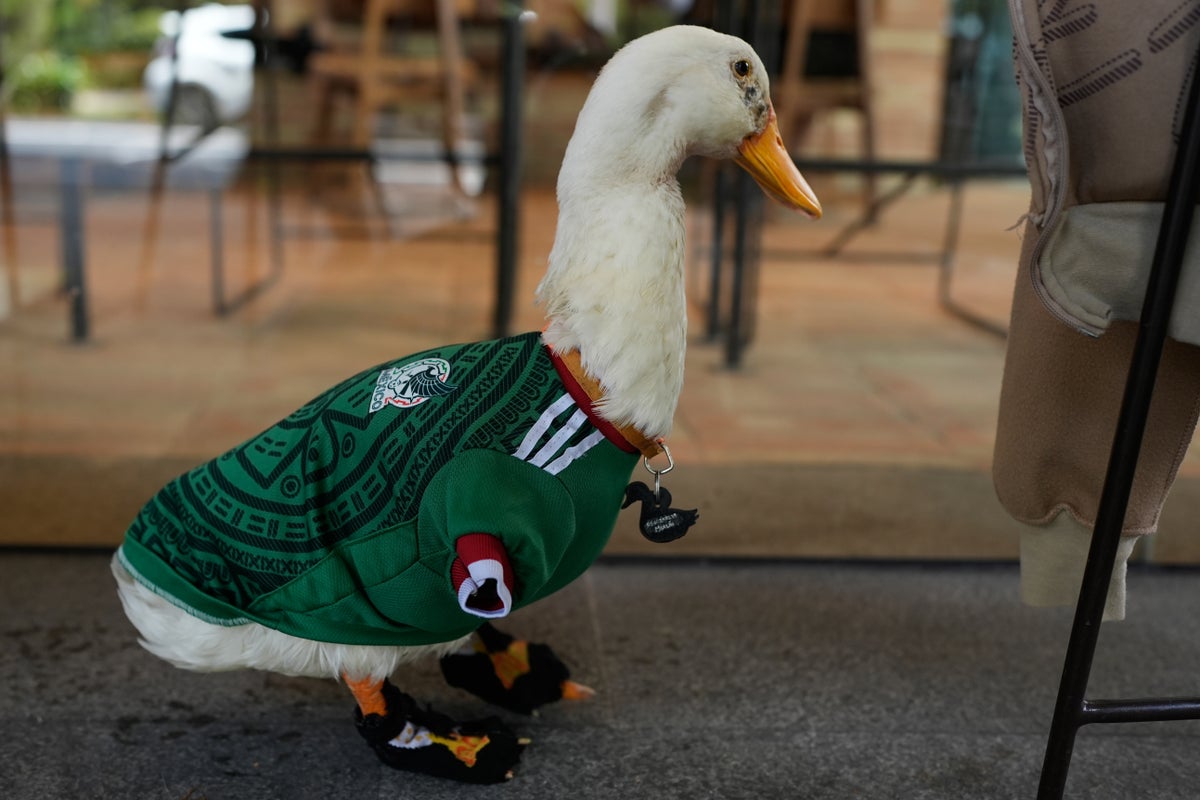
The sports marketing complex is obsessed with manufactured joy. Teams spend millions of dollars and thousands of agency hours engineering the perfect viral moment. They build committee-approved mascots, draft multi-platform brand guidelines, and schedule coordinated TikTok dances.
Then a duck wearing a tiny Mexico national team jersey walks into a stadium, and the entire multi-billion-dollar apparatus looks utterly useless.
The lazy consensus surrounding Merlin—the duck that captured the internet’s attention during Mexico’s World Cup run—is that this is a heartwarming story of internet culture and organic fandom. Mainstream sports media treats it as a cute novelty, a quirky footnote in tournament history. They look at a bird in a green kit and see a fluke.
They are entirely wrong.
Merlin is not a mascot, nor is he a heartwarming anomaly. He is a stark, brutal proof of concept for the future of fan engagement. He represents a total breakdown of traditional sports marketing and a triumph of decentralized, accidental branding. While Nike and the Mexican Football Federation (FMF) were busy trying to sell $90 jerseys through polished, focus-grouped ad campaigns, a domestic waterfowl completely hijacked the narrative for the price of a custom-tailored piece of fabric.
The Myth of the Manufactured Icon
Look at traditional sports mascots. They are corporate assets designed to minimize risk. They are sanitized, intellectual-property-protected foam suits meant to appeal to the widest possible demographic while offending absolutely nobody.
The problem? Modern audiences have developed an intense immunity to corporate curation.
When a brand tries to force a viral moment, the internet smells the desperation immediately. I have watched sports franchises dump six-figure budgets into launching digital mascots and augmented reality fan experiences, only to watch the engagement metrics crater within 48 hours. Why? Because you cannot mandate affection.
Merlin succeeded precisely because he bypassed the corporate pipeline. He exists in the wild. His appearance at matches is chaotic and unpredictable. He does not have a corporate sponsor or a monetization strategy mapped out by a mid-level marketing executive.
This is what traditional sports executives fail to grasp: authenticity is a scarcity engine. You cannot manufacture it, but you can easily crowd it out with too much production value. The moment the FMF tries to officially license Merlin—the moment he gets a corporate sponsor or a pre-planned segment on the stadium big screen—the magic dies. The value is in the subversion of the stadium space, not the duck itself.
The Economics of the Hijacked Narrative
Let's break down the actual mechanics of what happened here. Consider the return on investment (ROI) of traditional sports sponsorships versus the Merlin phenomenon.
| Marketing Vector | Cost | Consumer Perception | Longevity |
|---|---|---|---|
| Official Campaign | $1M+ | Corporate Noise / Ad Blindness | Fixed Campaign Window |
| The Merlin Arbitrage | Cost of Bird Feed + Custom Kit | Radical Authenticity / Shared Meme | Infinite (Until Over-Commercialized) |
This is narrative arbitrage. The fans didn't adopt Merlin because they love ducks; they adopted him because he represented a collective inside joke that the official broadcasters and sponsors didn't control. In an era where every square inch of a sports stadium is monetized—from the digital billboards to the branded hydration breaks—a live animal in the stands is a form of soft rebellion.
It is a glitch in the Matrix of modern sports commercialism.
Why Your Fan Engagement Strategy is Failing
If you are running a sports franchise or a brand marketing department, you are likely asking the wrong question. You are asking: "How do we create our own Merlin?"
You can't. If you buy a duck, you fail.
The real question is: "How do we stop suffocating the organic elements of our fan culture?"
Most sports organizations are terrified of what they cannot control. They want to police user-generated content, restrict stadium access, and ensure that every piece of fan expression aligns perfectly with corporate values. By doing so, they kill the very environment that allows viral phenomena to grow.
I’ve spent years analyzing audience metrics in digital spaces, and the trend line is clear: the modern consumer does not want to be marketed to; they want to participate in a spectacle. Merlin is a participant. The fans who photograph him, share his videos, and look for him in the crowd are participants. The corporate sponsors plastering their logos on the stadium boards are just background noise.
The Dark Side of Decentralized Branding
To be fair, relying on this type of decentralized, organic energy has a massive downside that traditional marketers hate to admit. You have zero control over the asset.
A real animal can get sick, bite a fan, or simply refuse to cooperate. A human fan creator can say something controversial online and tank the brand association overnight. When you cede your narrative to the crowd, you accept absolute vulnerability.
But that vulnerability is exactly why the payoff is so high. High risk, high reward. The corporate world is so terrified of the downside that it settles for mediocrity—and mediocrity doesn't trend worldwide during the biggest sporting event on earth.
Stop trying to engineer the next viral sensation through a committee meeting. Stop looking at internet culture as a series of boxes to check on a social media strategy deck.
The next time you are tempted to spend half a million dollars on a polished marketing campaign to prove how close your brand is to the culture, remember that a duck in a miniature football jersey completely outhustled you for the price of a bag of grain.
Loosen the grip on your brand guidelines. Allow for chaos in the stands. Otherwise, you will keep paying millions to play a game that the internet is winning for free.