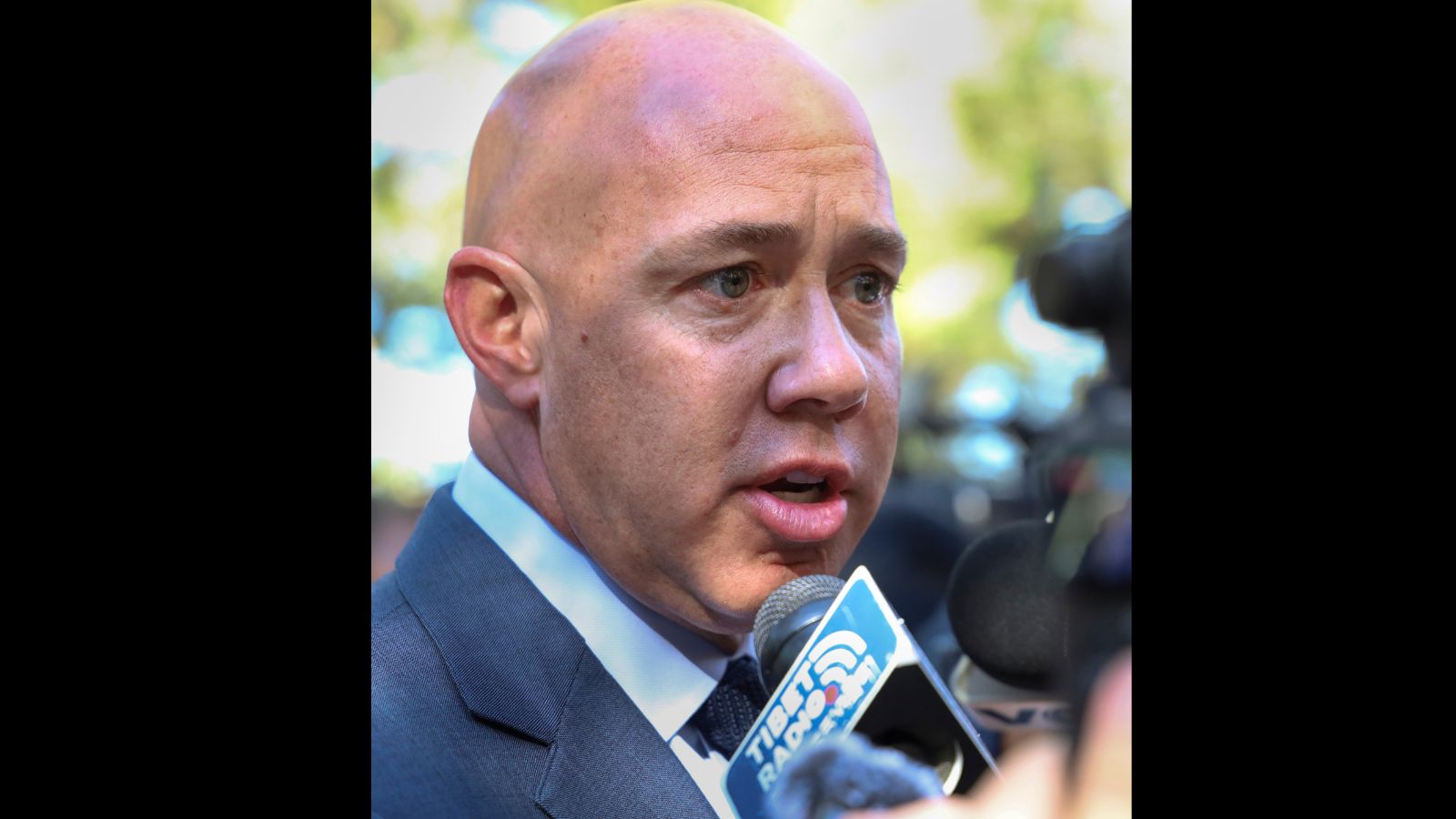
Right after Donald Trump and Xi Jinping sat down at the White House in September 2026, a bipartisan group of U.S. lawmakers packed their bags for Dharamshala to meet the Dalai Lama. That timing wasn't accidental. When high-stakes superpower summits focus on tariffs, critical minerals, and strategic guardrails, human rights and minority freedoms often get pushed to the margins—or quietly traded away. By showing up in the Himalayan foothills right on the heels of those talks, House Foreign Affairs Committee Chairman Brian Mast and his colleagues sent a sharp signal that Congress isn't willing to let Tibet vanish from Washington's political map.
Anyone watching U.S.–China diplomacy closely knows how this dance usually works. Presidents talk big-picture stability. Congress pushes back when it thinks the executive branch is going too soft or leaving vulnerable groups behind. Still, a visit to Dharamshala does more than generate headlines. It exposes the friction between transactional summit diplomacy and long-term pressure over religious freedom, succession, and transnational repression.
What Actually Happened When Lawmakers Met the Dalai Lama
In late September 2026, a bipartisan U.S. congressional delegation traveled to Dharamshala, India, to meet with the 14th Dalai Lama following earlier stops in New Delhi. Rep. Brian Mast, leading the group alongside lawmakers including Rep. Haley Stevens and Rep. James Gallagher, framed the meeting around fundamental liberties, self-determination, and solidarity with Tibetans.
Crucially, Mast didn't portray the Dalai Lama as opposed to high-level diplomacy between Washington and Beijing. According to Mast, the spiritual leader views talks between Trump and Xi—the leaders of two of the world's largest economies and militaries—as important. The catch, from Mast's perspective, is that engaging Beijing at the summit level shouldn't come at the cost of ignoring how China treats Tibetans or Uyghurs.
That distinction matters. A lot of commentary treats diplomatic engagement and human rights pressure as an either-or choice. Either leaders talk trade and security, or they lecture each other on rights. The Dharamshala visit argued for keeping both tracks alive at once, even when that makes life awkward for diplomats trying to keep a summit on track.
Why the Timing Right After Trump Xi Talks Matters
Summits between U.S. and Chinese leaders are crowded agendas. In 2026, discussions around Trump and Xi's meetings have centered on tariff suspensions, agricultural purchases, rare earth supply chains, artificial intelligence guardrails, and regional flashpoints. In that kind of environment, issues like Tibet rarely top the readout.
Tibetan advocates and exile leaders have repeatedly warned about a "Tibet deficit" during high-level U.S.–China negotiations. When the White House prioritizes economic stability or crisis management, sensitive political disputes can get downplayed to avoid derailing broader deals.
A congressional delegation heading straight to Dharamshala acts as a counterweight. Even if lawmakers don't set executive branch policy on their own, their visit reminds Beijing—and the White House—that Tibet still has vocal backers in Washington. As VOA News noted in its coverage of U.S.–China diplomacy, congressional oversight and lawmakers' priorities can complicate executive strategy and keep human rights on the radar even when summit talks focus elsewhere.
The Real Flashpoints Behind the Rhetoric
If you only read short news briefs, you might think this visit was just another symbolic photo-op. Look closer, though, and three concrete issues stand out behind the lawmakers' remarks.
China's Ethnic Unity Law and Assimilation Pressure
One major concern raised around the delegation's visit is Beijing's Law on Promoting Ethnic Unity and Progress, passed by China's National People's Congress in March 2026 and put into effect on July 1, 2026. Rights groups, exile officials, and outside analysts have warned that the law codifies assimilation policies, pushes Mandarin-medium instruction at the expense of minority languages, and tightens state control over cultural and religious expression in Tibet, Xinjiang, and Inner Mongolia.
Beijing's official line is very different. Chinese officials argue the legislation promotes equality, ethnic harmony, social stability, and national security while targeting separatism. That clash over definitions—what Beijing calls "unity" and "stability," critics call forced assimilation and legal erasure—sits right at the heart of the dispute.
Transnational Repression Beyond China's Borders
Another point Mast emphasized during the trip was transnational repression—efforts by a government to monitor, intimidate, or silence critics, activists, and diaspora communities outside its own borders. For Tibetans living in India, North America, and Europe, this isn't an abstract theory. Families back home can face pressure or retaliation when relatives abroad speak out, and diaspora groups watch closely for surveillance or intimidation around protests and public events.
Lawmakers bringing this up in Dharamshala wasn't just about Tibet inside the Tibet Autonomous Region. It was a warning that policies made in Beijing can affect people living in democratic countries too.
The Succession Question and the Dalai Lama's Future
Perhaps the most sensitive long-term flashpoint is religious succession. Mast warned that Beijing could try to interfere in the succession process or name its own candidate—a fear rooted in decades of friction over Tibetan Buddhism's traditions and the Chinese Communist Party's insistence on state authority over reincarnations.
From a practical standpoint, succession is where symbolism meets high stakes. Whoever is recognized as the next Dalai Lama—or whether competing figures emerge—will shape the morale, legitimacy, and organization of the Tibetan movement for generations. That's why U.S. lawmakers have previously addressed the issue in legislation like the Tibetan Policy and Support Act and the 2024 Resolve Tibet Act, and why Mast brought it up openly after meeting the spiritual leader.
What Critics and Skeptics Get Wrong
It's easy to fall into two lazy traps when talking about congressional visits to Dharamshala.
The first trap is assuming a visit by U.S. representatives automatically changes conditions on the ground in Lhasa or forces Beijing to reverse course. Let's be honest: it won't. Beijing routinely rejects foreign visits and criticism as interference in internal affairs, and executive branch trade or security negotiations often move on a separate track from congressional resolutions.
The second trap is dismissing symbolic diplomacy as completely meaningless. In politics, what gets talked about—and what gets ignored—shapes leverage over time. If nobody mentions Tibet when top leaders meet, silence becomes the default. Congressional visits keep the issue documented, force officials to answer questions about it, and signal to diaspora communities that they haven't been completely sidelined.
Practical Ways to Follow and Verify Tibet Developments
If you want to track this story without getting swept up in partisan spin or recycled wire blurbs, focus on primary records and diverse sources:
- Read U.S. statutory text and committee releases. Look up laws like the Resolve Tibet Act (passed in 2024) and official statements from the House Foreign Affairs Committee to see what is legally binding versus what is political rhetoric.
- Compare official statements from all sides. Read reporting from outlets like Tibetan Review or the Central Tibetan Administration alongside independent international reporting and official Chinese government statements so you can see where facts align and where narratives clash.
- Watch summit readouts after major meetings. When U.S. and Chinese leaders meet, check whether human rights, religious freedom, or Tibet appear in official summaries—or get left out altogether.
- Track follow-through, not just travel. A trip to Dharamshala makes news for a day or two. What matters more afterward is whether lawmakers hold hearings, push legislation, or press administration officials on implementation.


