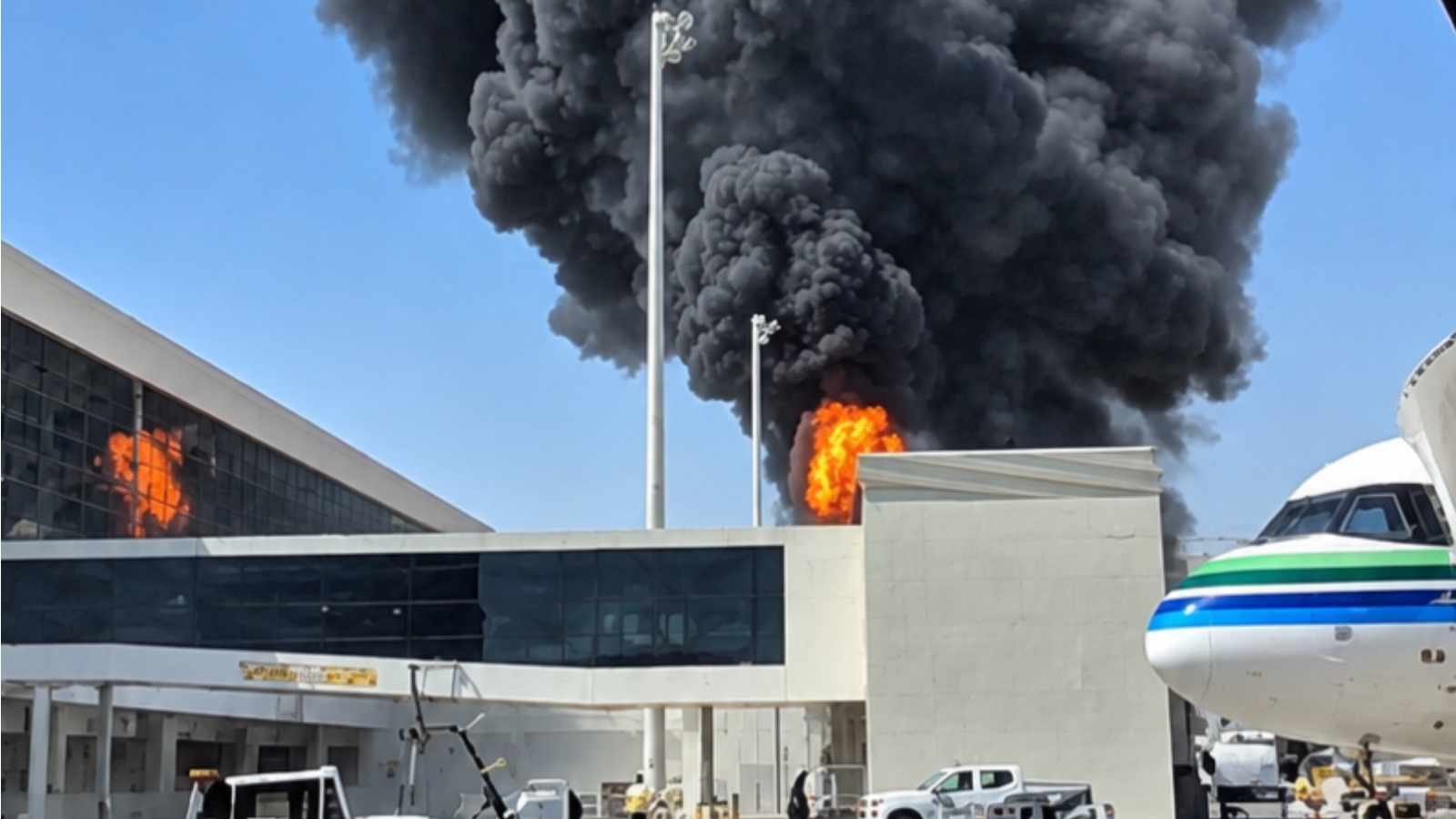
Tragedy makes for simple headlines, but simple headlines make for terrible analysis. When news broke that a second Indian national succumbed to injuries following a targeted drone and missile strike near Riyadh’s international airport infrastructure, the standard media playbook immediately activated.
Out came the predictable narratives: routine workplace safety critiques, superficial human rights scolding, and emotional coverage framing migrant casualties as accidental statistics caught in the crossfire of regional aggression.
That framing is fundamentally wrong. It misdiagnoses the structural realities of global labor mobility, geopolitical targeting strategies, and state-level liability.
Calling this a basic oversight in worker protection ignores how modern conflict, infrastructure dependency, and labor migration actually operate. Treating these events as mere collateral bad luck obscures the deliberate strategic calculations defining conflict zones today.
The Misconception of Casualties in High-Risk Zones
The mainstream press treats migrant labor in the Arabian Peninsula as a static, passive demographic. The media consensus assumes that when regional conflict escalates around critical infrastructure—airports, energy facilities, transport hubs—foreign workers are simply unintended victims of imprecise military strikes.
That perspective misses the core mechanic of asymmetric warfare.
Modern non-state actors and regional proxies do not strike transport hubs by accident. They strike them specifically because these facilities concentrate strategic economic value. Logistics hubs rely entirely on foreign workforces to function. When an airfield or terminal is targeted, the strike aims to destabilize the operational supply chain.
                                  +---------------------------------------+
                                  | Strategic Target: Infrastructure Hubs |
                                  +-------------------+-------------------+
                                                      |
                                                      v
                                  +---------------------------------------+
                                  |   Concentrated Foreign Labor Force    |
                                  +-------------------+-------------------+
                                                      |
                                                      v
                        +-----------------------------+-----------------------------+
                        |                                                           |
                        v                                                           v
+-----------------------------------------------+           +-----------------------------------------------+
|             Operational Disruption            |           |             Geopolitical Friction             |
| Interrupts supply chains, transit, & logistics|           | Pressures origin states & labor agreements    |
+-----------------------------------------------+           +-----------------------------------------------+
Foreign workers inside these zones are not secondary damage; their presence within essential operational nodes makes them directly exposed to strategic interdiction.
The defense architecture of primary transit hubs is designed to shield physical assets—runways, fuel reserves, aircraft—rather than human perimeter management. When an artillery or drone payload impacts a perimeter support facility, it exposes a glaring failure in defense perimeter prioritization.
Diplomatic Leverage and Labor Dependency
Origin nations face a complex diplomatic calculation. India sends millions of workers to the Gulf Cooperation Council (GCC) states. The resulting remittances form a major backbone of foreign currency inflows for regional domestic economies.
Because of this economic reality, public diplomatic statements following worker deaths are carefully calibrated. They emphasize consular assistance, repatriation logistics, and formal condolences while avoiding structural critiques of host-nation defense posture.
| Analytical Lens | Standard Media Consensus | Geopolitical Reality |
|---|---|---|
| Primary Exposure Cause | Unfortunate proximity to military targets | Structural deployment within vital economic infrastructure nodes |
| Defense Prioritization | Unified protective envelope for personnel & assets | Hardened physical assets prioritized over perimeter support personnel |
| Origin State Response | Purely humanitarian support and repatriation | Delicate economic balancing act to protect remittance corridors |
| Security Responsibility | Private employer workplace compliance | Sovereign host-state air defense and intelligence integration |
This dynamic creates a policy vacuum. Host states rely on accessible international labor to run critical infrastructure during heightened regional tension. Meanwhile, origin states cannot aggressively restrict labor deployment without threatening their own national remittance pipelines.
The result is a system where worker risk is absorbed as an operational externality rather than managed as a primary security mandate.
Rethinking Duty of Care in Regional Conflict
Fixing this problem requires abandoning superficial corporate compliance checklists. Standard workplace safety protocols mean nothing when the primary operational threat comes from long-range precision munitions or tactical loitering drones.
Rebuilding duty of care in volatile regions requires three non-negotiable structural shifts:
- Air Defense Integration Around Support Infrastructure: Host security frameworks must extend active air defense coverage and early-warning warning systems beyond corporate terminals to include support corridors and maintenance housing.
- Mandatory Security Risk Indexing for Labor Mobility: Sending nations must institute clear security thresholds that adjust labor clearance based on real-time threat intelligence rather than static diplomatic relations.
- Direct Host-State Liability Frameworks: Insurance and compensation for casualties in sovereign transport hubs must be underwritten directly by host defense authorities, forcing financial accountability to align with national security planning.
Until analysts stop treating infrastructure strikes as mere isolated tragedies and start addressing them as calculated disruptions of globalized labor systems, the response will remain fundamentally broken.
Stop analyzing military impacts on international labor through the lens of local workplace accidents. Treat them as what they actually are: the direct consequence of state defense priorities failing to protect the human engine running their most critical infrastructure.

