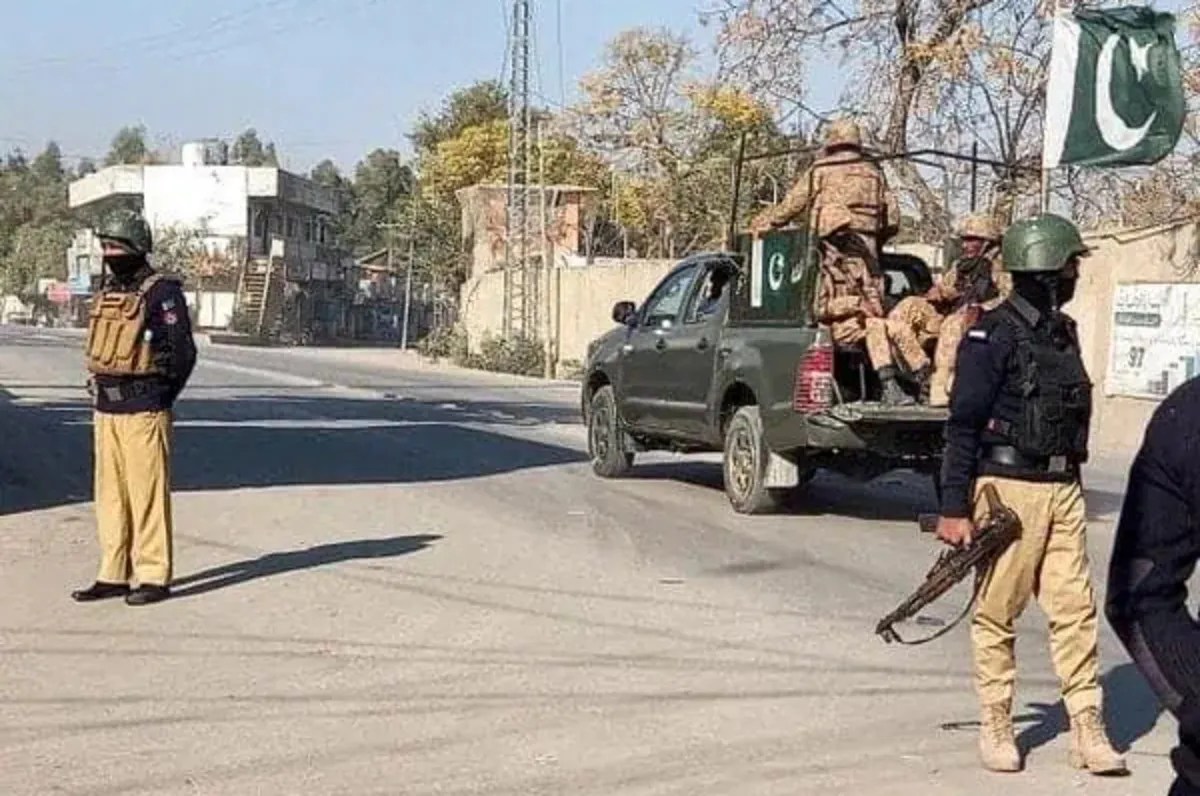
The escalation of kinetic operations by Pakistani security forces in Balochistan, resulting in the reported neutralization of 75 insurgents, signals a shift from containment to high-density attrition. Media coverage typically treats these events as isolated security spikes. A strategic evaluation, however, reveals they are the logical output of a specific operational calculus designed to disrupt the command-and-control networks of ethno-nationalist militant groups.
To understand the efficacy of these operations, the situation must be parsed through three distinct analytical lenses: the operational doctrine driving the kinetic push, the structural supply lines of the insurgency, and the systemic bottlenecks that prevent tactical victories from translating into permanent stabilization.
The Triad of Kinetic Enforcement
The recent surge in military output relies on a coordinated three-tier operational framework. State forces have shifted away from passive garrison defense toward proactive, intelligence-led interdiction.
- Signal Intelligence (SIGINT) Convergence: Real-time interception of satellite and encrypted communication networks allows security forces to map the exact geolocation of insurgent transit corridors. This reduces the time lag between target acquisition and engagement.
- Aviation-Supported Encirclement: Utilizing rotary-wing assets enables rapid deployment of special operations units into high-altitude, rugged terrain, effectively cutting off escape routes before ground friction begins.
- Targeted Decapitation: Prioritizing high-value targets (HVTs) within the Balochistan Liberation Army (BLA) and Baloch Liberation Front (BLF) organizational charts disrupts the mid-level commanders responsible for executing coordinated guerrilla strikes.
This methodology forces insurgent elements out of entrenched sanctuaries, exposing them to superior firepower in open terrain. The elimination of 75 combatants indicates a high concentration of force at critical chokepoints, rather than scattered skirmishes.
The Asymmetric Cost Function
An insurgency does not require absolute military parity to survive; it operates on an asymmetric cost function. The state expends significant financial and human capital to maintain infrastructure security, whereas insurgent cells require minimal capital to inflict disproportionate economic and psychological damage.
                  [External Sanctuaries / Funding]
                                 │
                                 ▼
[Local Recruitment Hubs] ──> [Insurgent Cell] <── [Weaponry & Logistics]
                                 │
                                 ▼
                     [Asymmetric Strike Target]
                    (High Damage / Low Cost Base)
The sustainability of the militant network depends on three critical inputs:
- Porosity of Border Corridors: The lengthy border with Afghanistan and Iran serves as a logistical release valve. When kinetic pressure increases within Balochistan, insurgent elements slip across international boundaries to regroup, rearm, and access medical supply lines.
- Socio-Economic Recruitment Pools: Localized economic stagnation, low literacy rates, and perceived alienation regarding state-led extraction of natural resources create a self-sustaining recruitment loop. Attrition of personnel is quickly offset by new inductees driven by ideological or material incentives.
- External Financial Subsidy: The sophisticated nature of weaponry used by these groups—ranging from modern sniper systems to improvised explosive devices (IEDs) with advanced triggering mechanisms—points to external financial pipelines that bypass standard domestic banking monitors.
Unless kinetic operations permanently degrade these three inputs, tactical attrition rates remain a temporary setback for the insurgency rather than a decisive defeat.
Structural Bottlenecks to Permanent Stabilization
The primary limitation of relying exclusively on kinetic dominance is the "whack-a-mole" dynamic inherent to counterinsurgency. Eliminating a specific cell creates a temporary power vacuum, but it does not alter the underlying structural incentives that birthed the cell.
The first bottleneck is the institutional governance deficit. Kinetic clearing operations are rarely followed by rapid, sustained civilian administrative deployment. When military units withdraw to barracks after a successful sweep, the state fails to establish accessible judiciaries, localized policing, or transparent public service delivery. The resulting vacuum is inevitably re-occupied by underground militant shadow governance.
The second limitation is the securitization of economic corridors. While large-scale infrastructure investments like the China-Pakistan Economic Corridor (CPEC) aim to integrate Balochistan into the national economy, the heavy military footprint required to protect these sites can inadvertently deepen local alienation. The benefits of these mega-projects must be demonstrably decentralized to the local populace to undermine the insurgent narrative of economic exploitation.
Strategic Shift and Required Force Realignment
To convert recent tactical momentum into long-term strategic stability, the security apparatus must pivot from pure attrition to an area-denial and institutional-anchoring strategy.
The immediate requirement involves the systematic fortification of border check-posts combined with biometric monitoring to seal the transnational escape routes. Simultaneously, the counterinsurgency framework must transition its primary human intelligence (HUMINT) gathering from federal agencies to heavily reformed, locally recruited district police forces. Locals possess the micro-level cultural and geographical nuance necessary to identify insurgent infiltration before kinetic escalation becomes necessary.
The ultimate metric of success is not the body count of neutralized insurgents, but the density of secure, self-governing civilian zones established in the wake of military actions.