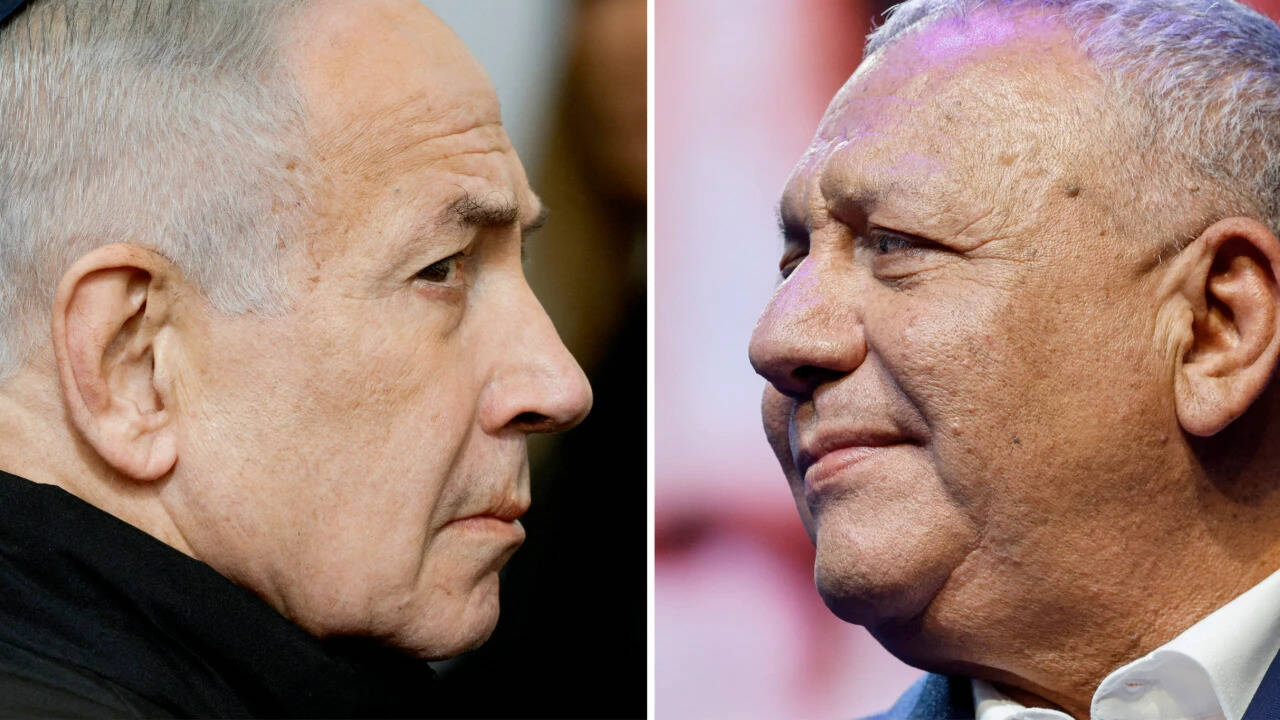
The October 2026 Israeli legislative election produced a structural stalemate across the 120-seat Knesset, leaving Benjamin Netanyahu's right-wing bloc at 53 seats, Gadi Eisenkot's opposition bloc at 48 seats, and Arab-led parties with an unprecedented 19 seats. Because Israel operates under a closed-list proportional representation system with a 3.25% electoral threshold, the mathematical path to a 61-seat governing majority is currently blocked unless Zionist opposition parties abandon pre-election boycotts or a cross-bloc unity government forms.
The Seat Distribution and Coalition Math
Standard political coverage frames deadlocked elections as temporary negotiation failures. In operational terms, the 26th Knesset deadlock is a rigid arithmetic bottleneck. With 120 total mandates, a coalition requires 61 seats to pass a vote of confidence and govern.
Based on the projected tallies and initial vote distributions, the parliament is divided into three non-overlapping clusters:
- The Right-Religious Bloc (53 seats): Anchored by Netanyahu's Likud at roughly 27 seats (20.8% of the vote at the 85% count mark) alongside ultra-Orthodox and far-right allies. This bloc falls eight seats short of a majority.
- The Zionist Opposition Bloc (48 seats): Led by Gadi Eisenkot's Yashar party (16.1% at the 85% count mark) alongside allied factions including Naftali Bennett, Yair Lapid, Yair Golan, and Avigdor Lieberman. This bloc sits 13 seats below the governing threshold.
- The Arab-Led Bloc (19 seats): Capturing 14.9% of the vote at the 85% count mark—driven by a more than 60% surge in total votes compared to the previous cycle—Arab parties hold the exact mathematical balance of power.
Neither primary bloc can govern independently. Adding all 19 Arab mandates to Eisenkot's 48 yields 67 seats—a comfortable six-seat buffer above the majority line. Even securing external support from 13 of the 19 Arab lawmakers pushes an opposition coalition to exactly 61 seats. Conversely, Netanyahu's bloc has zero ideological overlap with the Arab parties, leaving his coalition mathematically capped at 53 unless he poaches defectors from the opposition.
The Turnout Multiplier Mechanism
The historic 19-seat showing by Arab parties was not an isolated demographic anomaly; it was the direct output of how proportional representation rewards differential voter turnout. In Israel's single nationwide constituency, the total number of valid votes determines the absolute vote quota required to clear the 3.25% electoral threshold.
When turnout among Palestinian citizens of Israel surged following the Gaza war and an aborted September 2026 attempt by the Central Elections Committee to disqualify Arab-majority lists, two compounding effects occurred simultaneously:
- Direct Seat Expansion: The more than 60% increase in ballots cast for Arab-led factions directly translated into an unprecedented 19 mandates, up sharply from prior cycles where voter apathy suppressed representation.
- Threshold Inflation: Higher aggregate turnout raised the raw vote count required for every party in the country to reach 3.25%. Smaller right-wing lists hovering near the margin faced heightened risk of falling below the cutoff, burning votes that would otherwise have accrued to Netanyahu's 53-seat bloc.
This mechanism demonstrates why turnout shifts in proportional systems exert non-linear pressure on coalition geometry. A surge in one sector does not merely add seats to that sector; it compresses the seat share of every other list by raising the denominator of the national vote pool.
The Three Structural Constraints Blocking Coalition Formation
While the arithmetic points directly toward a 67-seat opposition-Arab alignment, political game theory reveals why converting parliamentary seats into executive authority faces severe friction. Three distinct constraints govern the post-election negotiation window:
1. The Veto-Player Red Lines
Within Eisenkot's 48-seat coalition, right-leaning opposition figures such as Avigdor Lieberman and Naftali Bennett operate under intense domestic political pressure. Polls prior to the election indicated that a majority of Jewish Israeli voters opposed relying on Arab parties to form a government, a sentiment amplified by post-war societal trauma and aggressive media rhetoric. If Eisenkot relies on all 19 Arab lawmakers, any single faction inside his 48-seat bloc can collapse the government by walking out, turning every ideological disagreement into an existential crisis.
2. The Asymmetric Incentive Structure of Arab Factions
The 19 Arab seats are not a monolithic voting machine; they represent distinct ideological currents—ranging from pragmatic Islamist factions like Ra'am, which previously joined the 2021 change coalition, to secular nationalist and communist lists within the Joint List framework. While leaders like Jamal Zahalka noted that high turnout successfully blocked Netanyahu from securing an outright majority, translating that blocking power into active governing support requires concrete policy concessions on civil equality, municipal budgets, and policing. Zionist opposition leaders have signaled little willingness to adopt these policy shifts, creating a mismatch between what Arab lawmakers must demand to justify participation to their voters and what Zionist partners can politically afford to concede.
3. The Presidential Mandate and Absentee Latency
Under Israeli constitutional protocol, President Isaac Herzog is not legally obligated to award the first mandate to form a government to the leader of the largest single party (Netanyahu's Likud at 27 seats), though he has publicly warned against forcing another election cycle. Furthermore, the final allocation of marginal seats depends on roughly half a million absentee ballots—predominantly from military personnel and diplomats—which historically skew toward right-wing and centrist Zionist lists rather than Arab parties. A shift of even one or two mandates after absentee tabulation alters the bargaining power of individual defectors.
Scenario Matrix for the 26th Knesset
Evaluating the 53-48-19 split through coalition stability theory yields four primary pathways, each carrying distinct failure modes:
- The Confidence-and-Supply Minority Government (Probability: Moderate): Eisenkot forms a minority cabinet backed by his 48 Zionist seats, while the 19 Arab lawmakers—or a 13-seat subset—provide external support from outside the cabinet during the initial confidence vote and budget approvals. This mirrors the 1992 Yitzhak Rabin model. Its primary vulnerability is legislative paralysis: while external backing prevents a no-confidence ouster, the government cannot pass controversial legislation without ad-hoc majorities.
- A Zionist National Unity Coalition (Probability: Moderate-Low): Likud (27 seats) and Yashar (16.1% vote share) bypass smaller ideological flanks to form a broad centrist-right administration. This solves the arithmetic immediately—easily clearing 61 seats without Arab or far-right parties—but requires resolving the fundamental leadership deadlock between Netanyahu and Eisenkot, a hurdle that has repeatedly collapsed previous unity talks.
- Targeted Defections to the 53-Seat Bloc (Probability: Low): Netanyahu needs eight individual Members of Knesset to cross the aisle from Eisenkot's camp to reach 61. While individual defections have occurred in prior Knesset terms, poaching eight lawmakers simultaneously across entrenched ideological lines requires offering cabinet portfolios that would alienate Netanyahu's existing 53-seat partners.
- Institutional Deadlock and Snap Elections (Probability: High): If President Herzog's designated candidates fail to assemble 61 mandates within the statutory 28-day window (plus a 14-day extension), the Knesset automatically dissolves. This forces a repeat election where Netanyahu's camp will attempt to depress Arab turnout while Eisenkot's camp attempts to consolidate fragmented opposition votes.
Strategic Play for Coalition Architects
For the Zionist opposition led by Gadi Eisenkot, attempting to construct a formal, fully integrated 67-seat coalition with all 19 Arab lawmakers is a strategic trap that will fracture his 48-seat base before a government is sworn in. Instead, the optimal maneuver is a two-tier legislative architecture: negotiate a strictly bounded Confidence-and-Supply Agreement with a 13-to-15-seat pragmatic subset of the Arab bloc, trading targeted municipal infrastructure funding and crime-reduction budgets for guaranteed abstentions or support on the investiture vote and the state budget. Simultaneously, Eisenkot must establish a pre-negotiated legislative firewall with Likud moderates on core national security issues to neutralize right-wing veto threats. If Eisenkot fails to lock in external Arab backing within the first 21 days of receiving the presidential mandate, he should pivot immediately to demanding a rotating national unity framework with Likud—conditioning Likud's entry on the removal of far-right veto players—rather than allowing the clock to run out into a snap election that favors incumbent mobilization.
For further context on the coalition arithmetic and party breakdowns, see the Israel Election Result analysis covering how the 19 Arab seats impact Netanyahu and Eisenkot's paths to 61 mandates.